Topley’s Top 10 – February 18, 2022

1.One Year…..XLE Energy ETF +50% vs. XBI Biotech -43%

www.yahoofinance.com


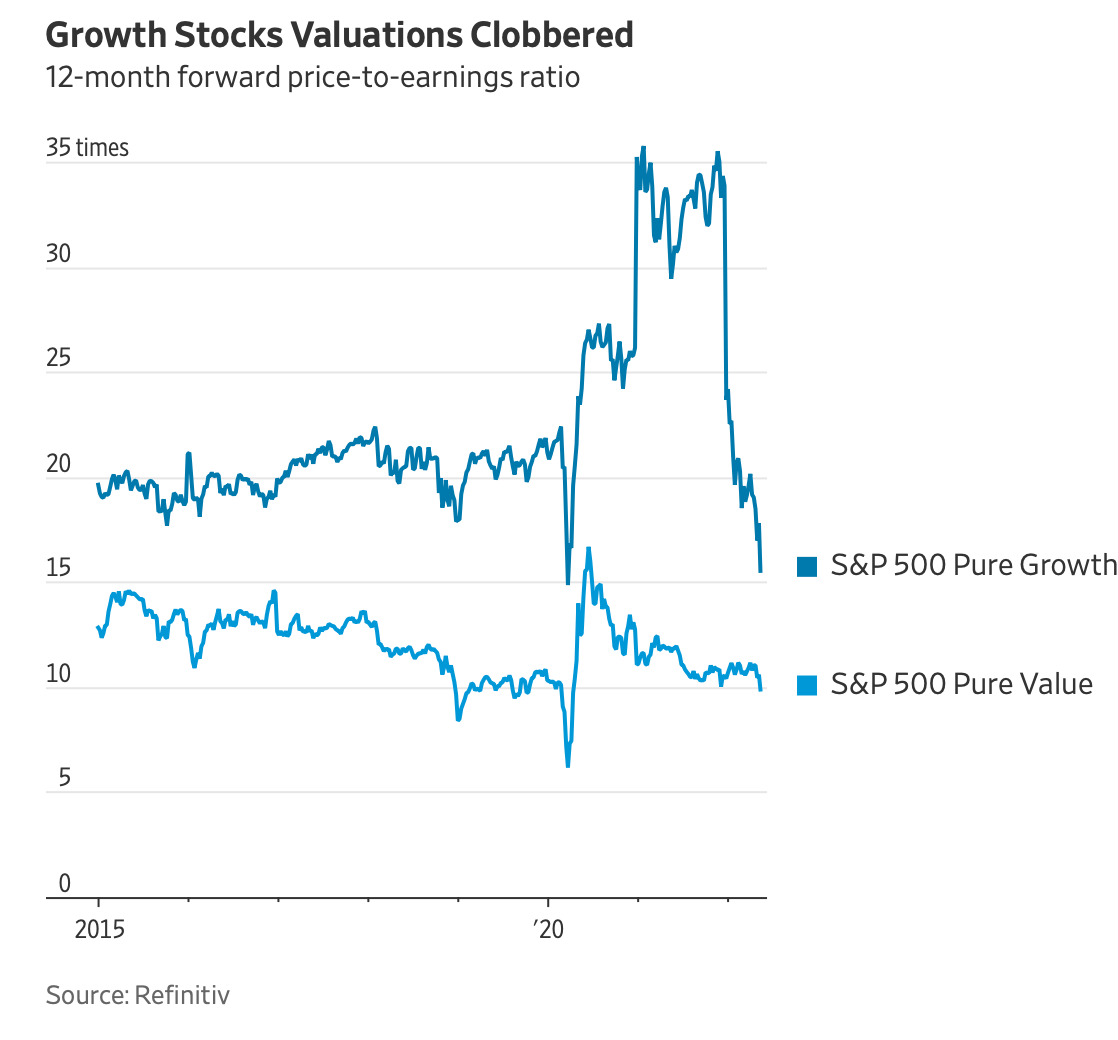
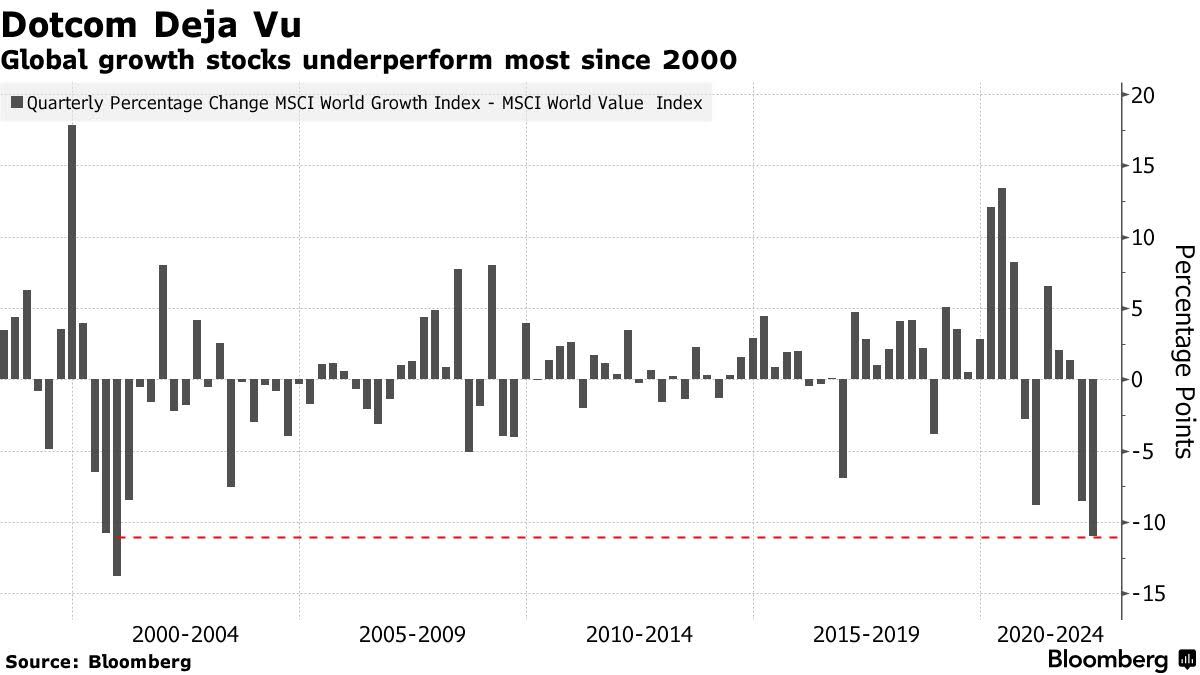
2. After underperforming Growth for 11 of the last 15 calendar years, Value leads Growth by 9% in 2022, its best relative start to a year on record.

Joseph Carr Dow Jones 

https://www.linkedin.com/in/joseph-carr-5416907/


3. Copper-Gold Ratio vs. Interest Rates.

Nasdaq Dorsey Wright–Gold’s repeated failures to breakout could likely be stemming, at least in part, to the likelihood of rising real yields given a fading base effect and hawkish stance from the U.S. Federal Reserve. Rising real yields (nominal yield less inflation) typically act as a headwind for precious metals, a topic further detailed in this article.

A tangent technical trend to this conversation is the tightening spread in the copper-gold ratio. Like gold over the past year, copper (HG/) prices have traded between about $4 and $4.80, which has led to a stall out in the copper-gold ratio and an opportunity for interest rates to close the gap. We saw similar behavior in 2012 when the copper-gold ratio flatlined, rates diverged, and then subsequently rebounded. Note that the rebound in rates eventually coincided with an uptick in the copper-gold ratio, so if history rhymes, this could also add skepticism to a sizeable precious metals rally.

https://www.nasdaq.com/solutions/nasdaq-dorsey-wright


4. ”Low Volatility” ETF is Down 2% More than S&P YTD

SPLV Low Volatility ETF vs S&P

www.yahoofinance.com


5. Banks vs. Tech YTD

KRE Regional Bank ETF vs QQQ Tech


6. Fed Balance Sheet Overly with Nasdaq and S&P

Guggenheim

https://www.guggenheiminvestments.com/perspectives/global-cio-outlook/forget-raising-rates-shrink-the-balance-sheet


7. Bond mutual funds have now experienced two consecutive weeks of outflows totaling $30 billion

Advisor Perspectives Bond Funds Lurk as a Challenge to Fed’s Inflation Fight-by Eric Balchunas, 2/16/22

Bond funds are in a bad spot, and it will probably get worse.

A crash to Earth for growth stocks and cryptocurrencies is one thing, but a sharp decline in mainstream bond mutual funds could spell enormous trouble. Signs are emerging of the beginnings of a potential downward spiral in these funds, which could ultimately lead to redemption halts and subsequent panic by retail investors. That could pose the biggest challenge to the Federal Reserve’s plans to tame inflation through rate increases and quantitative tightening.

Bond mutual funds have now experienced two consecutive weeks of outflows totaling $30 billion, with exchange-traded funds adding an additional $10 billion. It may not seem like a big deal — and it isn’t yet — but these funds almost always take in cash, and it doesn’t take long for a little outflow to become a lot. Moreover, the last two times these funds experienced periods of significant outflows, the Fed did or said something dovish to turn it around. Now these outflows may not have been the cause of the central bank’s actions — although they were most likely at least a factor given how these funds manage more than $5 trillion of aging baby boomers’ retirement investments — but they are correlated. At least as of late.

The problem for these funds is they own a bunch of bonds that are going to be worth less if all the new bonds coming out offer higher yields. That’s why the prices of bonds are down and their returns are diminishing. And there’s really nowhere to hide. Corporates, Treasuries, mortgages, long term, short term, international, you name it, they are all red this year. And when bond funds start posting negative returns, money tends to start flowing out.

When they experience outflows, they usually start by dipping into their cash or selling any bond ETFs that they own as liquidity reserves. This is already taking place; the most liquid bond ETFs — HYG, LQD and TLT, for example — are experiencing billions of dollars in outflows already this year. Mom-and-pop investors aren’t selling these ETFs; they are professional money managers. Once they sell all their ETFs and the outflows continue, they will have to sell actual bonds, which will lower prices and result in negative returns, which will spark more outflows which will force them to sell more bonds which will lower prices and their returns. You get the idea. This downward spiral would start to dry up liquidity in the bond market and could ultimately lead to the fund having to halt redemptions. Panic would ensue.

The prospect of halting redemptions — and their much larger size — is why bond mutual funds are arguably a bigger risk to market stability, and the Fed’s hawkish plans, than bond ETFs, which many have pegged as the most serious threat. While ETFs won’t escape misery, they have only a fifth of the assets, and they have the release valve of trading on an exchange. Their shares may trade at a discount to net asset value, but they will trade.

I’m not the only one pointing out this potential problem. Janet Yellen said the same thing a year after the March 2020 crisis in response to questions from Senator Elizabeth Warren:

“I believe it is important to look very carefully at the risks posed by the asset-management industry, including BlackRock and other firms. FSOC began to do that, I believe, in 2016 and 2017, but the risks it focused on were ones having to do with open-end mutual funds that can experience massive withdrawals and be forced to sell off assets that could create fire sales. That is actually a risk we saw materialize last spring in March.”

Had the Fed not stepped in and thrown the kitchen sink at the bond market at that time, it’s entirely likely that some of the country’s biggest mutual funds would have halted their redemptions. They experienced two consecutive weeks of $90 billion outflows. One example is the $143 billion Pimco Income Fund, which declined 13% in the 30 days before the Fed acted. This triggered outflows of about $14 billion. All in all, the fund shrank 18% in a few weeks. How much more of this could the Pimco fund have withstood before it would have needed to halt redemptions? In India, where the central bank didn’t act as aggressively as the Fed did in the U.S., Franklin Templeton halted redemptions on about half a dozen of its active bond funds.

Of course, it’s possible that outflows from bond mutual funds are much more orderly — or even reverse and turn to inflows — and that these funds are able to adapt to the rising rate environment without the downward spiral kicking in. But as the Fed embarks on tightening monetary policy, investors and policy makers need to keep a close eye on which way the money flows and how funds are able to respond.

Bloomberg News provided this article. For more articles like this please visit bloomberg.com.

https://www.advisorperspectives.com/articles/2022/02/16/bond-funds-lurk-as-a-challenge-to-feds-inflation-fight


8. Tesla Falls in Consumer Reports Ranking After Design Changes

Bloomberg-Tesla Inc. sank toward the bottom of Consumer Reports’ newest annual auto brand rankings, weighed down by poorly received design changes and reliability problems.

The electric-car maker placed No. 23 out of 32 brands on the 2021 list, down seven spots from the year before, Consumer Reports said Thursday. Tesla’s Model 3 was also beaten out as the “top pick” for 2022 in the electric-vehicle category by Ford Motor Co.’s Mustang Mach-E.

By Sean O’Kane  https://www.bloomberg.com/news/articles/2022-02-17/tesla-tumbles-in-consumer-reports-ranking-after-design-changes?sref=GGda9y2L


9. Miami becomes least affordable housing market in the US

From Morning Brew https://www.morningbrew.com/daily

Home prices are rising at a faster clip than wages By Katherine Kallergis

(iStock/Illustration by Shea Monahan for The Real Deal)

Miami is the most expensive housing market in the country, surpassing New York, according to a RealtyHop report.

Home prices in Miami have soared during the pandemic, propelled by the migration of out-of-state buyers and renters, many of whom have moved from the Northeast. Wages, meanwhile, have not risen at the same pace.

A household in the city of Miami would have to contribute 78.7 percent of its income toward homeownership costs, according to RealtyHop’s February affordability index. That’s based on a median home price of $589,000 and a projected median household income of $43,401.

Miami has moved higher in the ranking of least affordable cities for housing in recent months, eclipsing Los Angeles in October to take the No. 2 spot.

New York became the second least affordable city in February. A household in New York City would have to spend close to 78 percent of its income on homeownership costs, including mortgage payments and property taxes. That’s based on a median annual household income of $68,259 and median home price of $970,000.

In third-ranking Los Angeles, households can expect to spend 74.2 percent of their annual incomes on housing, based on a median income of $68,733 and a median home price of $925,000.

RealtyHop analyzes homeownership affordability across the country’s 100 most populous cities.

To remain below the threshold for cost-burdened housing, homeowners and renters should spend no more than 30 percent of their income on housing.

“What we’ve been seeing since the pandemic is Miami is the destination for a lot of out-of-state residents,” said RealtyHop data scientist Shane Lee. “These people often bring in more money than [locals].”

Rents have also jumped exponentially. One report found that rents in Miami rose 38 percent, the highest gains nationwide, in 2021.

Much of the local workforce, including those in healthcare, education and first responders, are priced out of homeownership. A Florida Realtors report found that home health care and personal care aides, earning the least out of 17 occupations studied, would need to earn more than three times their median annual salary to purchase a home, and nearly double their salary to rent a one-bedroom unit.

Last year, Miami ranked 16th in the country for cities with the biggest increases in median home asking prices, according to RealtyHop. The median price rose 17 percent in 2021 to $580,000. Austin experienced the biggest increase, up nearly 28 percent to $535,000.

“Miami has become increasingly unaffordable especially for those local residents. They’re the ones who increasingly struggle with homeownership,” Lee said. “It’s the same reason why Austin was the hottest market [in 2021].”

Lee and other experts predict price growth will slow as interest rates rise, but sales will continue to increase.

Miami Most Expensive US Housing Market (therealdeal.com)


10. How One Person Can Change the Conscience of an Organization

by Nicholas W. Eyrich,and Robert E. Quinn,

Summary.   While corporate transformations are almost universally assumed to be top-down processes, in reality, middle managers, and first-line supervisors can make significant change when they have the right mindset. Dr. Tadataka Yamada was one of dozens of executives…more

In December 2000, when Dr. Tadataka Yamada became the new chairman of research and development at Glaxo SmithKline, he was horrified to learn that his company was a complainant in a lawsuit over access to drug therapies for HIV/AIDS patients. GSK was one of 39 pharmaceutical companies charging Nelson Mandela and the government of South Africa with violating price protections and intellectual property rights in their efforts to access lower priced antiretroviral drugs. Close to 25 percent of black South Africans were living with HIV/AIDS and at the time, antiretroviral therapies cost approximately $1000 per month—more than a third of the average South African’s annual salary, putting treatment out of reach for most patients.

Yamada held discussions with his research staff and quickly learned that he was not alone in his opposition to the lawsuit. The team wanted to be a part of the solution to global health issues, not party to a lawsuit preventing such drugs from reaching those in dire need, but they felt they lacked the power to change the company’s direction. Yamada felt differently. In one-on-one meetings with individual board members of GSK, he stressed the company’s moral responsibility to alleviate human suffering and tied it to the long-term success of the company. He stated that GSK can’t make medicines that save lives and then not allow people access to them. He noted the public relations disaster associated with the lawsuit, and set forth a vision, co-created by his team, for how GSK could also become a leader in the fight against TB and malaria, diseases that also were disproportionately impacting third-world populations. The external pressure did not abate, with protests against many drug companies around the world.

In April, 2001, all 39 companies dropped the lawsuit against Nelson Mandela; GSK and others reduced the prices of antiretroviral drugs by 90% or more. Furthermore, under Yamada’s direction, one of GSK’s major laboratories in Tres Cantos, Spain, was converted into a profit-exempt laboratory that focused only on diseases in the developing world, including malaria and tuberculosis. Using his influence, Dr. Yamada also spurred GSK into allocating resources for affordable access to medications and development of future therapies. Subsequently top executives at GSK became leaders in global health issues. Andrew Witty assumed the CEO position at GlaxoSmithKline in 2008 and became one of the leading spokespersons for global health in the pharmaceutical industry. Chris Viehbacher, corporate executive team member at GSK, subsequently became the CEO of Sanofi, and a champion of global health. Both have since partnered with the Gates Foundation on global health initiatives.

Most people would love to be a part of such an amazing turn of events, yet this kind of transformation doesn’t happen very often. While many helped with these efforts, what made it possible for Dr. Yamada to step forward with a steady voice and a sound vision? In several interviews with Dr. Yamada we identified four key mindsets that helped him catalyze this transformation.

The power of one.

A single person with a clarity of conscience and a willingness to speak up can make a difference. Contributing to the greater good is a deep and fundamental human need. When a leader, even a mid-level or lower level leader, skillfully brings a voice and a vision, others will follow and surprising things can happen—even culture change on a large scale. While Yamada did not set out to change a culture, his actions were catalytic and galvanized the organization. As news of the new “not for profit” focus of Tres Cantos spread, many of GSK’s top scientists volunteered to work there. Yamada’s voice spoke for many others, offering a clear path and a vision for a more positive future for all.

The power of sequential skill building.

Prior to GSK, Yamada had a lot of practice with smaller challenges, from caring for the most complex patients in the intensive care unit, to becoming a department head and national leader in his field. Along the way he also led other efforts to change the status quo by actively helping more African Americans and women to join the gastroenterology faculty at the University of Michigan. The lesson is not to underestimate any chance you have, even if small, to hone your skills of challenging the status quo for the greater good. Train your “courage for challenging convention” muscle consistently, so that it’s ready when needed. At GSK, he first invited the input of his team, ultimately resulting in the plan to convert the Tres Cantos laboratory to a “not for profit” disease focus. He did not wait for someone else to speak out first, or for a committee to be formed to study the issue. He had built the skills to quickly recognize the problem, and also to advocate for a better way—a way GSK could become a leader in the fight against diseases that might not be profitable but would help countless individuals in dire need.

The power of sustained focus and determination.

It’s easy to say, “This will take some doing; I’ll think about it later.” Combined with an unconscious “This could be dangerous for my career,” it can be easy for tough challenges to gradually slip from focus. Over time the unacceptable can become the norm, and the energy for change dissipates. But Yamada didn’t accept the unacceptable; his focus and determination were well honed. He emigrated from Japan as a teenager and entered the demanding field of medicine. Along the way he took up marathon running and edited a seminal 3440-page textbook of Gastroenterology, among many other achievements. Attacking challenges was not just an occasional adventure—it’s been a way of being, as well as a highly successful career path. Assuring success of the Tres Cantos lab was not accomplished with a simple signature on a document. The laboratory was initially funded by GSK with the expectation that the researchers would soon obtain external grants so the output from the lab would not have expectations of making a profit for GSK. Partnerships with many organizations and universities were also initiated and sustained to help support this work.

The power of using privilege to support people with less privilege.

While such a mindset is not required for transformation to occur, most would agree that it’s even better, and more rewarding, when transformation also helps those with less privilege. Dr. Yamada, trained over many years in the “patient first” culture of medicine, had a well-honed awareness of the larger change he could bring because of his voice, and a vision for the positive impact GSK could bring to South Africa—and other countries in dire need of low cost, life-saving drugs to treat HIV, TB, and malaria. His team, and ultimately many others at GSK, shared a desire to help those less fortunate. The work done by the Tres Cantos lab continues to impact countless people in poverty suffering from TB, malaria, and many other diseases.

Speaking of the lawsuit that sparked his transformational leadership, Yamada said: “It was obvious we could reduce the price, but beyond that I felt it was really important for the company to make a commitment to making medicines for people where we might not make profit, but where we could have huge medical impact.”

With the support and efforts of many at GSK, this positive vision and pathway for action reverberated across the organization and helped energize a culture shift. The changes catalyzed by Yamada continued after he left GSK in 2006 to become President of the Global Health Program at the Bill and Melinda Gates Foundation. Today GSK is one of the top pharmaceutical companies for global drug access and global health initiatives. In just the past 3 years Tres Cantos researchers have co-authored over 100 scholarly research publications. The laboratory continues to provide independent researchers access to GSK facilities, expertise and resources to advance the understanding of diseases of the developing world.

Yamada was one of dozens of executives we spoke to over the last several years to learn how one can succeed in making positive change in large organizations. In these interviews, we heard accounts that reflect the mindsets Yamada described. In nearly every case we saw the power of one. In one example, a woman in a Fortune 50 company shared her experience in transforming her unit in Brazil. After being promoted to a senior position at headquarters, she saw the need for change, but the politics were more intense, and her previous experience seemed irrelevant. With unwavering focus, she pressed forward and succeeded. In reflecting on her success, she noted that challenging the status quo is a skill that one can develop, and it applies at every level. In another case, a woman in a Fortune 500 company was promoted to oversee a large but failing business line. The eight people who preceded her were all fired. She spent months examining the organization and formulated a strategic plan. It required serious work at the top. Her boss said no. Using all her acquired skills and courage, she led her boss until he was ready to change. The organization turned around.

These stories remind us that while corporate transformations are almost universally assumed to be top-down processes, in reality, middle managers, and first-line supervisors can make significant change when they have the right mindset.

https://hbr.org/2019/12/how-one-person-can-change-the-conscience-of-an-organization?utm_medium=social&utm_campaign=hbr&utm_source=LinkedIn&tpcc=orgsocial_edit

Topley’s Top 10 – February 16, 2022

1.Market Now Betting on 7 Rate Hikes.

2.Another Chart that Quietly had -20% Correction…Dow Transports

Transports 18,200 to 14,600 before recent bounce

www.stockcharts.com

3.Small Cap Bounce After -20% Correction

Small Caps bounce 9% off lows but still well below 200 day moving average and 13% from highs

4.History of U.S. Energy Balance Sheet

The United States now produces so much of its own energy from all sources (oil, gas, wind, nuclear, hydro, solar) that it increasingly reduces the net call on imports, and frees up surpluses for export.

Gregor Macdonald  https://twitter.com/GregorMacdonald

5.Value Stocks Perform Better During Decades of High Inflation

Value Stocks Like Higher Inflation by Ben Carlson

I’m not taking a victory lap here because I certainly didn’t expect to see inflation rise to nearly 8%. I wasn’t expecting so many supply chain issues stemming from massive consumer demand.

And that piece wasn’t a macro call as much as it was trying to understand why value stocks had lagged growth stocks so badly in the years leading up to the pandemic.

My takeaway was value stocks needed higher inflation to outperform once again. While not a perfect relationship, value has tended to perform better during decades with above average inflation and perform worse during decades with lower inflation.

Here’s the visual:

https://awealthofcommonsense.com/2022/02/value-stocks-like-higher-inflation/

6.Liquid Alternatives $102.7B Positive Flows 2021

Advisor Perspectives Blog….AUM Jumps in Liquid Alts

All categories increased their Total Net Assets from last year with an overall 33% increase in assets totaling $707.4 billion on December 31, 2021. Real Estate, the largest category, ended the year with $239 billion in assets, up almost 50%.

Weekly flow-gathering was equally impressive. Options Trading, Relative Value Arbitrage, and Derivative Income categories enjoyed positive flows each week in 2021. Flows into Nontraditional Bond and Multistrategy categories were positive for 50 weeks with Event Driven, Equity Market Neutral, and Long-Short Equity Categories positive for 48 weeks. These flows confirm investors’ need for products providing portfolio diversification, performance consistency, alternative sources of income, and an equity hedge.

In aggregate, estimated net flows totaled $102.7 billion in 2021. A positive year after three consecutive years of negative net flows and the strongest positive year since 2013.

Elise Pondel, CFA, AVP, Director of Product Analytics

https://www.calamos.com/blogs/investment-ideas/liquid-alts-in-2021-record-aum-strongest-flows-since-2013-and-performance-to-believe-in/?utm_source=ap&utm_medium=nat_textl&utm_campaign=12522post

7.Top 1% Households by Wealth vs. Bottom 50%

Food for Thought: Portfolio allocations of the top 1% vs. the bottom 50%:

Source: Goldman Sachs; @MikeZaccardi

8.Omnicron Cases -83% vs. Restaurants Recovery Stall

LPL Research

https://lplresearch.com/2022/02/15/what-could-the-end-of-the-omicron-surge-mean-for-inflation/

9.Post Crypto Superbowl…BlockFi $100m Fine

Peter Thiel-backed crypto start-up BlockFi to pay $100 million in settlement with SEC, 32 states

PUBLISHED MON, FEB 14 202212:52 PM ESTUPDATED MON, FEB 14 20227:41 PM EST

Ryan Browne@RYAN_BROWNE_

SHAREShare Article via FacebookShare Article via TwitterShare Article via LinkedInShare Article via Email

KEY POINTS

·         BlockFi has agreed to pay $100 million to the SEC and 32 states to settle charges related to its retail crypto lending product.

·         The service, BlockFi Interest Accounts, let users accrue interest on holdings of bitcoin and other cryptocurrencies.

·         BlockFi says it is now applying to register with the SEC to offer a new crypto savings product called BlockFi Yield.

Cryptocurrency firm BlockFi said Monday it has agreed to pay $100 million to the U.S. Securities and Exchange Commission and several states to settle charges related to its popular crypto lending product.

BlockFi, which is backed by Silicon Valley investor Peter Thiel, touts itself as a banklike platform for crypto users. The company offers a popular savings product that lets clients accrue interest on their digital currency holdings.

BlockFi advertises annual percentage yields as high as 9.25% on its website, much higher than the average savings rates on offer from incumbent financial institutions. The firm says it is able to offer such rates as large institutional investors are willing to pay more to borrow the deposits.

Bitcoin and other digital assets are not regulated, however, and authorities have grown concerned by a lack of oversight for crypto-related services that more closely resemble traditional financial products that are regulated.

The SEC said Monday it had charged BlockFi with failing to register its retail crypto lending product, BlockFi Interest Accounts, and with violating the registration provisions of the Investment Company Act of 1940.

BlockFi agreed to pay the SEC $50 million to settle the charges, without admitting or denying wrongdoing or liability. It will also pay a further $50 million to 32 states over similar charges.

Following the settlement, BlockFi said U.S. customers will no longer be able to open new interest accounts with the firm. Clients can continue receiving interest on their existing holdings, but cannot add new assets to their accounts, the company said.

BlockFi says it is now applying to register with the SEC to offer a new crypto savings product called BlockFi Yield. The company added it intends to eventually move existing U.S. users over to the new service, unless they decide against it. BlockFi said the move provides “regulatory clarity” for the industry.

“From the day we started BlockFi, we have always known that strong engagement with regulators would be critical for the adoption of financial services powered by cryptocurrencies,” BlockFi CEO and founder Zac Prince said in a statement.

“Today’s milestone is yet another example of our pioneering efforts in securing regulatory clarity for the broader industry and our clients, just as we did for our first product — the crypto-backed loan,” he added.

The SEC also issued a warning to other crypto lenders that offer services like BlockFi’s, with Gurbir S. Grewal, director of the agency’s enforcement division, saying they “should take immediate notice of today’s resolution and come into compliance with the federal securities laws.”

The watchdog is reportedly scrutinizing Celsius, Gemini and Voyager Digital as part of an inquiry into crypto lending practices, according to Bloomberg. All three firms said they are cooperating with regulators.

Last year, Coinbase shelved plans to launch its own interest-earning crypto product after the SEC threatened to sue the company. The crypto exchange’s CEO, Brian Armstrong, got into a public spat with the watchdog, accusing it on Twitter of “sketchy behavior.”

Founded in 2017, BlockFi has raised a total of over $500 million in venture funding to date, according to CB Insights data, and was last privately valued at $3 billion.

https://www.cnbc.com/2022/02/14/crypto-start-up-blockfi-to-pay-100m-in-settlement-with-sec-32-states.html?utm_campaign=mb&utm_medium=newsletter&utm_source=morning_brew

10.Warren Buffett: 3 Daily Habits That Separate the Doers From the Dreamers

Don’t just dream about success–act on it with focus and intent.

.

BY MARCEL SCHWANTES, FOUNDER AND CHIEF HUMAN OFFICER, LEADERSHIP FROM THE CORE@MARCELSCHWANTES

Outside of Warren Buffett‘s mastery of investing, you have to agree that his simple life and business lessons are not only the stuff of legends, but also have a profound effect on people.

Some of it is pure common sense, like this slice of wisdom from the Oracle of Omaha:

You only have to do a very few things right in your life so long as you don’t do too many things wrong.

So, if you keep your failures to a minimum (with the full understanding that you must fail in order to succeed) you can achieve a level of success you’ve never imagined by doing a few things right over and over again0002:43

The next question should naturally be: What are some of those things? Well, we should probably consult Buffett on the matter. We may think that we need to devise grandiose strategies from complex ideas, but Buffett himself famously said, “It is not necessary to do extraordinary things to get extraordinary results.”

3 Buffett habits to practice

Some of life’s greatest successes come from the daily habits we practice with commitment and belief. An obstacle on the way to your success may be focusing too much on the results and not enough on the habits that will get you there.

Here are three that Buffett preaches by. They have worked for him. Will they work for you?

1. Surround yourself with the right people

A Buffett put it a few years ago when he spoke with some college students, “You will move in the direction of the people that you associate with. So it’s important to associate with people that are better than yourself.”

As the famous saying goes, we are the average of the five people we spend the most time with. And depending on whom you associate with at work, that can potentially disrupt your thinking, belief system, and how you make decisions.

2. Act swiftly on a decision

Did you ever sit on a decision too long and do nothing when you should’ve acted on it? Buffett calls that “thumb-sucking.” It’s stalling, procrastinating, and avoiding something that may have been your best bet to begin with to reach your goals. We’re all guilty of it.

As with most important decisions in life, do your research thoroughly, get all the information, and then act swiftly on your decision.

3. Invest in yourself

According to Buffett, one of the keys to your success is to go to bed a little smarter each day. By investing in yourself, especially honing your communication skills, Buffett says you will “become worth 50 percent more than you are now.”

If you can’t communicate well in business, Buffett warns, “it’s like winking at a girl in the dark–nothing happens. You can have all the brainpower in the world, but you have to be able to transmit it. And the transmission is communication.”

https://www.inc.com/rebecca-deczynski/misfits-market-grocery-delivery-service-food-deserts.html?cid=sf01003

Topley’s Top 10 – February 15, 2022

1. 2021 More Equity Inflows than Prior 25 Years Combined.

Zerohedge-2021 logged more equity inflows, $913 Billion, than the prior 25 years combined. 2022 is on pace to exceed this number by 45%.

Rubner writes that “in 2009, I officially retired the term “Great Rotation” or the movement of capital out of fixed income into equities, from my weekly emails and IB chat rooms. I switched this portfolio shift into the “Wedge”, which was the movement of capital into bonds and cash, and out of equities.”

https://www.zerohedge.com/markets/money-flowing-stocks-record-pace-goldman-does-not-see-larger-correction-taking-place


2. Nasdaq Price to Sales Ratio…Lower but Still Double 10 Years Ago

@Charlie Bilello The question many are asking is how much lower can valuations go?

If we look at the Nasdaq 100 over the last 10 years, we find that even after the recent correction, the median Price to Sales ratio remains elevated at 6.4x. Ten years ago (in 2012) this multiple stood at 3x.  Powered by YCharts

What was the 10-Year Treasury yield and Fed Funds Rate back in 2012?

Exactly the same as they are today: 2.0% and 0-0.25% respectively.

Which means that a) multiples can certainly go lower and b) sentiment, much more than interest rates, are the primary driver of valuations.


3. Negative Returns Very Uncommon in Diversified Bond Portfolio

SCHWAB


4. S&P …What Matters is the Direction of Earnings Per Share….0.94 Correlation.

From Irrelevant Investor Michael Batnick

https://theirrelevantinvestor.com/2022/02/12/time-to-buy-defense-stocks/


5. Geopolitical Events and Stock Market Reactions

LPL Research

https://www.marketwatch.com/story/what-a-russian-invasion-of-ukraine-would-mean-for-markets-as-white-house-warns-attack-could-come-any-day-now-11644624056?mod=home-page


6. 85% of Russian Natural Gas Goes to Europe.

WSJ-For now, the most likely energy disruption would be to Russia’s exports of natural gas, say analysts. Russia exports around 23 billion cubic feet of gas a day, about 25% of global trade, and 85% of that gas goes to Europe, according to Cowen. In particular, Russia’s flow of natural gas to Europe through a pipeline network in Ukraine could be disrupted during a conflict. The network transports about 4 billion cubic feet a day at full capacity to Europe but is currently flowing at about 50%, according to Cowen.   Approximately half of Russia’s federal budget is tied to oil and gas, according to investment bank Raymond James.

By 

Christopher M. Matthews Follow and Collin Eaton Follow  https://www.wsj.com/articles/why-russian-invasion-peril-is-driving-oil-prices-near-100-11644790004


Science Direct

Fig. 1. Russia’s natural gas production, consumption, and export [analysis based on 1].

Natural gas export occurs via pipeline systems and in the form of LNG. The Russian natural gas export geography for LNG includes Asia Pacific (Japan, South Korea, and Taiwan), Europe, and other countries (including the Middle East and Canada, with minor volumes), and for pipeline gas includes Europe and CIS countries, predominantly Belarus. Besides, Russia imports natural gas from Kazakhstan and Uzbekistan for further re-export [1]. Fig. 2 shows the main destinations of Russian natural gas export in 2018.


https://www.sciencedirect.com/science/article/pii/S2211467X2030064X


7. 30 Year Treasury Yield 2.29% Last….3.5% Level is High Going Back to 2014

30 year treasury yield…50day about to cross above 200day to upside (bullish)

30 Year Yield has been Below 3.5% Level Since 2014

www.stockcharts.com


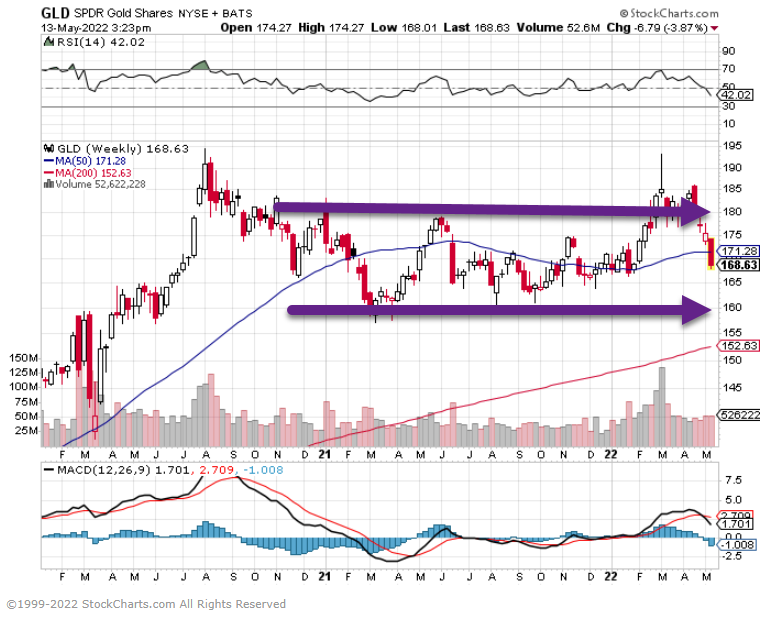
8. Gold Sideways for 2021…Watch for Breakout

www.stockcharts.com


9. Sun Belt Rents Rise as Population Migrates

Bloomberg-Among the 50 largest metropolitan areas, Tampa ranked No. 1 with a 27% surge in rent in the 12 months through January, according to the Zillow Observed Rent Index. Rents also rose 27% in the Miami area, while they were up 26% in No. 3 Phoenix, the data show. According to LinkedIn data, Sun Belt cities such as Nashville, Tennessee; Austin and Tampa are among the largest per-capita recipients of net job migration. Miami didn’t make LinkedIn’s top 10 overall, but it has proved a popular destination for the emerging crypto economy, and has attracted some high-profile new finance and tech firms. By Jonathan Levin

https://www.bloomberg.com/news/articles/2022-02-14/miami-tampa-post-largest-jump-in-rents-as-sun-belt-prices-soar?srnd=premium&sref=GGda9y2L


However…Inflation including rents is starting to flat Line


10. Why your high-performing employees may be slowly disengaging from work

BY WHITNEY JOHNSON5 MINUTE READ

We are experiencing an extraordinary socioeconomic upheaval the media calls the Great Resignation. Half the American workforce is looking for a new job. (I dislike this label and prefer to call the phenomenon the “Great Aspiration.”) Most people aren’t giving up, despite the significant workplace headwinds of the pandemic. Workers are looking for better work, higher compensationgreater purposemore flexibility. Individuals want opportunities to grow. They are emboldened to make their own change.

To model human growth and help people see their progress and proactively direct their own growth, I use the so-called S curve to describe learning. Here’s the framework in summary: The base of the curve is the launch point. Growth is slow as competence is gradually acquired. It can be painful and discouraging and requires appropriate management.

As competence increases, we tip into the sweet spot up the steep back of the “S.” Growth is rapid, engagement and productivity are high. Again, well-informed management strategies can extend this valuable phase. The subject of this article is the final stage: mastery at the high end of the “S.” It’s a plateau that becomes a precipice; we’ve exhausted the growth experience available on a curve, and we’re getting bored. This is where an employee who is very, very good at what they do begins to feel they can’t do it anymore. They need a new S curve to climb.

Why is this so?

ADVERTISEMENT

Our enjoyment and engagement in any activity is driven by neuroscientific processes. Our brains are learning machines, with a default setting for growth. When we are learning, our brains are changing. This is called neural plasticity. Brain cells, the neurons, develop cell-to-cell connections called synapses. As we learn, new synapses form between cells not previously connected. Our synapses grow at a rate commensurate with the challenge level in our brains. Mental effort translates into faster growth of the neural network.

Additionally, our brains are continually running predictive models. When something is new to us, our predictions can be uninformed. When we get it wrong, dopamine in the brain drops. It feels bad. When we get what we expect dopamine levels are steady. When our expectations are exceeded, dopamine is released in high doses. Dopamine is a feel-good chemical; it makes us feel delight. We are naturally drawn to seek the dopamine reward of exceeding expectations.

Consider this analogy: In actual mountaineering, the summit is the goal. It’s the high end of that S curve. But stopping for very long at high altitude can be deadly. Elevation above 26,000 feet is considered the death zone. We consume oxygen faster than it can be replaced–a condition called anoxia. In a short time, bodies and brains start to die from oxygen deprivation. Even if supplemental oxygen is available, physical exhaustion and cognitive impairment can lead to serious accidents and death.

Learning—or rather, the brain activity and chemicals associated with learning—is the oxygen of human growth. At the high end of the S curve, where we are in mastery, our actions are automatic, our competence is high, but our brain rewards are low. We’re not getting dopamine doses delivered sufficiently to make us feel the involvement and delight that we once had. Our interest is dying. This results in stagnation, lower productivity, and disengagement. It becomes difficult to force ourselves to do things we do easily and well.

In his book Behavioral and Neural Plasticity, Michael M. Nikoletseas writes that habituation is an organism’s decremented response to environmental stimuli that it experiences repeatedly over time. Habituation leads to a behavioral plateau, where the organism responds minimally, if at all, to events that it has found to be predictable. “If we present a stimulus many times, the organism will either stop responding, or respond minimally at a lower level. Eventually, no matter how many more times we present the stimulus, we do not see any further change. The curve plateaus.” Nikoletseas adds that humans exhibit decremented responses to events that have become too familiar. We produce nothing but a reflexive response—no new learning—which is neural rigidity.

This is why top performing employees are often the biggest flight risk. It’s why the quality of their work may decline. They don’t just want a new job; they need one. Hopefully, informed leaders have the early, open, and regular conversations with their reports that help both manager and employee map this process. The S curve of the learning model provides a common language to facilitate this critical communication. Leaders can have their finger on the pulse of an employee’s perception of their progress, the most important indicator of when retention is going to become a challenge if a new in-house opportunity is not available. Proactive preparation can ensure that valuable human resources know that their growth is a high organizational priority.

The fascinating 2019 study titled The CEO Life Cycle illustrates this process at the highest level of organizations. It describes the pattern of growth, stagnation, and possible regrowth over time. Tracking the year-by-year financial performance of more than 700 S&P chief executives, the study reveals distinct phases of job performance, starting with the “honeymoon” and concluding with the “golden years.”

Those who last to year 11, when the golden years typically begin, must first survive the death zone of success. The peak of a CEO’s S curve is around year six. It is “often followed by a time of prolonged stagnation and mediocre results,” according to the report. The plateau is a precipice: Many CEOs quit or are fired. CEOs only reach the golden years if they deliberately and repeatedly reinvent themselves on new curves of learning: “CEOs who survive the complacency trap typically go on to experience some of their best value-creating years.”

Once valuable employees who are in decline can be valuable again. They may just need a new version of the curve to climb.


Whitney Johnson is CEO of the tech-enabled talent development company Disruption Advisors, an Inc. 5000 fastest-growing private company in America and one of the 50 leading business thinkers in the world as named by Thinkers50. She is a frequent lecturer for Harvard Business School’s Corporate Learning and she is the author of Smart Growth: How to Grow Your People to Grow Your Company.

https://www.fastcompany.com/90718635/why-your-high-performing-employees-may-be-slowly-disengaging-from-their-work?partner=inc&cid=sf01003

Topley’s Top 10 – February 14, 2022

1. SuperBowl Bets +78% Year Over Year…4 Years Since Legalization…Gambling Companies Revs +1,000%

Barrons-Bookmakers have always been busy on Super Bowl Sunday, but this year will be a bonanza like never before. Bettors are on track to wager $7.6 billion on the game, up 78% from last year, and it’s not because the office pool is getting bigger.

Legal sports gambling has now spread to 30 states and Washington, D.C.—home to more than 130 million. In the four years that it has been legal, both the amount of money bet on sports and the amount counted as revenue by gambling companies have risen nearly 1,000%, to $57 billion and $4.3 billion, respectively, according to the American Gaming Association, or AGA.

In New Jersey, which led the way in allowing sports betting, $10.9 billion was wagered in 2021. That’s $1,200 for every man, woman, and child in the state.

The $22 Billion Wager: DraftKings and Others Are Reaching for a Piece of the Sports-Gambling Prize By

Avi Salzman Follow

https://www.barrons.com/articles/draftkings-mgm-online-sports-gambling-social-cost-51644628419?mod=past_editions


2. The Most Commodities in Backwardation Since 1997

Commodities: Many commodities are in backwardation amid tight supplies.

Source: Bloomberg Read full article

From The Daily Shot https://dailyshotbrief.com/the-daily-shot-brief-february-10th-2022/


3. Timber eyed as a hedge against rising prices as inflation surges to 40-year highs

“Timber, historically, has been positively correlated with inflation fairly directly,” Joe Sanderson of Domain Timber Advisors told Insider, adding that this makes it a good hedge against the rising prices of goods and services.

Isabelle Lee 

https://markets.businessinsider.com/news/commodities/inflation-hedge-asset-timber-wood-lumber-hike-rates-fed-cpi-2022-2


4. TBF Short Bonds ETF….Rally but Still Well Below 2021 Levels

www.stockcharts.com


5. UBER Made More Money Delivering Food than People

Uber wrapped 2021 with strong revenue growth and greater adjusted profitability

Alex Wilhelm@alex /. Today after the bell, Uber reported its fourth-quarter financial performance. The company saw $25.9 billion in gross platform spend, up 51% compared to its year-ago result, and revenues of $5.78 billion, up 83% compared to Q4 2020. The company also reported GAAP net income of $0.44 per share, though that number did include non-operating items relating to investments.

Analysts had expected the company to report a per-share loss of $0.35 against revenues of $5.34 billion, according to estimates shared by Yahoo Finance. Shares of the American company are up just under 6% in the immediate aftermath of its earnings disclosure.

On a per-segment basis, here’s how Uber’s key business units performed in revenue terms:

Image Credits: Uber

The company’s diversification is in full-force in the above numbers, with ride-hailing posting the slowest growth of Uber’s core unit results, even losing the revenue crown to delivery. However, when it comes to generating heavily adjusted EBITDA, things are rather different:

Image Credits: Uber

Here we can see that Uber’s ride-hailing business remains utterly supreme when it comes to the creation of margin for the company’s corporate operations to charge against. In contrast, delivery and freight-focused operations effectively canceled out one another in the quarter. Still, for Uber, posting positive adjusted EBITDA is a useful indication that its business has matured into something less awash in red ink than it once was, helped in no small part by the company’s delivery work shifting its results into the green.

https://techcrunch.com/2022/02/09/uber-4q-earnings-strong-revenue-growth-greater-adjusted-profitability/?guccounter=1

Found at Chartr  www.chartr.com


6. 285 ETFs Hold TSLA….62.6m Shares

What’s one factor about our current markets that doesn’t get enough attention?

One factor about our current markets that doesn’t get enough attention, in my opinion, is the explosion in the number or ETFs over the past ten years and the huge volume traded there.

Tesla is a holding in over 200 different ETFs – when TSLA stock goes higher all these ETFs need to buy TSLA stock to match its weighting and performance. The same is true when TSLA stock goes lower; all the ETFs need to sell.

This is true of any major ETF held stock: when it goes higher, more funds need to buy it (and need to sell it when its going lower). All this is fine when the markets are functioning normally, but in moments of inefficiency, when liquidity dries up, this can lead to huge volatile moves.

So, blame the algos, blame the ETFs, blame the Fed, but this is how fear and selling in a few of the markets’ mega-caps can quickly cascade into a waterfall.

https://www.zerohedge.com/markets/selling-few-mega-caps-can-quickly-turn-waterfall-former-cboe-floor-trader

www.stockcharts.com


7. 50% of Nasdaq and 45% of Small Cap Russell 2000 -20% from Highs.

Schwab-Liz Ann Sonders–Deteriorating breadth was an issue in 2021 but has become more acute in 2022. For example, more than 40% of the stocks on the Russell 2000 index have experienced a drawdown of a least 20% from a recent peak so far this year. For the Nasdaq index, the total is closer to half. These stealth bear markets are having an effect at the index level, with the Nasdaq recently experiencing a maximum drawdown of 17% from its November 2021 peak and the Russell 2000 down (at its worst point) 21% this year from its November 2021 peak.

Bear markets are getting less stealthy

Source: Charles Schwab, Bloomberg, as of 2/4/2022. Past performance is no guarantee of future results.

https://www.schwab.com/resource-center/insights/content/market-perspective


8. BlackRock Planning to Offer Crypto Trading, Sources Say

Clients would be able to trade crypto through the firm’s Aladdin investment platform, said one of the sources.

By Ian Allison

BlackRock headquarters in New York (Jeenah Moon/Bloomberg via Getty Images)

BlackRock, the world’s largest asset manager, is preparing to offer a cryptocurrency trading service to its investor clients, according to three people with knowledge of the plans.

The New York-based company, which manages over $10 trillion in assets for institutions, plans to enter the cryptocurrency space with “client support trading and then with their own credit facility,” one of the people said. In other words, clients would be able to borrow from BlackRock by pledging crypto assets as collateral.

One of the people said BlackRock will allow its clients – which include public pension schemes, endowments and sovereign wealth funds – to trade cryptocurrency through Aladdin (short for “Asset, Liability, Debt and Derivative Investment Network”), the asset manager’s integrated investment management platform. The timetable for unveiling the service is unclear.

BlackRock declined to comment.

The asset manager may have been telegraphing its intentions as early as June when it began hiring for an Aladdin blockchain strategy lead. These days it’s taken as known that Wall Street banks and large financial institutions are edging into crypto, with the likes of Goldman Sachs, Morgan Stanley and Citi carefully choosing strategies.

Read more: BlackRock Wants a Blockchain Strategy for Aladdin, Its Investments Engine

BlackRock has already sent some positive signals to the market regarding crypto, including trading CME bitcoin futures, as per a filing with the U.S. Securities and Exchange Commission. The company also has plans to launch the iShares Blockchain and Tech ETF, an exchange-traded fund tracking an index composed of companies involved in crypto technologies in the U.S. and abroad.

BlackRock also owns 16.3% of MicroStrategy, whose CEO, Michael Saylor, regularly trumpets news about his firm’s bitcoin holdings.

A second person with knowledge of the plans said BlackRock was “looking to get hands-on with outright crypto” and was “looking at providers in the space.”
A third person referred to a working group of “approximately 20 or so” inside BlackRock that is evaluating crypto, adding, “They see all the flow that everyone else is getting and want to start making some money from this.”
https://www.coindesk.com/business/2022/02/09/blackrock-planning-to-offer-crypto-trading-sources-say/


9. New FDA-approved eye drops could replace reading glasses for millions: “It’s definitely a life changer”
A newly approved eye drop hitting the market on Thursday could change the lives of millions of Americans with age-related blurred near vision, a condition affecting mostly people 40 and older.

Vuity, which was approved by the Food and Drug Administration in October, would potentially replace reading glasses for some of the 128 million Americans who have trouble seeing close-up. The new medicine takes effect in about 15 minutes, with one drop on each eye providing sharper vision for six to 10 hours, according to the company.

Toni Wright, one of the 750 participants in a clinical trial to test the drug, said she liked what she saw.

“It’s definitely a life changer,” Wright told CBS News national correspondent Jericka Duncan.

Before the trial, the only way Wright could see things clearly was by keeping reading glasses everywhere — in her office, bathroom, kitchen and car.

“I was in denial because to me that was a sign of growing older, you know, needing to wear glasses,” she said.

It was in 2019 that her doctor told her about a new eye drop with the potential to correct her vision problems, temporarily. The 54-year-old online retail consultant, who works from her farm in western Pennsylvania, instantly noticed a difference.

“I would not need my readers as much, especially on the computer, where I would always need to have them on,” she said.

Vuity is the first FDA-approved eye drop to treat age-related blurry near vision, also known as presbyopia. The prescription drug utilizes the eye’s natural ability to reduce its pupil size, said Dr. George Waring, the principal investigator for the trial.

“Reducing the pupil size expands the depth of field or the depth of focus, and that allows you to focus at different ranges naturally,” he said.

A 30-day supply of the drug will cost about $80 and works best in people 40 to 55 years old, a Vuity spokesperson said. Side effects detected in the three-month trial included headaches and red eyes, the company said.

“This is something that we anticipate will be well tolerated long term, but this will be evaluated and studied in a formal capacity,” Waring said.

Vuity is by no means a cure-all, and the maker does caution against using the drops when driving at night or performing activities in low-light conditions. The drops are for mild to intermediate cases and are less effective after age 65, as eyes age. Users may also have temporary difficulty in adjusting focus between objects near and far.

As of now, the drug is not covered by insurance. Doctors who spoke with CBS News said it’s unlikely that insurance will ever cover it because it’s not “medically necessary,” as glasses are still a less expensive alternative.

For Wright and millions just like her, the new drug is an easy backup solution — with a clear advantage.

“Just a convenience to have that option of putting the drops in and being able to go,” she said.

https://www.cbsnews.com/news/vuity-eye-drops-presbyopia-reading-glasses-vision-fda-approved/


10. The Power of Regret Found at Abnormal Returns Blog

Daniel Pink is the author seven books about business, work, creativity, and behavior, including the #1 New York Times bestsellers Drive and To Sell Is Human. He is also one of our curators here at the Next Big Idea Club.

Below, Daniel shares 5 key insights from his new book, The Power of Regret: How Looking Backward Moves Us ForwardListen to the audio version—read by Daniel himself—in the Next Big Idea App.

1. Regret is universal.

“No regrets.” We hear it everywhere—in hit songs, on tattoos, in celebrity interviews. The message booms from every corner of the culture. Forget the past, seize the future, bypass the bitter, savor the sweet. A good life has a singular focus (forward) and an unwavering valence (positive).

This philosophy makes intuitive sense, but there’s just one problem: It’s dead wrong. Regret is not dangerous or abnormal, a deviation from the steady path to happiness; it is healthy and universal, an integral part of being human. Everyone has regrets. In one study from the 1980s, regret was the second most-common emotion expressed in interviews, trailing only love. In 2008, social scientists found that among negative emotions, regret was both the most experienced and the most valued. And in my own survey of nearly 4,500 Americans, 99 percent of people admitted that they do at least occasionally experience this emotion.

Regret is a universal human experience. The only people who don’t have regrets are five-year-olds, people with brain damage and neurodegenerative disorders, and sociopaths.

In other words, the inability to feel regret—in some ways the apotheosis of what the “no regrets” philosophy encourages—isn’t a sign of psychological health. It’s the sign of a grave disorder.

2. Done right, regret makes us better.

Why is regret hard to take and harder to avoid? Why is it so prevalent? Are we all masochists? No. Well, at least not all of us. Instead, we are wired for survival. Regret makes us feelworse, but it can make us do better. Indeed, the way it makes us do better is by making us feel worse. A half-century of research shows that dealing with our regrets properly—not ignoring them, but not wallowing in them either—delivers at least three benefits.

“Regret makes us feel worse, but it can make us dobetter.”

First, it can sharpen our decision-making. In one study, negotiators fared better on subsequent interactions if they considered previous negotiation regrets. Reflecting on prior regrets can help us avoid cognitive biases, like escalation of commitment to a failing course of action.

Second, regret can elevate our performance on a range of tasks. People who regret their performance on problem-solving tasks do better on their next attempts to solve problems. Even hearing about other people’s regrets can change our thinking for the better. People who heard a story about a woman who narrowly missed out on winning a trip to Hawaii because she switched seats scored 10 points higher on the LSAT, the law school admission test.

Third, regret can strengthen our sense of meaning and connectedness. People who think counterfactually about pivotal moments in their lives experience greater meaning than those who think explicitly about the meaning of those events. Likewise, when people consider counterfactual alternatives to life events, they experience higher levels of religious feeling and a deeper sense of purpose than when they simply recount the facts of those events.
This way of thinking can even increase feelings of patriotism and commitment to one’s organization.

In short, regret can make us better by improving our decisions, boosting our performance on problem-solving tasks, and deepening our sense of meaning.

3. To understand what people regret, look beneath the surface.

Beginning with George Gallup in 1949, pollsters and professors have tried to determine what people regret. Do they have career regrets, education regrets, romance regrets, health regrets, family regrets, financial regrets? And since the mid-20th century, their answer has been unsatisfying.

“People seem to express the same four core regrets, irrespective of the domain of their life.”

People regret a lot of stuff. No domain predominates. But I think I figured out the riddle. What’s visible and easy to discover—the realms of life, such as family, school, and work—is far less significant than a hidden architecture of motivation and aspiration that lies beneath it. In analyzing 15,000 regrets from people in 105 countries, I’ve found that people seem to express the same four core regrets, irrespective of the domain of their life.

One is foundation regrets. Many of our education, financial, and health regrets are actually different outward expressions of the same core regret: our failure to be responsible, conscientious, or prudent. Our lives need some basic level of stability.

The second category: boldness regrets. A stable platform for our lives is necessary, but not sufficient. One of the sturdiest findings in academic research and my own is that over time, we are much more likely to regret the chances we didn’t take than the chances we did.

Third: moral regrets. Most of us want to be good people, yet we often face choices that tempt us to take the low road. When we behave poorly or compromise our belief in our own goodness, regret can build and then persist.

Finally, connection regrets. Our actions give our lives direction, but other people give those lives purpose. Many human regrets stem from our failure to recognize and honor this principle. Connection regrets arise anytime we neglect the people who help establish our sense of wholeness. When those relationships fray, disappear, or never develop, we feel an abiding loss.

Foundation regrets, boldness regrets, moral regrets, connection regrets—these are the four core regrets that people express.

“We are much more likely to regret the chances we didn’t take than the chances we did.”

4. Science offers a systematic way to deal with our regrets.

So, what can we do to turn our existing regrets into engines of progress? Science suggests a three-step process.

First, look inward through self-compassion. Self-compassion, pioneered by Kristin Neff at the University of Texas, begins by replacing searing judgment with basic kindness. It doesn’t ignore our screw-ups or neglect our weaknesses; it simply recognizes that being imperfect, making mistakes, and encountering life difficulties is part of the shared human experience. By normalizing negative experiences, we neutralize them. Self-compassion encourages us to treat ourselves with kindness rather than contempt so that we can move on.

Second, express outward through self-disclosure. We’re often skittish about revealing negative information about ourselves to others. But an enormous body of literature makes clear that disclosing our thoughts, feelings, and actions by telling others—or simply writing about them—brings an array of physical, mental, and professional benefits. Disclosing regret lifts the burden, and by converting the blobby, amorphous negative emotion into concrete words, we make the threat less menacing and can begin making sense of what happened.

Third, move forward through self-distancing. When we’re beset by negative emotions, including regret, one response is to immerse ourselves in them, but immersion can catch us in the undertow of rumination. A better, more effective, and longer-lasting approach is to move in the opposite direction—not to plunge in, but to zoom out and gaze upon our situation as a detached observer. Self-distancing helps you analyze and strategize, examine the regret dispassionately, and then extract a lesson from it that can guide your future behavior.

“Self-compassion encourages us to treat ourselves with kindness rather than contempt so that we can move on.”

5. Anticipating our regrets is useful, but this medicine should come with a warning label.

We often think about regret through the rearview mirror, but it’s also well worth our time to consider it through the front windshield.

Anticipating regrets can often work to our advantage. It slows our thinking. It taps our cerebral breaks, allowing us time to gather additional information and to reflect before we decide what to do. Anticipated regret is especially useful in overcoming regrets of inaction. For example, one well-regarded British study showed that people prompted to agree with the simple statement “if I do not exercise at least six times in the next two weeks, I will feel regret” ended up exercising significantly more than people who did not have regret on their minds.

Anticipating our regrets is often useful, but it should come with a warning label. One problem with using anticipated regrets as a decision-making tool is that we’re pretty bad at predicting the intensity and duration of our emotions, and we’re especially inept at predicting regret. Anticipating regret can sometimes steer us away from the best decision and toward the decision that most shields us from regret.

The best advice, then, is not to avoid all regrets, but rather to optimize them. We know that people tend to regret the same four things, so anticipate those regrets. Do everything you can to build your foundation. Take a sensible risk. Do the right thing. Reach out. But for other possible regrets, chill out. Good enough is often good enough.

Our everyday lives consist of hundreds of decisions, some crucial to our well-being, many inconsequential. Understanding that difference can make all the difference. If we know what we truly regret, we know what we truly value. Regret—that maddening, perplexing, and undeniably real emotion—points the way to a life well-lived.

To listen to the audio version read by author Daniel Pink, download the Next Big Idea App today:

https://nextbigideaclub.com/magazine/power-regret-looking-backward-moves-us-forward-bookbite/32395/

Topley’s Top 10 – February 11, 2022

Good Riddance Ben…The Passed Up Dunk that Ended It All

1. Warren Buffett Returns….BRK/B +7% vs. QQQ -10% Year to Date

This chart shows Berkshire vs. QQQ….50day thru 200day to upside

www.stockcharts.com

2.Energy is Back…….6 Months-XLE Energy ETF +40% vs. ARKK -40%

www.yahoofinance.com

3.Tech Stocks vs. Utilities Ratio Eclipsed 20 Year High

Bespoke Investments–The S&P 500 Technology (XLK) to Utilities (XLU) ratio is another interesting sector ratio chart.  This ratio exploded higher during the late 1990s Tech Bubble, but then it plunged from the peak in early 2000 and continued lower right through the Financial Crisis that ended in early 2009.  After hitting 2.5 at the peak of the Dot Com Bubble, the ratio got all the way down to 0.5 at its low.  Just recently, the ratio briefly ticked above 2.5, eclipsing its prior high made more than 20 years ago.  While the Tech sector has struggled over the last couple of months as the prospect of higher interest rates has weighed on growth stocks, this ratio shows that there is still A LOT to unwind if a new secular shift has begun.

https://www.bespokepremium.com/interactive/posts/think-big-blog/sector-and-index-ratios

4.Interest Rates and Inflation….Disconnect Takes Another Leg Up

Morningstar-Even as many in the markets continue to expect inflation to begin heading lower over the course of 2022, bond prices fell after the CPI data, sending yield on the widely-followed U.S. Treasury 10-year note toward 2%, its highest level since July 2019. Short-term bond yields also rose.

https://www.morningstar.com/articles/1078786/7-charts-on-the-big-cpi-rise-fed-rate-hike-outlook

5.Next Watch is Inverted Yield Curve

Zerohedge

The yield curve is collapsing (2s10s)…

And 7s10s briefly inverted…

The last time 5s30s spread was this low, The Fed folded on its policy tightening stance…

https://www.zerohedge.com/economics/rate-hike-odds-spike-after-hottest-cpi-40-years

6.Michael Batnick with a Hard to Believe Chart….You Can’t Buy a Home if You Make $75k-$100k

Irrelevant Investor Blog….

https://theirrelevantinvestor.com/2022/02/09/animal-spirits-inflation-at-disney-world/

7. Crypto M&A volume jumped nearly 5,000% in 2021 with the average deal size tripling in value, PwC says


Fernando Gutierrez-Juarez/picture alliance via Getty Images

  • The total volume of crypto M&A deals skyrocketed nearly 5,000% in 2021, according to PwC.
  • The average transaction size tripled in value from $52.7 million to $179.7 million.
  • PwC also found that deals shifted back to the Americas with 51% of them occurring in the region.

Business Insider…The total volume of cryptocurrency mergers and acquisitions skyrocketed nearly 5,000% in 2021, mirroring the stunning rally in the price of digital assets, according to PwC.

In a report published in early February, the Big Four accounting firm revealed that the number of deals surged by 4,846% in 2021 with the average transaction size tripling in value from $52.7 million to $179.7 million.

This was boosted by a number of blank-check deals worth billions of dollars. The top 10 deals, in fact, were all well above that level, led by Bullish Limited, which was acquired for $8.1 billion.

Top 10 crypto M&A deals in 2021 by deal size PwC Analysis, MergerMarket, Capital IQ, Crunchbase, Pitchbook, CoinDesk, CoinTelegraph

Meanwhile, the total value of crypto fundraising deals leapt 645% to $34.3 billion in 2021, with the average fundraising amount up 143% to $26.3 million. The previous year also saw players tap into the SPAC boom.

Below is a the top five investors by deal count in 2021, according to PwC.

Rank Investor Name Selected Investments
1 AU21 Capital Chainflip, DEIP, Arcana Network, reBaked, Decentral Games
2 Genesis Block Ventures Highstreet, Coin98 Finance, Pyth Network, Calaxy, Dex Lab
3 Genblock Capital NearPad, Biconomy, ClayStack, DexLab, Unbound Finance
4 Coinbase Ventures Chainflip, MobileCoin, CoinDCX, Liquality, Pintu
5 Moonwhale SoldexAI, Beyond Finance, DeepDAO, Chronicle, Panther Protocol

The firm also found that transactions shifted back to the Americas, with 51% of deals occurring in the region, up from the previous year’s 41%.

However, the Europe, Middle East, and Africa region saw total deal value of $25.5 billion, slightly surpassing that of the Americas despite comprising only 33% of the deals globally. The Asia Pacific region garnered 16% of the total deals at $5 billion.

Digital assets exploded in the past year with various cryptos, from bitcoin to dogecoin, hitting their all-time-highs. The market capitalization of the ecosystem even hit $3 trillion at one point in November, roughly the size of the entire UK economy, amid a broader rally. It has since cooled off and now stands at $2 trillion.

Check out: Personal Finance Insider’s picks for best cryptocurrency exchanges

https://markets.businessinsider.com/news/currencies/crypto-merger-acquisition-volume-jumped-nearly-5000-percent-pwc-2022-2

FTX Chief Reminds Congress That 95% of Crypto Volume Is Offshore–Yueqi Yang

(Bloomberg) — Sam Bankman-Fried, the chief executive officer and co-founder of cryptocurrency exchange FTX, said 95% of crypto trading volume occurs offshore and urged for greater regulatory clarity to attract businesses to the U.S.

“Despite the majority of the intellectual property for the digital asset industry originating from the United States, 95% of volume occurs offshore,” Bankman-Fried told members of the Senate Agriculture Committee during a hearing Wednesday on crypto assets. “The majority of assets are not accessible at all from the United States. It would be great to be able to move that liquidity, that business back on shore.”

Bankman-Fried cited the number as he made his requests for clarity of federal oversight over the digital assets industry. He supported expanding the jurisdiction of the Commodity Futures Trading Commission, which currently regulates the crypto derivatives market, to include spot digital commodity transactions. He also suggested the U.S. create a process to allow digital tokens to be registered in the country, and asked for greater clarity over licensing requirements.

The messages are in line with the request of CFTC Chairman Rostin Behnam, who urged lawmakers during the hearing to give his agency more authority and a bigger budget to oversee trading in the fast-growing cryptocurrency market.

The international FTX.com exchange has seen around $15 billion of assets traded daily on the platform this year, which now represents approximately 10% of global volume for crypto trading, according to Bankman-Fried’s testimony.

https://finance.yahoo.com/news/ftx-chief-reminds-congress-95-183325577.html

Russia to Regulate Crypto, Dispelling Fears of Ban–Anna Baydakova, Tracy Wang

Instead of banning cryptocurrencies, the Russian government has decided to regulate them, legitimizing a $2 trillion asset class in the world’s 11th-largest economy.

A document setting the principles for the regulation of cryptocurrencies appeared on the government’s official website on Tuesday night. Notably, the plan has the support of the central bank, which had called for a ban on crypto mining and trading.

This is the second major regulatory cloud to have been lifted from the global crypto market in a month. India last week took a step toward legalization with a tax on digital asset transfers. While it carries a hefty rate (30%), the tax was seen by many as putting the fifth-largest economy on track toward legitimizing crypto.

In Russia (population 144 million), residents own over 12 million cryptocurrency accounts and about 2 trillion rubles ($26.7 billion) worth of crypto, according to the government’s document (PDF in Russian).

https://finance.yahoo.com/news/russia-license-crypto-exchanges-tax-101022637.html

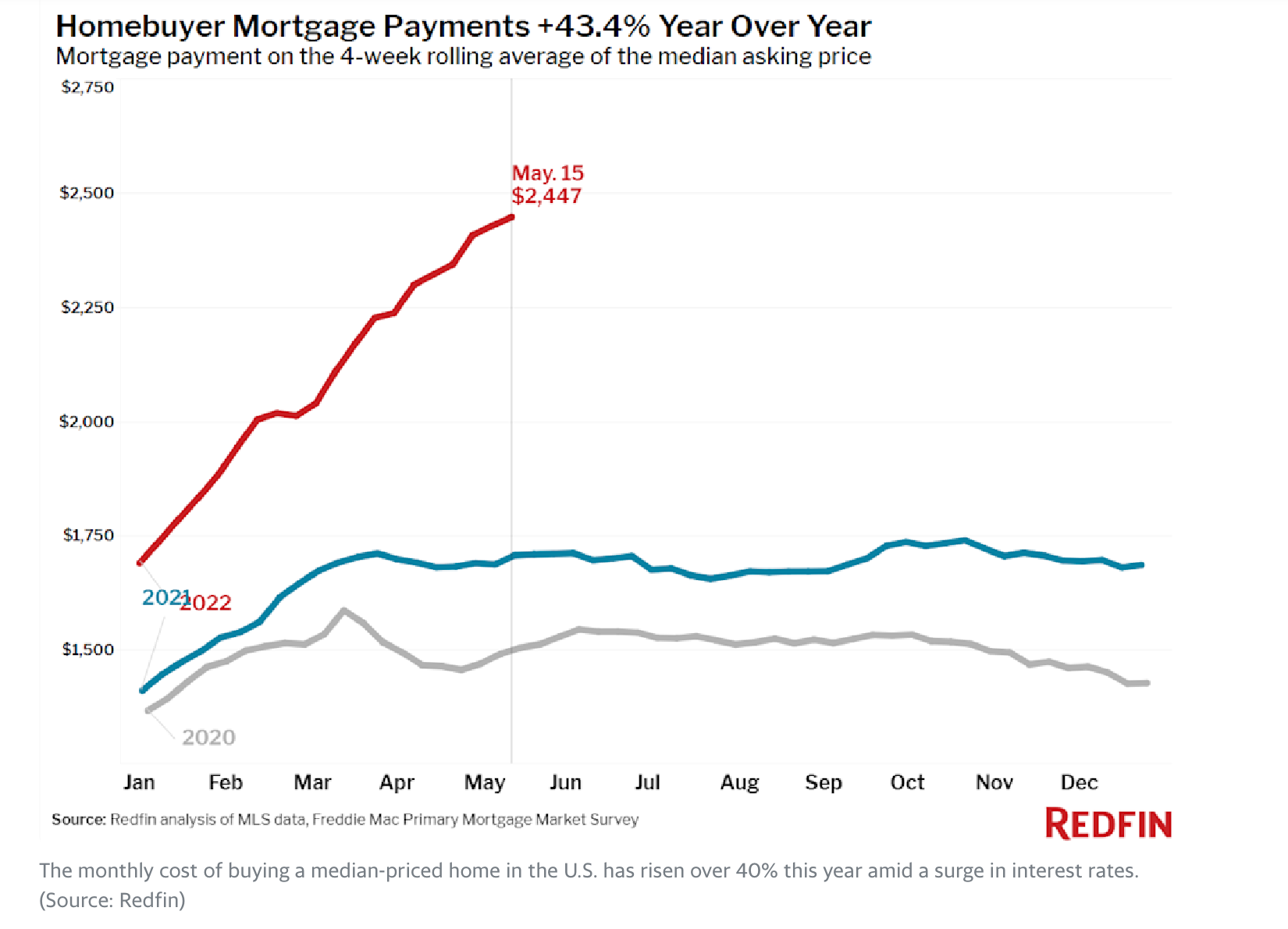
8. U.S. Mortgage Rates Surge to the Highest Level in More than Two Years….4% ?

9.Electric Vehicles Hit 9% of New Cars Sold….Total Cars on Road 6.6m out of 1.4B

CHARTR

Change: fast, but slow

Almost 9% of all new cars sold last year were electric, according to a new report from the International Energy Agency, more than double the 4% that were electric the year before.

That’s a big leap forward in relative terms, but a more modest one in absolute size. The 9% market share figure represents about 6.6 million actual new electric cars, a tiny, tiny fraction of the 1.3-1.4 billion cars that are estimated to be on the road around the world.

Tesla leads, just

The other interesting data point from this report is that Tesla still leads on electric car deliveries, selling 936k cars last year. That’s ahead of VW Group’s 763k and BYD’s 598k (all of which came in China alone).

Recommended reading: The long road to electric cars.

www.chartr.com

10.The 6 Most Passive-Aggressive Email Phrases You Use Without Thinking, According to a Recent Study

An ounce of prevention will keep you from sending the wrong message when you hit ‘Send.’

BY SCOTT MAUTZ, KEYNOTE SPEAKER AND AUTHOR, ‘FIND THE FIRE’ AND ‘MAKE IT MATTER’@SCOTT_MAUTZ

Getty Images

Ahh, the art of the email. I’ve always found it to be a terrible medium for communicating--so much can be misconstrued from an unintentionally curt sentence, a light-hearted capitalization–heck, even an emoji that doesn’t convey your mojo the way you meant.

These are the three biggest problems we create for ourselves with email:

1.     We don’t communicate enough to get the point across (the biggest problem with communication in general is the illusion that it has actually taken place)

2.     We’re not clear enough with the communication

3.     Our communication is taken the wrong way (with irritation or offense)

This last one most often happens when we use terms in email that are, in reality, seen as passive-aggressive by the recipient. A recent 1,000-person study by the email platform GetResponse revealed the top 6 phrases perceived as the most passive-aggressive by the receiver.

I’ll reveal them from the least offensive to the most offensive. You can decide to use this information to help you avoid coming across as passively aggressive, or the opposite, depending on your mood.

6. “Going forward I’d prefer…”

Guess what? Going forward the person who reads this line would prefer you not use it again. The “going forward” part is super passive aggressive because it assumes that what happened in the past didn’t work. The reader reads, “Look, what happened in the past is the past, but you can, and will, correct it in the future.” It’s assumptive and dismissive. Even the “I’d prefer” part is weak; it’s language someone uses when they’re beating around the bush on something.

An alternative (and, again, all alternatives that follow are based on the assumption you actually don’t want to come across passive-aggressive, but if that really is your intent, fire away): The alternative here is a good ol’ fashioned face-to-face conversation. When it comes to behavior changes that need to happen, don’t do it over email. Asking change of someone involves emotions, which are always better handled in person.

5. “According to my records…”

Ugh–so formal and uptight sounding. Is this a cross-examination or an email?

An alternative: “I honestly could have this wrong, but from what I think I know…,” or, “The way I see it is…” Fellow columnist Carmine Gallo wrote a great piece on how Tim Cook uses the power of these 5 words“The way I see it…”

4. “Any updates on this?”

When I read this, I can’t help but picture the sender standing there by my cubicle, peering over the top of it with arms crossed, feet tapping, and a resting jerk face painted on. Try this test: Say “Any updates on this?” out loud to yourself without sounding snippy. Impossible.

An alternative: “I’m guessing you’re swamped–so, sorry to bug you, but what’s the latest on… It would help to know because…” Being brief in email is key so I’m not preaching verbosity here, but this one requires a bit more couching.

3. “Please let me know if I’ve misunderstood.”

What you’re really saying here is “We both know you’ve got this wrong.” This one is the most disingenuous of the lot because the recipient knows that you do not think you have it wrong in any way, shape, or form.

An alternative: If you actually do suspect you got something wrong, pick up the phone for this one. Misunderstandings tend to get more tangled when not ironed out in person. But if you do use email, consider, “I honestly could have this wrong, but…”

2. “Just a friendly reminder…”

It’s not friendly. You know it and I know it.

An alternative: “I honestly hate when people bug me about something, but I’m forced to be ‘that guy/girl’ here in reminding you that… because…”

1. “As per my last email…”

You may as well say, “You obviously didn’t read my last email, so let me try again, dummy.” This one is just plain rude and smacks of the assumption that the recipient has nothing better to do than to sit around waiting for your email to flow into their inbox like gorgeous salmon swimming upstream.

An alternative: “If you don’t mind my reinforcing a point I made before, only because it’s so important…”

We all get enough emails. No one wants more than they need, nor do they want them peppered with what more or less amounts to sass. You can still get your point across by using alternatives.

So, before you hit send, think of the message you’re sending.

https://www.inc.com/rebecca-deczynski/employee-satisfaction-pulse-surveys-great-resignation-how-to-retain-employees.html?cid=sf01003