
1. Biggest Short-Term Large Cap Tech Rally Ever
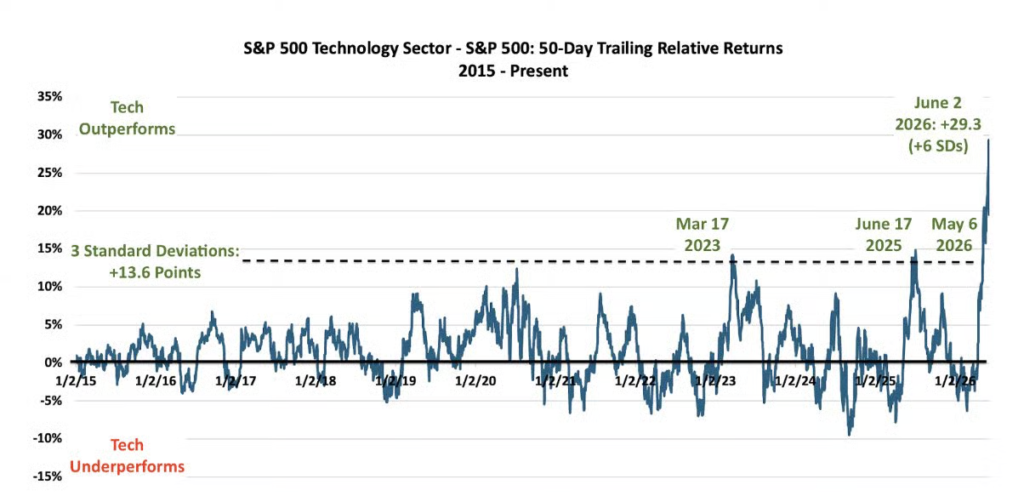
Tech vs. SPX. “US large cap Tech recently outperformed the S&P 500 by +6 standard deviations over the prior 50 days. No other rally since 2015 comes anywhere close. Prior periods of lesser but still statistically significant outperformance suggest further gains, even with Friday’s selloff…”
@datatrekmb
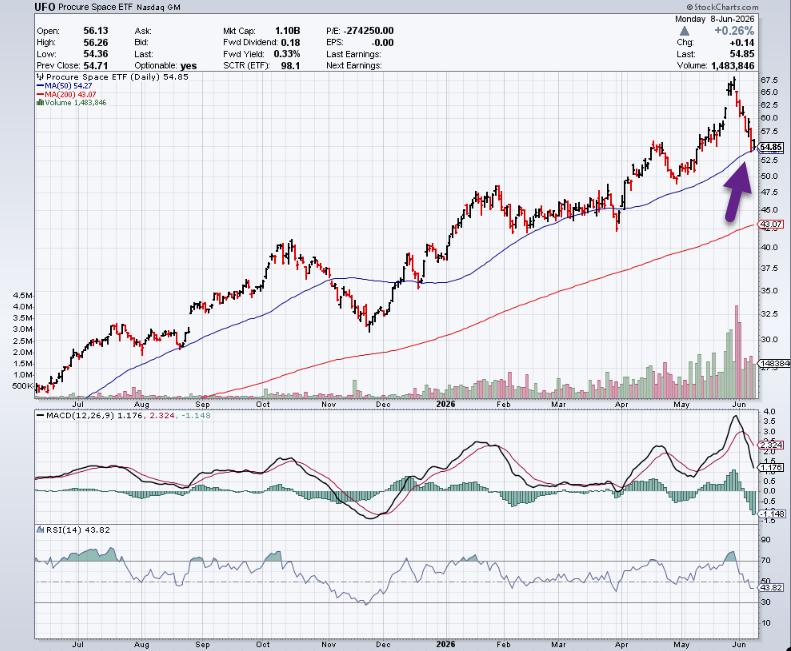
2. Space Related Stocks Run Up to Space X IPO……UFO Space ETF -20% Correction Back to 50 Day
StockCharts
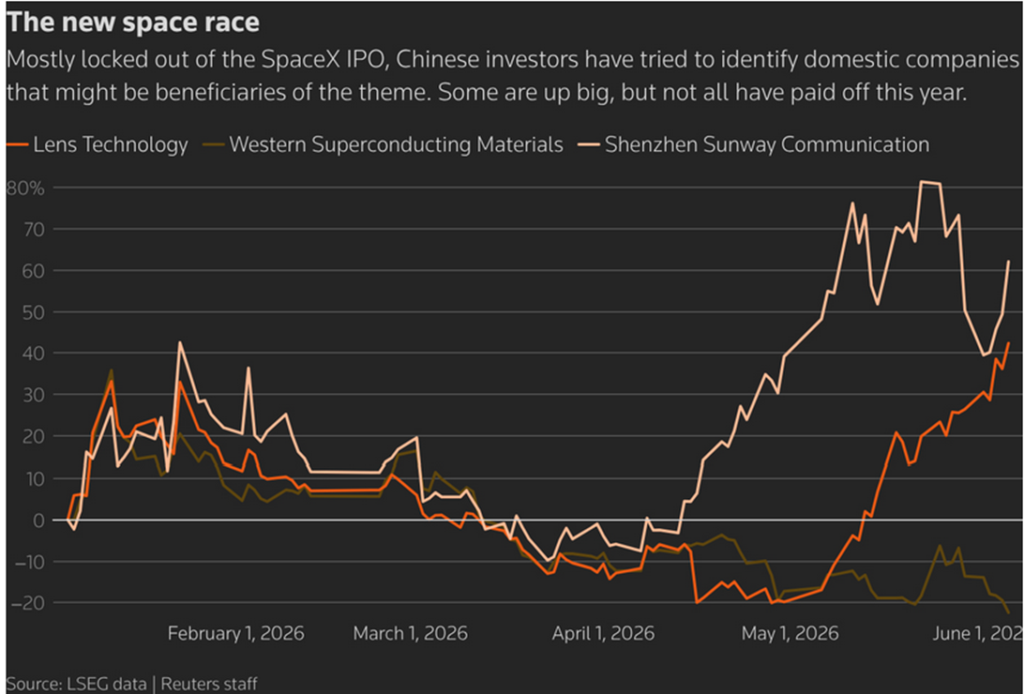
3. Space Frenzy Hitting China
Dave Lutz Jones Trading SpaceX’s $75 billion initial public offering (IPO) is fuelling a frenzy among investors in Asia for exchange-traded funds (ETFs) and supply chain partners linked to Elon Musk’s rocket company that are likely to benefit from the blockbuster deal. Shares of several European companies, including French satellite operator Eutelsat, German satellite maker OHB and Luxembourg-based SES, have posted double-digit gains in 2026.
4. Margin Debt in China Skyrocketing
The Kobeissi Letter
5. IPO Proceeds of Big 3
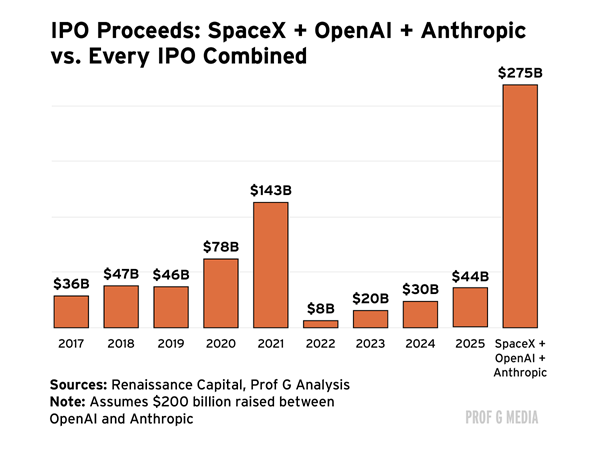
Prof G Media
6. The Stock Market Constantly Renewing Itself
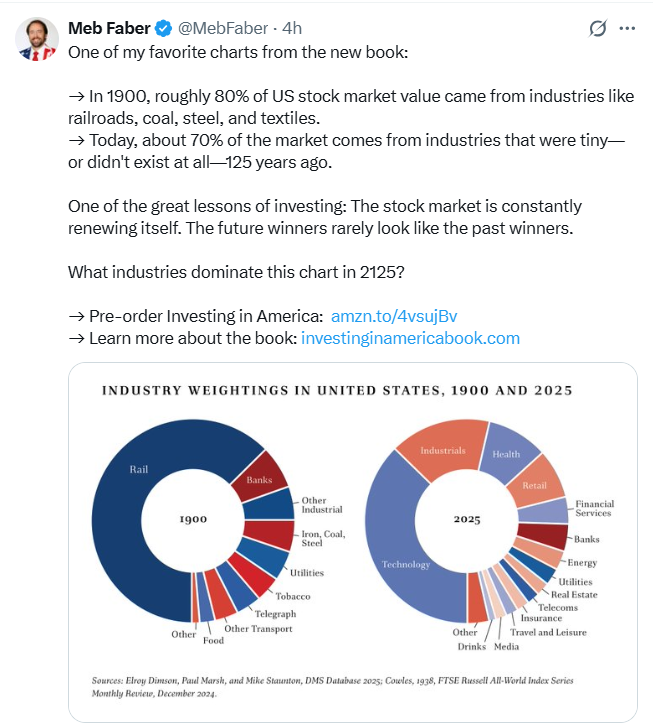
Meb Faber
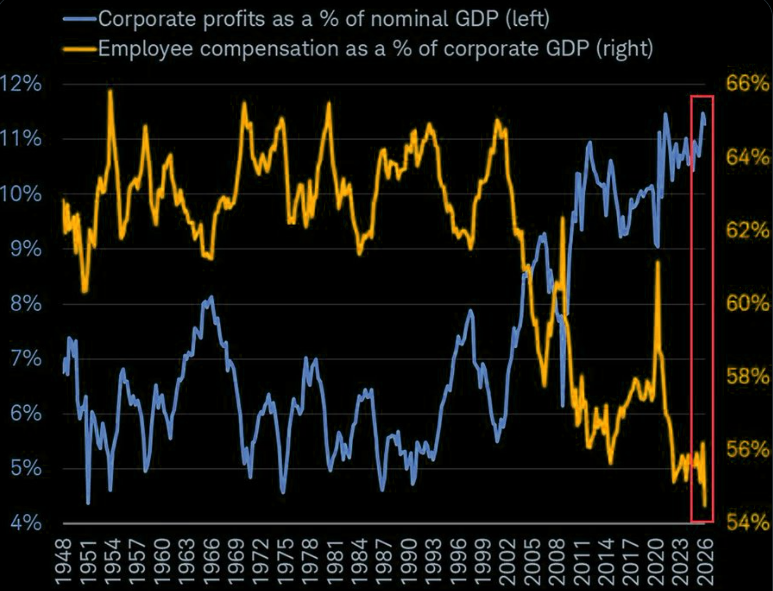
7. Employees Taking Home Lowest % of Corporate GDP Since 1948
Zack Goldberg Jefferies–Schwab shows employee compensation as a % of corporate GDP has fallen to ~54%, the lowest since records began in 1948. Since 2001, employee compensation as a % of corporate GDP has declined -10 points. Over the same period, the corporate profits proportion of GDP has doubled. Workers are keeping less of what they produce than at any point in history.
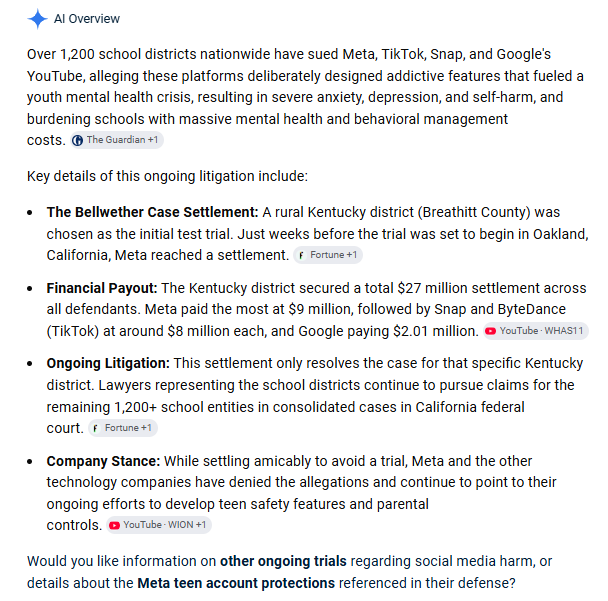
8. 1200 School Districts Lawsuits Against Big Tech
9. Home Markets Where Sellers Outnumber Buyers
Miami, Florida is the strongest buyer’s market in America with home sellers outnumbering homebuyers by 148%.
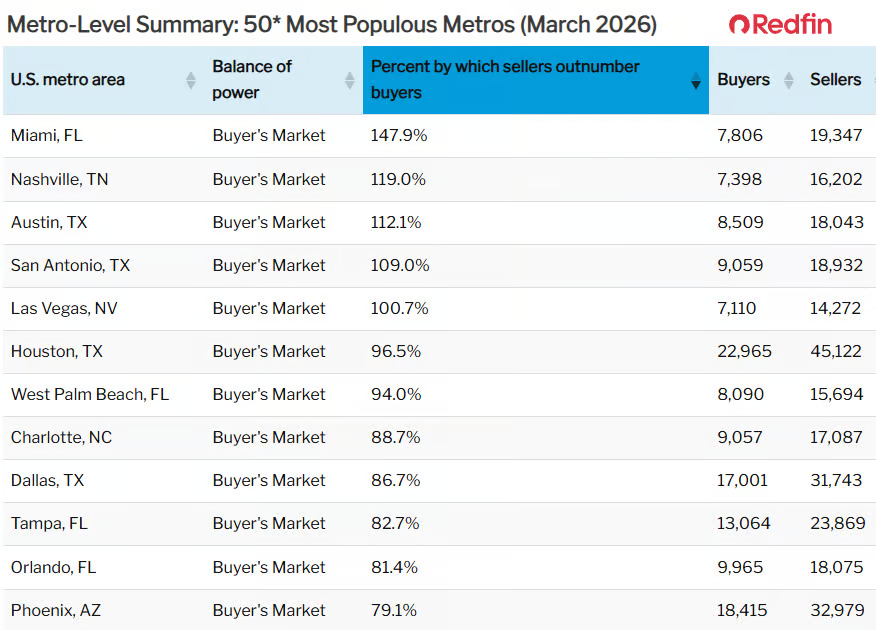
REDFIN Blog
10. Movement Habits Success.com
Movement Habits (14-26)
You don’t need a marathon training program. You need consistent, varied movement woven into your week. A comprehensive umbrella review published in the British Journal of Sports Medicine in 2025 confirmed that regular exercise improves general cognition, memory and executive function in both healthy individuals and those with clinical conditions. The dose threshold is lower than most people think.
14. Move before 10 a.m. when you can. Timing matters. Morning exercise optimizes circadian rhythms, stabilizes cortisol and primes your brain for focused work later. Research has found that people who exercised more than usual on a given day performed better on memory tests the following day.
15. Take a daily walk—even if it’s just 15 minutes. Walking is underrated as a performance input. It increases blood flow to the prefrontal cortex, the region responsible for decision-making and focus. Bonus: Do it outside, and you stack two habits at once.
16. Aim for 150 minutes of moderate activity per week. This is the WHO’s threshold for meaningful health benefits. Broken into five 30-minute sessions, it’s less daunting than it sounds.
17. Add resistance training at least twice per week. Muscle mass is a metabolic reserve. Strength training also improves mood, sleep quality and insulin sensitivity, all of which feed back into cognitive performance.
18. Take a movement break every 90 minutes. Extended sitting degrades circulation, focus and metabolic function. Set a timer. Stand, stretch or walk to the kitchen. Two minutes is enough to reset.
19. Make one weekly workout social. Accountability dramatically improves exercise adherence. A training partner, fitness class or group run removes the daily opt-in decision and adds relational energy on top of physical.
20. Exercise outside at least once a week. The combination of movement and natural environments produces stress reduction effects greater than either alone (see the nature exposure habits below for the research on why this works).
21. Stop counting exercise as a reward for productivity. The most common mistake high-performers make with fitness is treating it as a bonus, something they do if the day goes well. Protect it like a meeting. It is not an optional recovery. It is the input that makes output possible.
22. Track your steps as a floor, not a goal. Fewer than 4,000 steps per day is associated with meaningfully worse health outcomes; 7,000 to 8,000 is a more realistic and effective target for most non-athletes. You likely don’t need 10,000.
23. Don’t use travel as an excuse to stop. Build a minimal-equipment workout routine you can do anywhere: bodyweight circuits, hotel gym standards or walking routes in unfamiliar cities. Consistency across contexts is what separates habits from hobbies.
24. Stretch for five minutes when you wake up. Not for flexibility. For activation. Light movement in the morning increases circulation, reduces cortisol and signals the body to shift from rest to alert mode.
25. Pick at least one physical activity you genuinely enjoy. Discipline is not unlimited. The habits that last are the ones that have some intrinsic pull. If you hate running, stop insisting running is your habit. Find what you’ll actually do.
26. Do something physically challenging at least once a month. A hike, a race, a new class, a sport. Novel physical challenges train the brain’s adaptive capacity and break you out of habituation—the point where comfort becomes stagnation.