
1. Tech Stocks Seeing Highest Fund Flows Ever
Fund Flows — Tech Stocks: tech sector ETFs just recently witnessed their largest inflows ever, and now comprise around 50% of sector ETF assets under management. Investors the world over have a huge amount of confidence in the outlook for US stocks, to put it lightly.
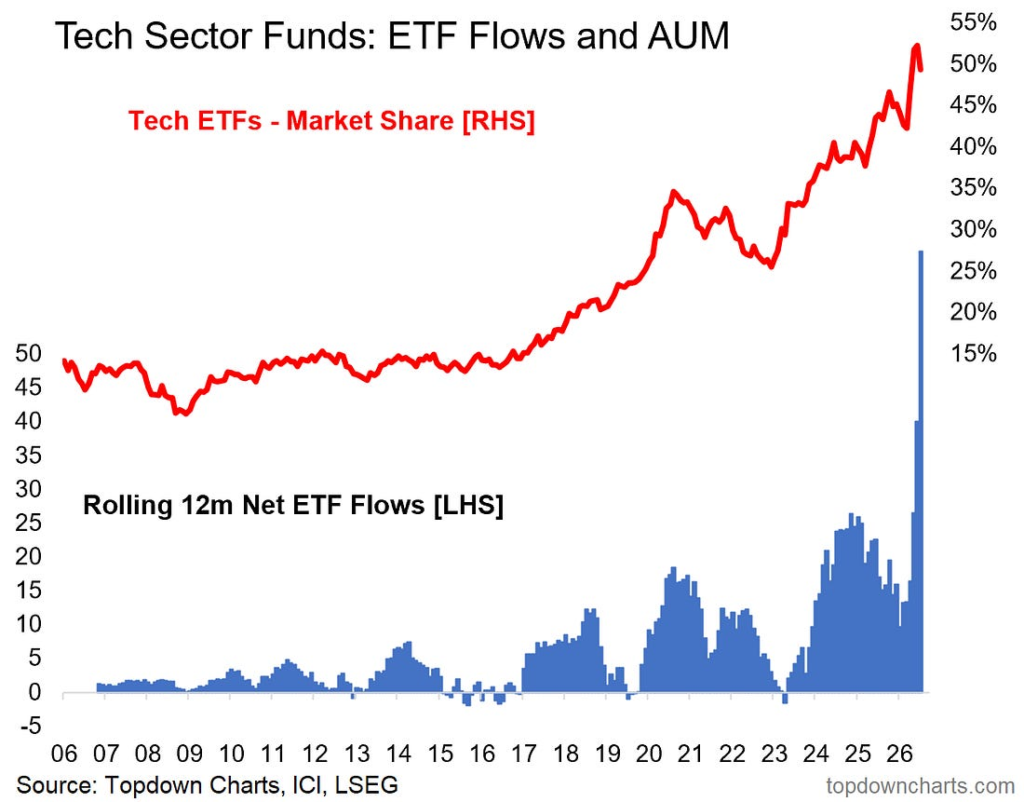
Topdown Charts
2. These Flows Do Not Match AAII Investor Sentiment ….Highest Bears in 12 Months
Bears are at their highest level since May 2025.
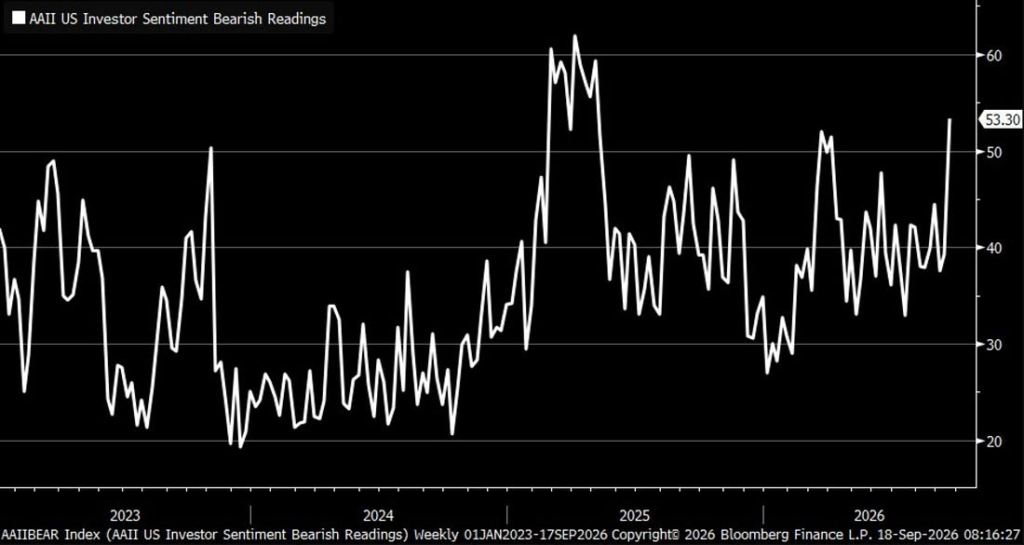
Kevin Gordon
3. More than 50% of S&P Stocks Trading Below 200 Day
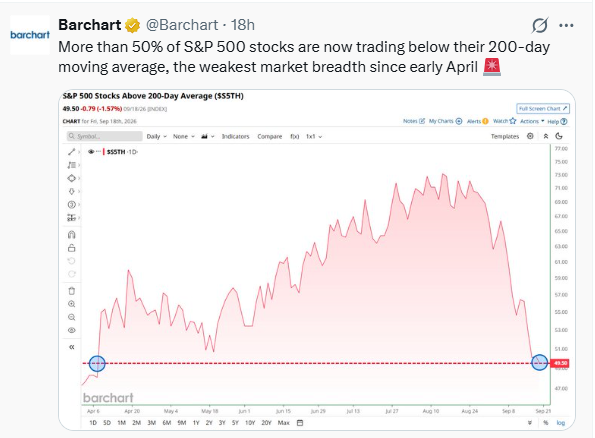
Barchart
4. Bond Yields in Historical Range
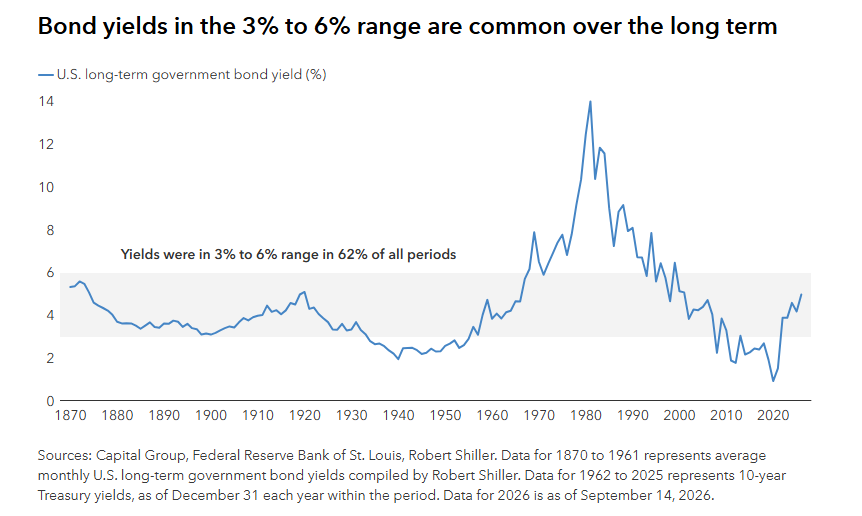
Capital Group
5. Hyper Scaler Debt was Addressed by Fed Chair Warsh
Dave Lutz Jones Trading One interesting point in the presser came in Warsh’s response to the rise in Treasury yields, according to Jonestrading chief strategist Mike O’Rourke. The Fed chair highlighted surging AI-related capex causing intense competition for capital. “Up until now the hyperscalers had asset-light business models generating free cash flow with almost no debt.” Those days are over, and “the rest of the AI trade is highly dependent on debt and equity capital markets to fund expansion.”
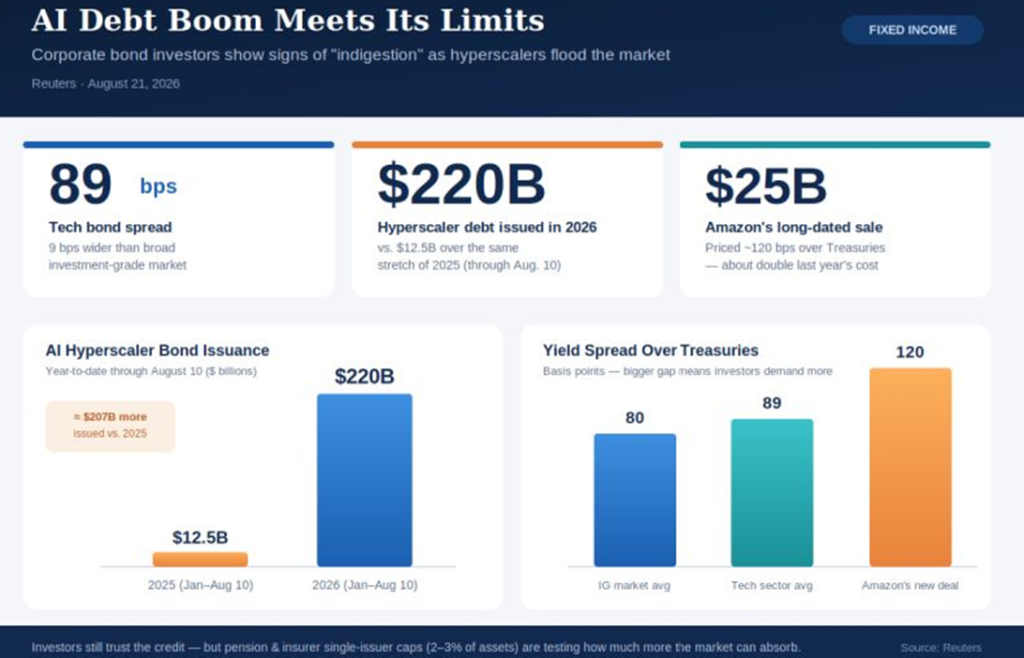
6. Bond Volatility Driving Stocks?
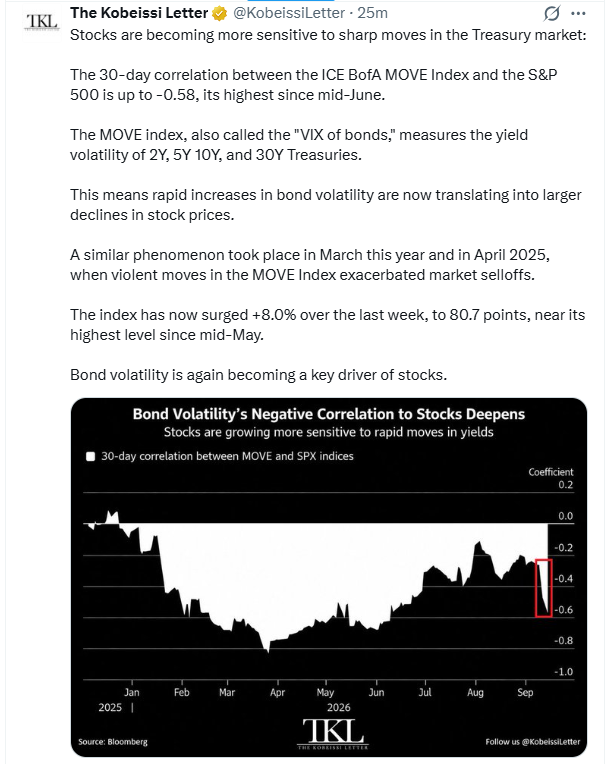
The Kobeissi Letter
7. The Result of Marriott Splitting into Two Companies….Marriott International Service Business Skyrocketed
The existing company would become Host Marriott. Host Marriott would receive virtually all of the physical assets such as real estate holdings, undeveloped land, and project partnerships. Importantly, they would also retain the vast majority of Marriott’s long-term debt.
The newly created company, Marriott International, would retain the service operations and intangible assets. This included the existing management contracts, franchise agreements, trademarks, etc. This business was a cash-generating machine and was left virtually debt-free.
Here’s how those two companies have performed since the separation in October of 1993:
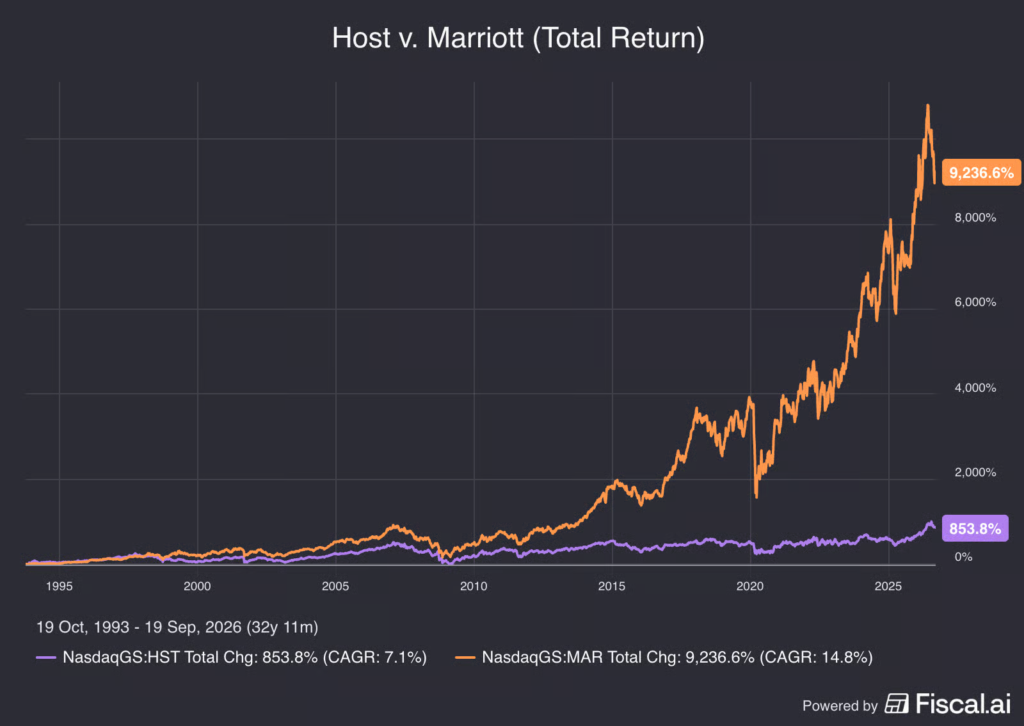
Fiscal.ai
8. Demographics is Destiny…American Population has Shrunk Only During the Two Global Pandemics
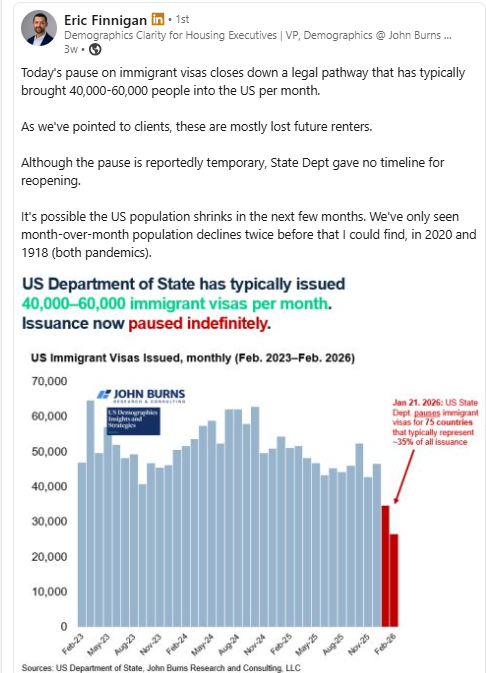
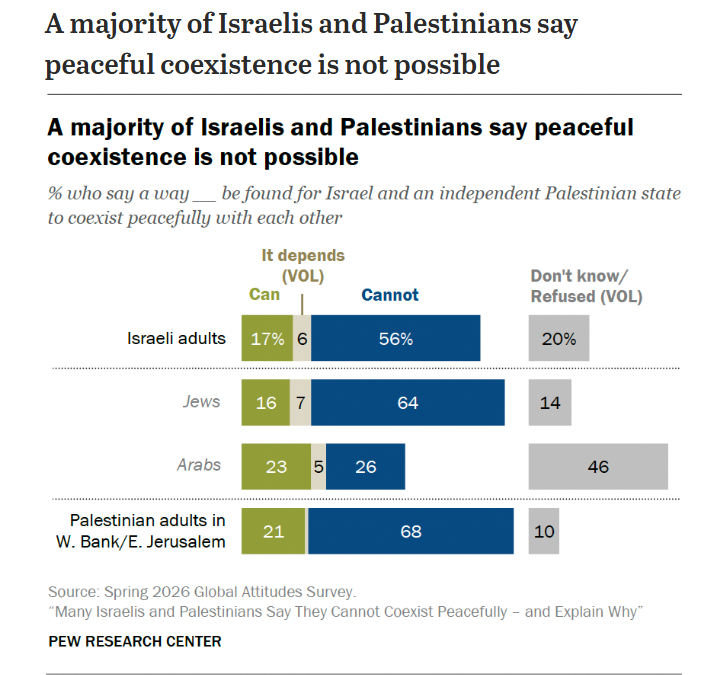
9. Pew Research Poll Israelis/Palestinians
Pew Research Center
10. Dealing with Defensiveness
INC EXPERT OPINION BY JUSTIN BARISO, AUTHOR, EQ APPLIED @JUSTINJBARISO
Three simple phrases for dealing with defensiveness
Another effective method for dealing with defensiveness is to use self-talk. Some expressions that I’ve found helpful:
They don’t know. They don’t know what it’s like to be me or to walk in my shoes, so their comment is likely coming out of ignorance, and my dwelling on it isn’t going to do anyone any good.
I don’t know. In the same vein, I don’t know what it’s like to be them or to walk in their shoes. Maybe they’re dealing with their own insecurity, baggage, or difficult problem in their personal life, and that’s coming out in this situation.
This is not an attack. Perceived attacks aren’t always attacks. Can I see below the surface as to why the person is saying what they’re saying? Is it actually a plea for help, even if not communicated in the best way? Can I shift my focus to see how I can help the other person, to somehow create a win-win scenario, so we go from adversaries to teammates? (This one is most helpful after a pause, if the feelings of defensiveness continue to linger.)
And here’s a bonus tool you can use:
The golden question. How am I going to feel about this in five days? Five weeks? Five months? Five years? This helps me keep things in perspective.
(These are all examples of my “rules” and “words” of emotional intelligence, tools I use to help clients—and myself—manage emotions in the moment.)
All of us are human. Part of that means dealing with feelings of defensiveness from time to time. The key to effectively managing those feelings is to first understand the “why,” the root cause behind them. Then, you can use tools like the ones we’ve discussed to develop a strategy for dealing with those feelings.
The goal isn’t to end the feeling of defensiveness once and for all. But by applying these methods, you can reduce the frequency you experience it, and handle those feelings more effectively when they arise, leading to stronger relationships at work and home. That’s making emotions work for you, instead of against you—and it’s turning emotional into emotionally intelligent.