
1. Best Performing S&P 500 Stocks YTD-Bespoke
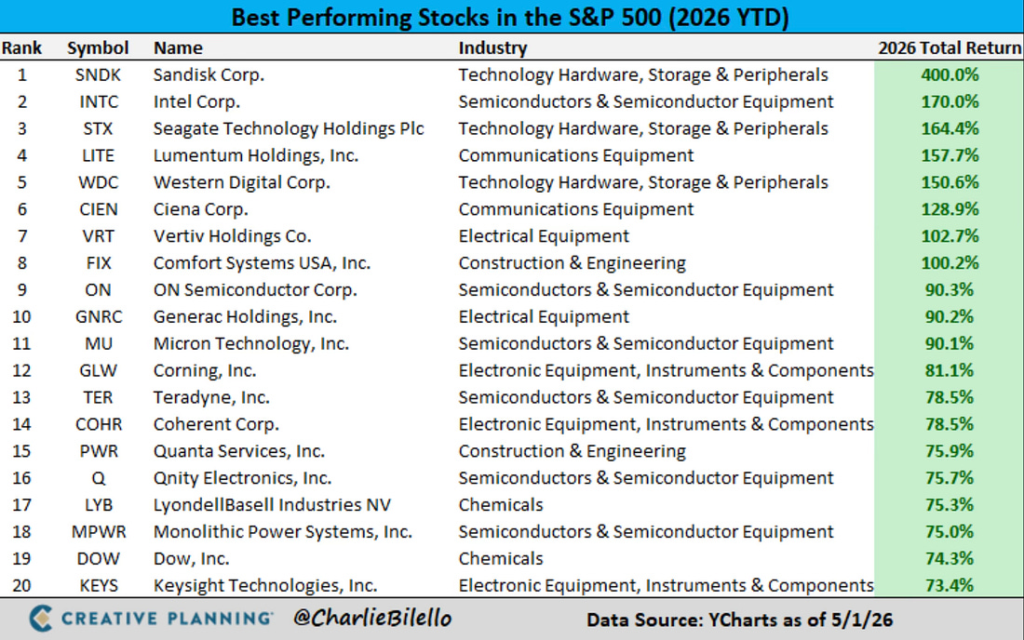
Charlie Bilello
2. Top 10 Companies Account for 34% of S&P 500 Profits
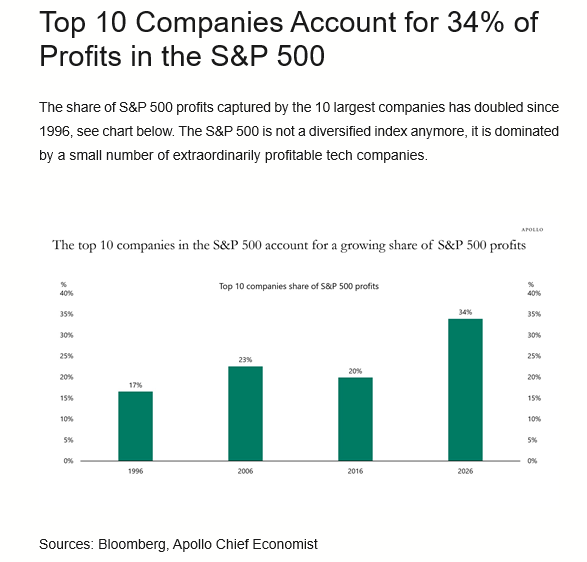
Torsten Slok
3. Tech Stock Relative to Tech Jobs=Higher Profit Margins
Tech stocks vs. Tech jobs. “If you need a ‘stock market is not the economy’ visual, this is a good candidate: Tech stocks relative to the market: all-time high. Tech jobs relative to all jobs: all-time low.”
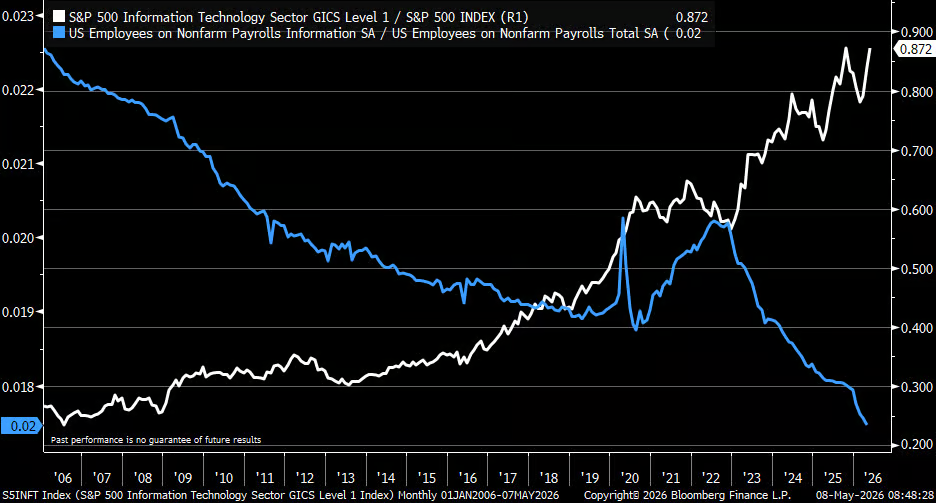
Kevin Gordon
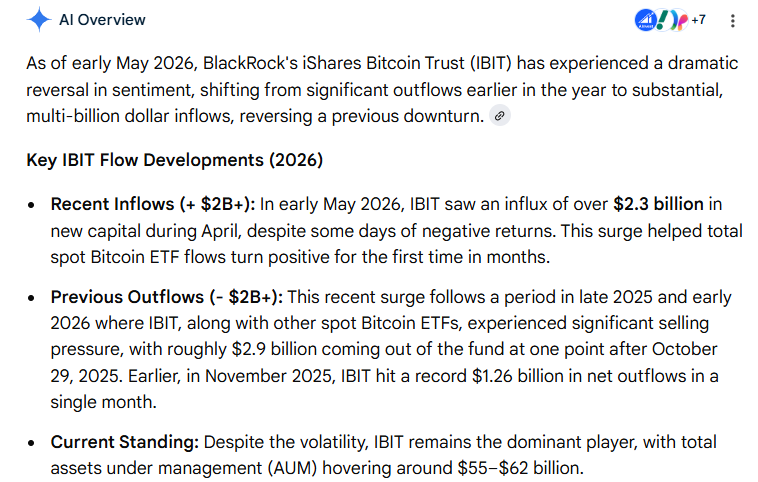
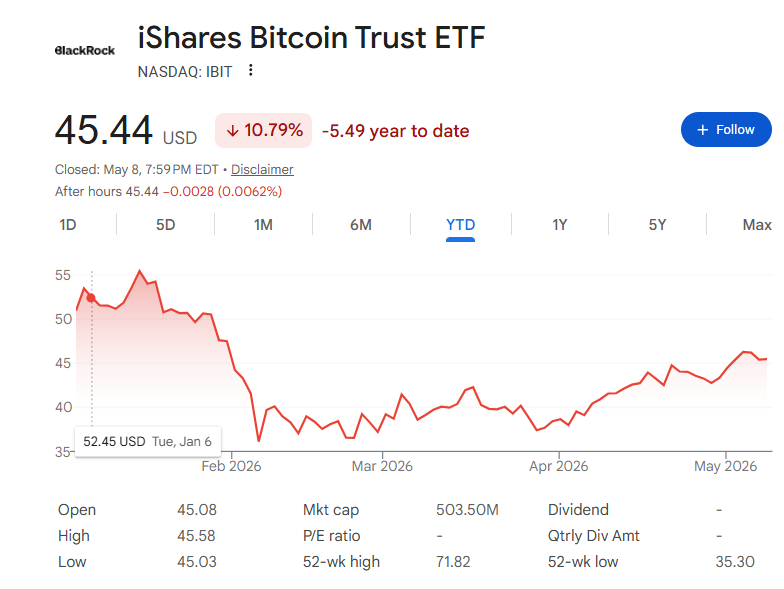
4. Bitcoin ETFs Flow Reversal….-$2B of Outflows to +$2B of Inflows …IBIT -10% YTD
5. Claude May Grow 80X?
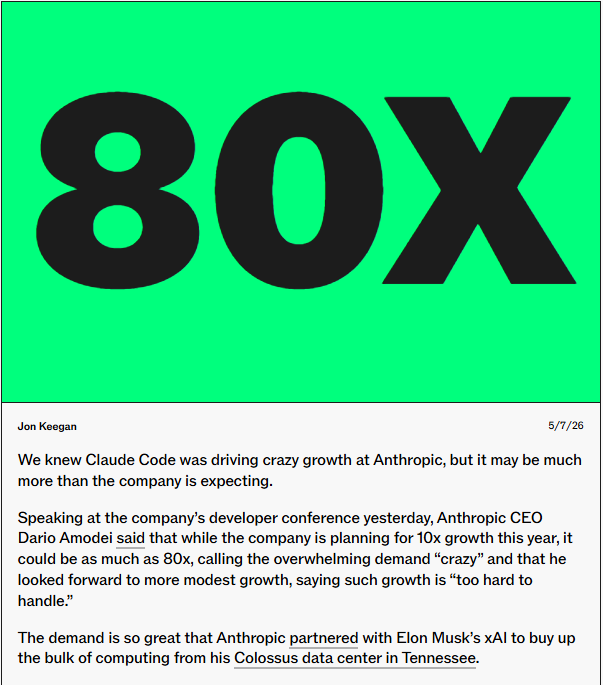
Sherwood
6. Cloud Revenue Going Parabolic
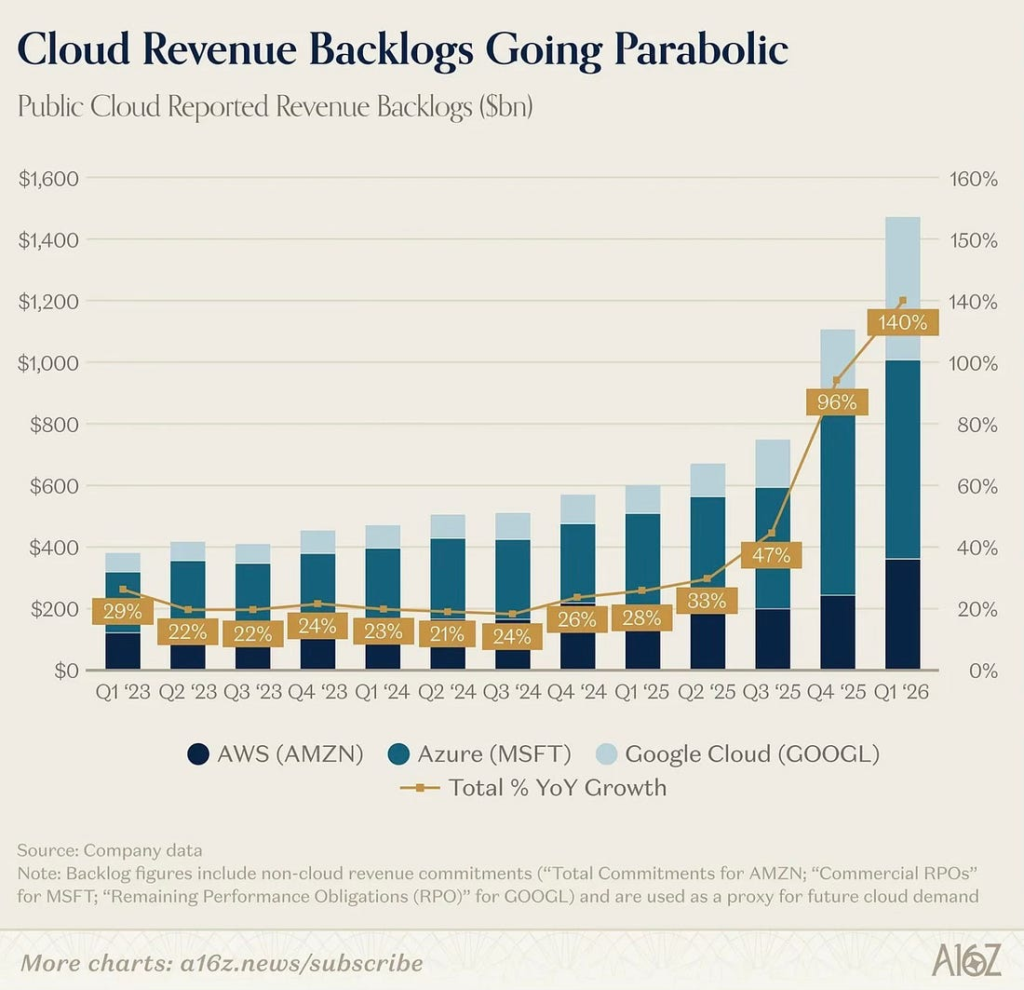
The Transcript
7. Small Cap Still Room for Catch Up….Small Stock IWM +34% vs. Large Cap SPY +87% 5- Year
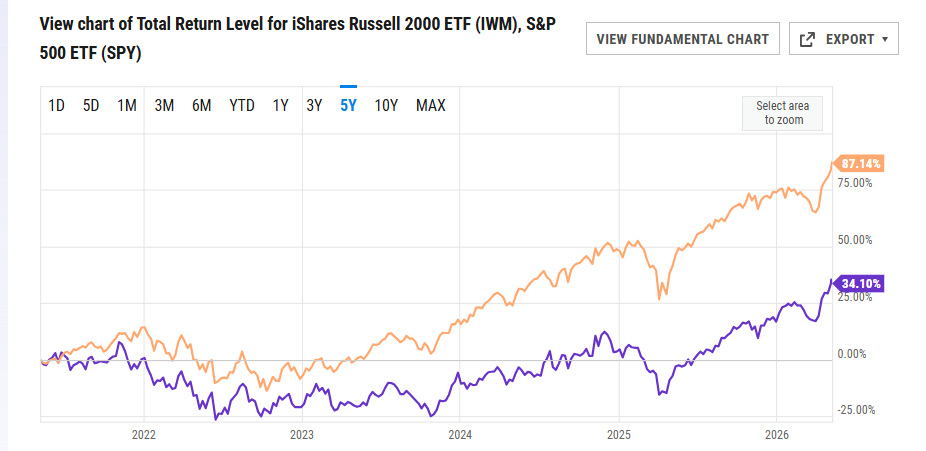
Ycharts
8. AI FEAR–New Technology Adds Jobs Over Long-Run….Spreadsheets were Predicted to Kill CPA’s Instead they Grew 4x
Prof G-But the tasks professionals perform have never been fixed, according to Eldar Maksymov, an accounting professor at Arizona State University. After the release of the first electronic spreadsheet in 1979, people predicted accountants would face mass unemployment. Instead, after adjusting for population growth, the number of accountants increased 4x over the next 40 years. “In every major occupational group that adopted computers heavily, employment grew faster than in groups that did not,” Maksymov wrote. “Computers eliminated specific tasks within jobs — but the resulting cost reductions created so much new demand that the occupations expanded overall.” Looking at AI, he concludes that the future of every knowledge profession hinges on a single question: Is human demand for analysis, oversight, and assurance elastic?
I believe it is. Case in point: computer programmers. They’re coding less and thinking bigger, according to journalist Clive Thompson, who interviewed more than 70 programmers in Silicon Valley and at small firms across the U.S. As he noted, “a coder is now more like an architect than a construction worker.” One executive Thompson interviewed put it this way: “I have never met a team at Google who says, ‘You know, I’m out of good ideas.’ The answer is always, ‘The list of things I would like to do is nine miles longer than what we can pull off.’” But as the cost of execution drops, new demand will likely come from areas that previously didn’t have access to programmers. “Several developers suggested that the number of software jobs might actually grow,” Thompson wrote. “An untold number of small firms around the country would love to have their own custom-made software, but were never big enough to hire, say, a five-person programmer team necessary to produce it.”
https://scottgalloway.profgmedia.com/newsletters/
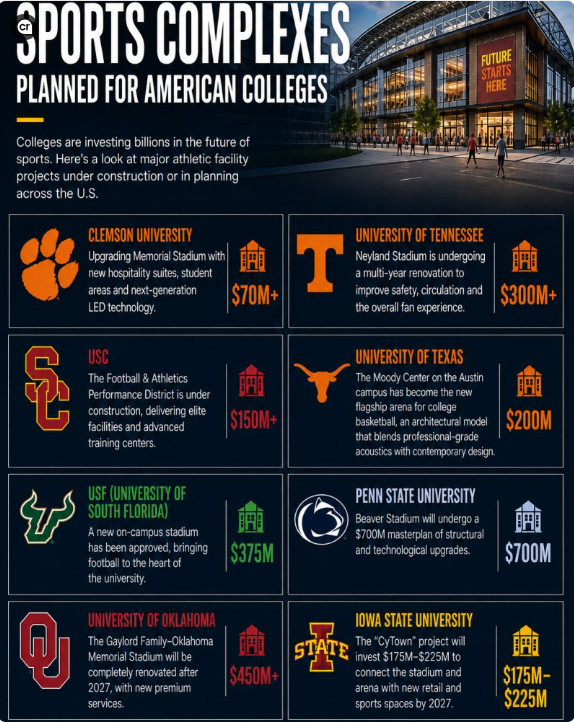
9. The Arms Race in NCAA Sports is Accelerating
10. Untreated Hearing Loss Is Tied for the #1 Modifiable Dementia Risk Factor (And 1 in 4 Americans Already Has Damage)-Arnold Daily
1. Untreated Hearing Loss Is Tied for the #1 Modifiable Dementia Risk Factor (And 1 in 4 Americans Already Has Damage)
Untreated hearing loss is one of the single largest modifiable contributors to dementia worldwide, accounting for roughly 7% of cases globally, according to the 2024 Lancet Commission on dementia prevention. It’s a ranking most people never encounter because they don’t think of their earbuds as a brain-health variable. The leverage is behavioral: noise-induced hearing damage is virtually 100% preventable, yet 1 in 4 American adults under 70 already shows signs, with roughly half of cases tied to everyday sources like headphones and concerts. For those with existing loss, the 2023 ACHIEVE trial found that hearing aids cut the rate of cognitive decline nearly in half over three years. And for everyone else, keeping headphones below 60% volume and wearing earplugs at concerts costs almost nothing, but it might help protect against a less healthy future.
2. The Most Sophisticated Form of Avoidance Is A Full Calendar
The most complicated form of inaction isn’t laziness; it’s the elaborate busyness system high-achievers build to avoid the thing they actually want to do: full calendars, reasonable excuses, and one more “almost ready” that functions as an anchor dressed as wisdom. Arnold’s insight, drawn from repeated first-step commitments across bodybuilding, Hollywood, and politics, draws a clean line: commitment isn’t confidence — it’s what precedes it, and what makes confidence possible after the fact. The practical instruction is deliberately small: name one thing you’re currently protecting instead of using, then design the smallest step that requires real courage and leaves the dock — an email sent, a registration completed, something said out loud to one person.