
1. Best Hedge Against Inflation=U.S. Stocks
What’s been the best hedge against inflation over the past 50 years? (Podcast Discussion)
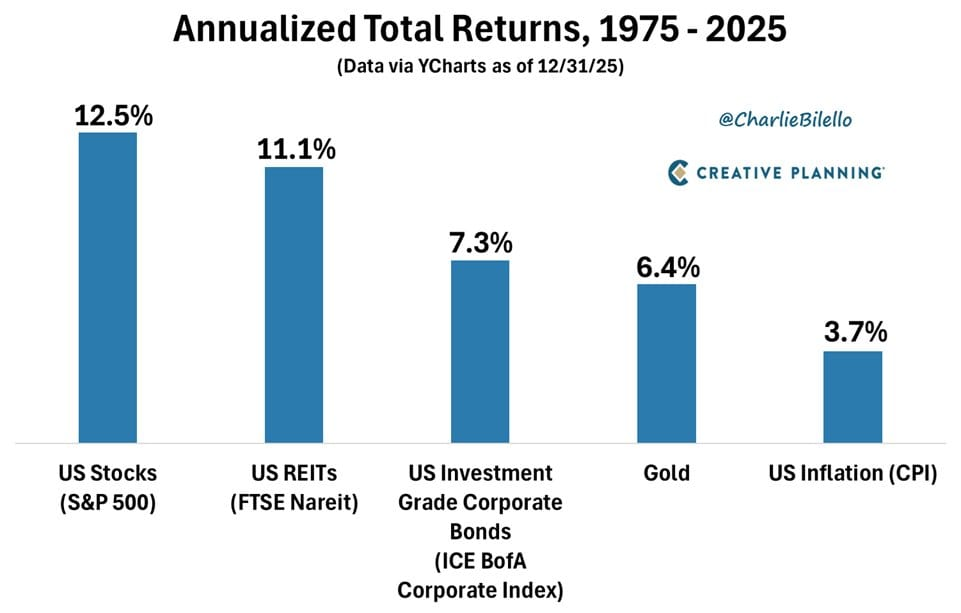
@Charlie Bilello
2. Rising Gas Prices Historically Non-Event for Stocks
Rising gas prices are painful for households but a non-event for stock market investors.
The Iran conflict has pushed prices at the pump to the highest in four years and consumer sentiment to a record low, yet a ProCap Insights analysis of historical data suggests these bearish metrics have zero impact on S&P 500 returns.
Digging through 537 non-recession months of data since 1976, forward returns for stocks had almost no correlation to gas prices.
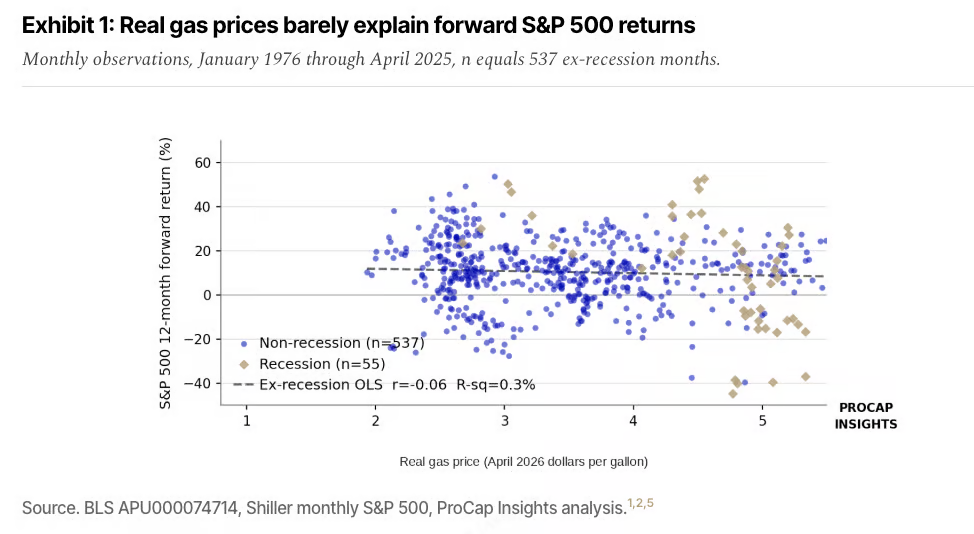
Chart courtesy of ProCap Insights
The ProCap report found that the top decile of real gas readings produced an average 12-month forward return of 11.2%, statistically indistinguishable from the typical return of 11.4% across all years.
Five of the six gas-spike episodes since 1979 left the S&P 500 flat or higher over the next year.
The one clear exception was 2007-08 — a 23.5% drawdown that credit spreads and the yield curve had already flagged before equities broke.
Gas has climbed 53% since the war began February 28, lifting the AAA national average to $4.56 a gallon.
Meanwhile, the University of Michigan’s consumer sentiment index fell to 44.8 in May, the lowest ever, with nearly 40% of respondents volunteering gas prices as the reason.
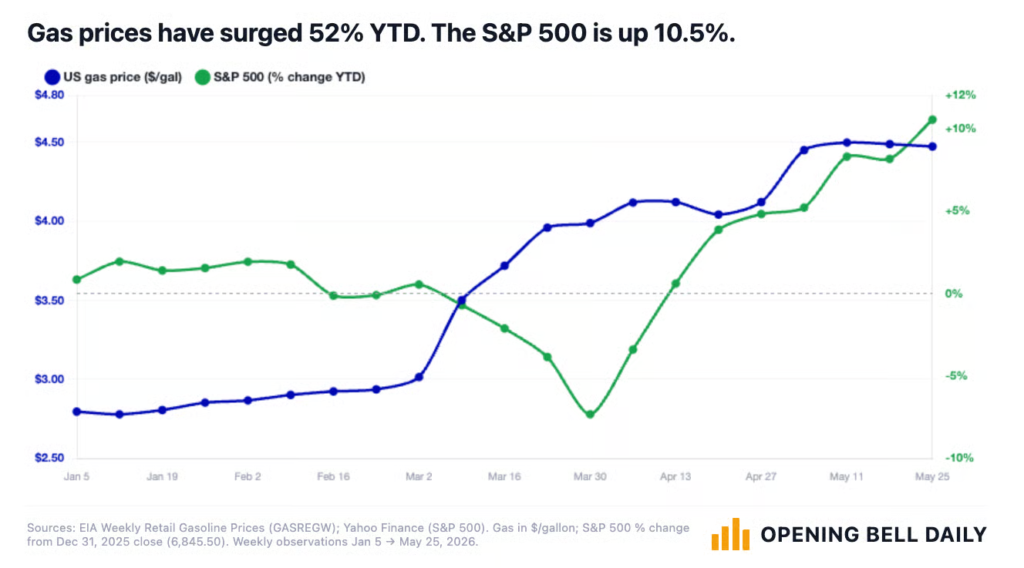
Opening Bell Daily
3. Q2 2026 Highest Increase in Earnings Estimates Since 2021
Q2 EPS revisions. “In a typical quarter, analysts usually reduce earnings estimates during the first two months of a quarter … The second quarter marks the largest increase in the bottom-up EPS estimate during the first two months of a quarter since Q3 2021 (+3.8%).”
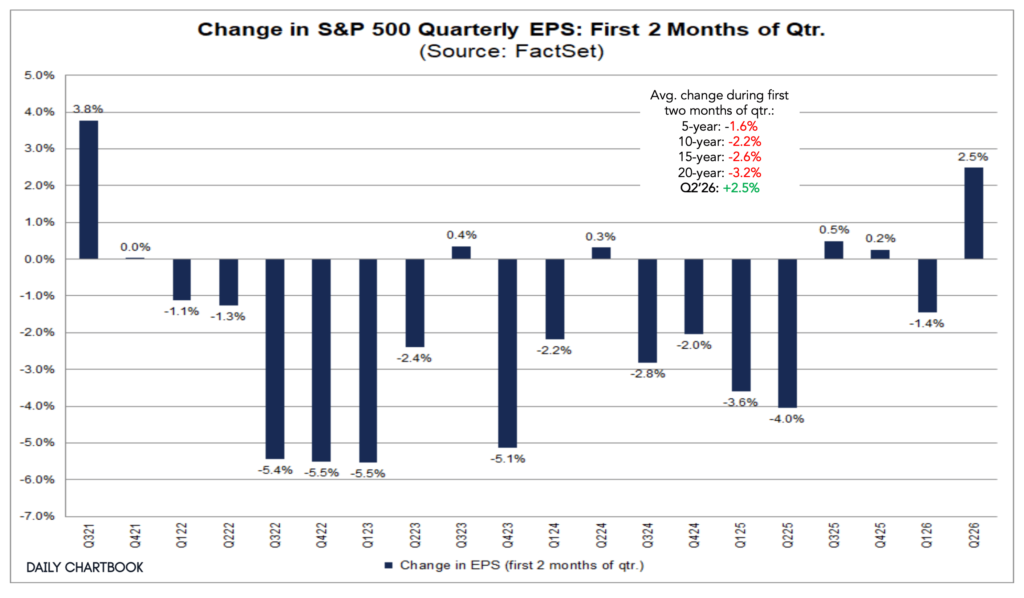
John Butters – FactSet
4. May Gains Over 5% Historically Bullish for Stocks
History says to take that seriously. When May gains more than 5%, the S&P 500 has never been lower one year later. That stat has held every single time since 1950, with an average return of nearly 20% in the following 12 months.
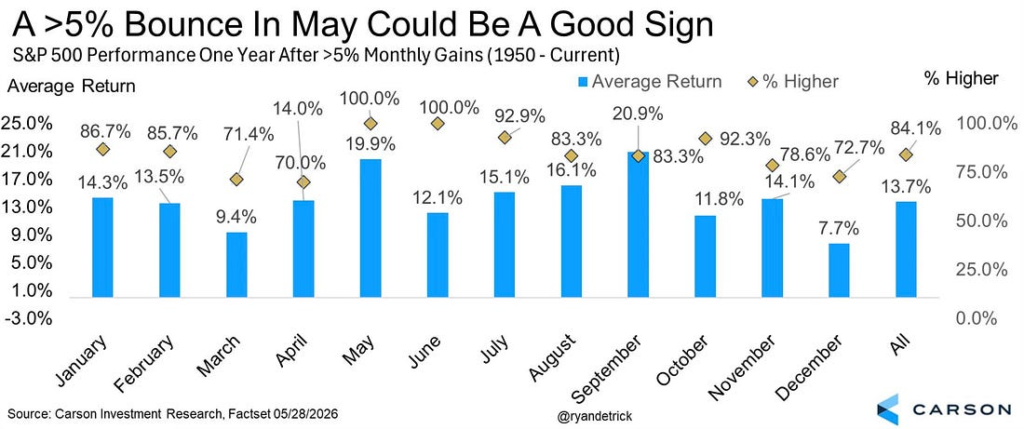
Ryan Detrick
5. Taiwan Chip Business Using 25% of Electricity on the Island
The chip boom is becoming so dominant that the semiconductor sector now consumes roughly 25% of all electricity on the island.
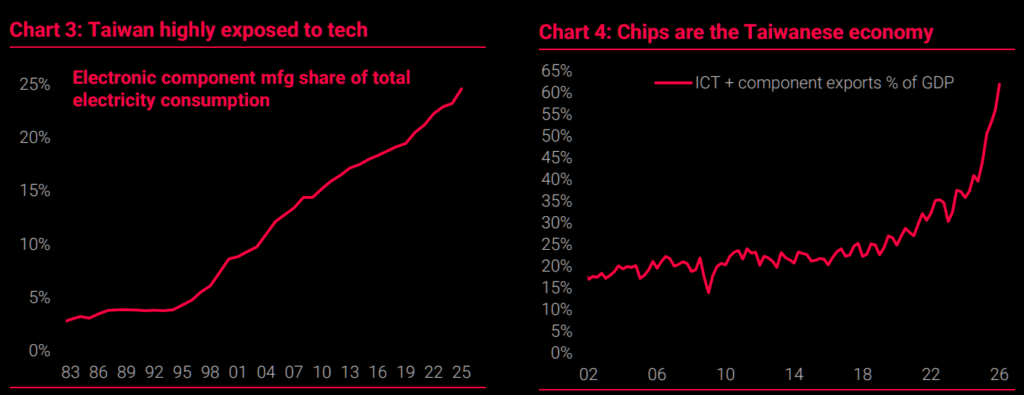
ZeroHedge
6. Leveraged Single Stock ETFs $65B Inflows
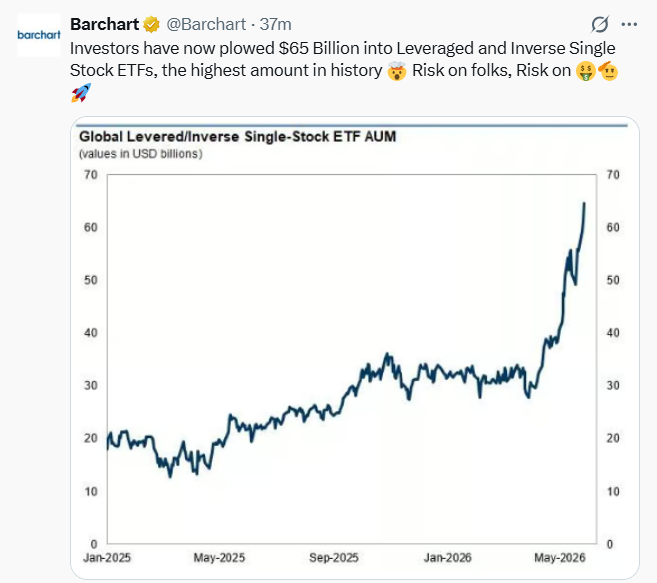
Barchart
7. Space ETFs 5x Increase in AUM Going into Space X IPO
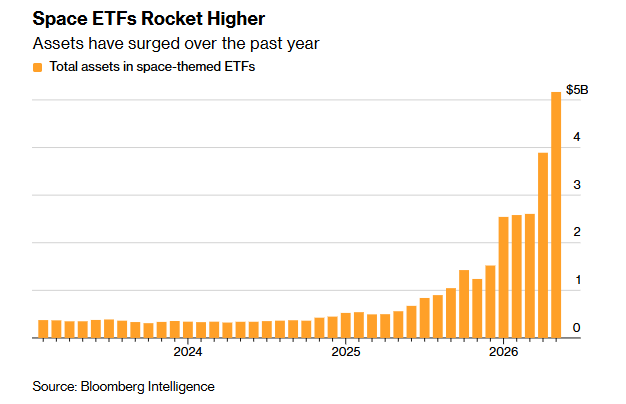
Bloomberg
8. U.S. Military Is Quietly Guiding Ships Through the Strait of Hormuz
U.S. Central Command has helped around 70 commercial ships pass through the strait in the last three weeks, an official said.
Vessels waiting to pass through the Strait of Hormuz. Before the U.S.-Israeli attacks on Iran, well over 100 commercial ships a day passed through the strait.Credit…Reuters
By Peter Eavis and Eric Schmitt
American forces in recent weeks have helped coordinate the passage of dozens of commercial vessels through the Strait of Hormuz, according to U.S. officials, even as travel through the waterway remains risky amid stalled negotiations to end the war with Iran.
U.S. Central Command has guided around 70 commercial ships through the strait, traveling into and out of the Persian Gulf, in the last three weeks, one of the officials said, speaking on condition of anonymity to discuss operational matters. The U.S. officials added that most of the vessels had turned off their transponders to avoid detection when going through the narrow waterway.
The officials declined to say what type of vessels were going through and what route they took, but one official indicated that at least one route was not close to the Iranian coastline. Ships passing near Iran without obtaining Iranian approval face the threat of an almost-certain attack by Iranian drones or missiles, U.S. officials said. Shipping analysts say the U.S.-guided crossings appear to follow routes that are closer to Oman.
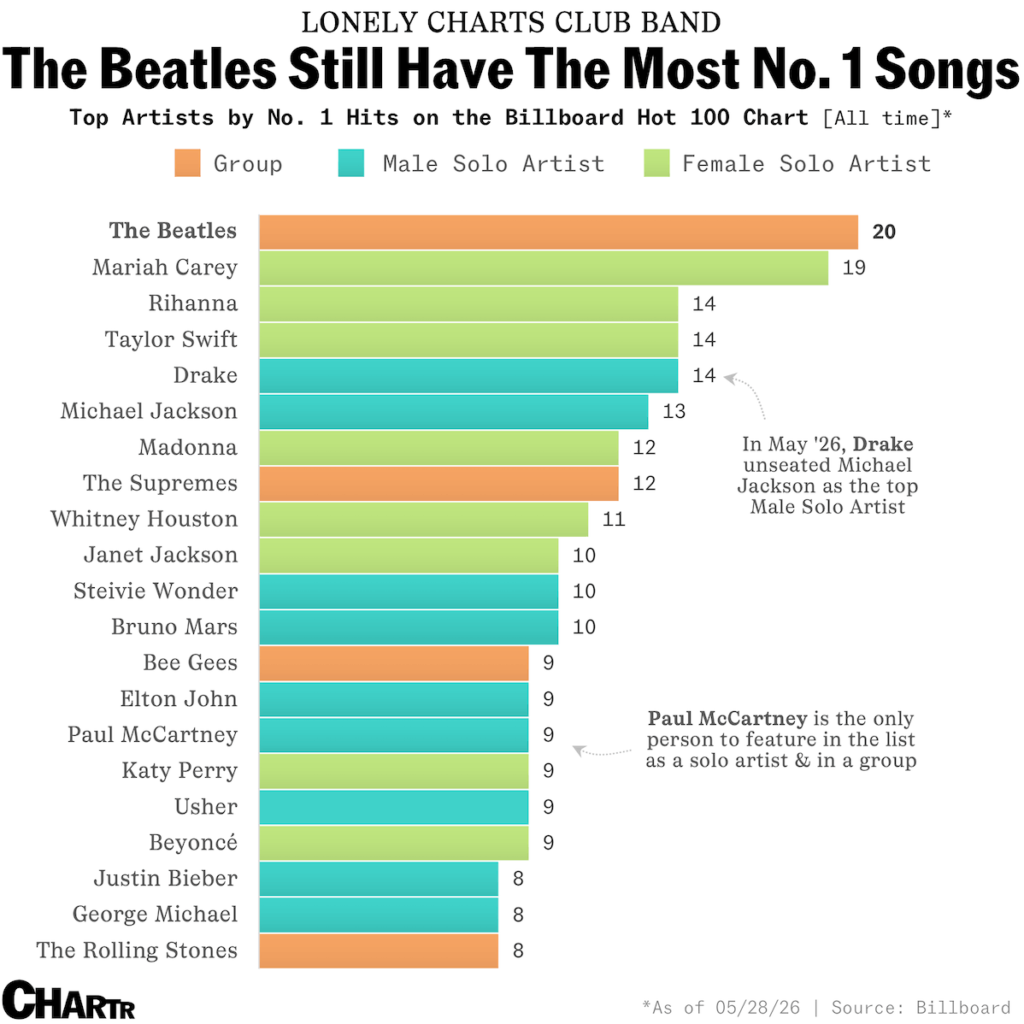
9. Artists with Most #1 Hits
10. Shane Parish on Soft Feedback
Most people give soft feedback because they care more about how the conversation feels than about whether the problem gets solved. This is selfish.
Another thought on this… A lot of people don’t actually want direct feedback; they prefer something softer. When they hear direct feedback, they focus on how it makes them feel and not the substance. If you’re focusing on how feedback makes you feel and not its accuracy, you’re robbing yourself of the opportunity to get better.
Exceptional results happen when people are willing to give direct feedback and to hear it.
Commentator Ezra Klein on reading:
“Part of what is happening when you spend 7 hours reading a book, is you spend 7 hours with your mind on the topics in the book, grappling with them, drawing connections, having thoughts you would not otherwise have had. And so without that process of grappling, without those hours inside that book, it doesn’t get inside you. It doesn’t impress itself upon you. It doesn’t change you. What reading and writing and processing information is supposed to do is change you.”
This is fascinating to think about through the lens of AI. You can get the answer without much effort, but you can’t get the understanding.