
1. AI Sales Crosses Above Estimated Depreciation
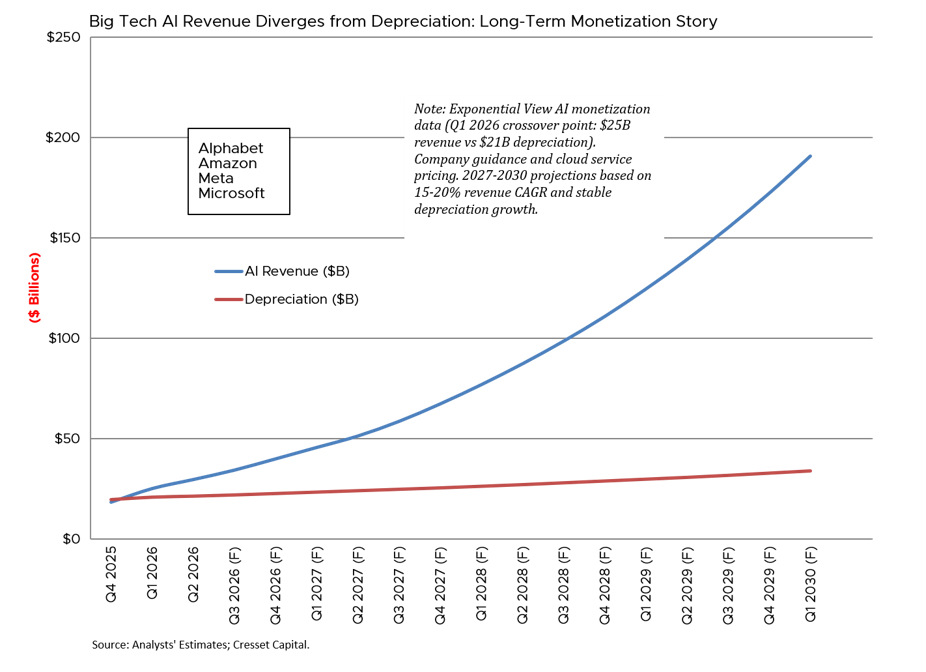
Jack Ablin Cresset-There are, however, early signs that the economics may be turning in the industry’s favor. Data from research firms tracking AI adoption found that global AI sales from hyperscalers and neo-cloud providers reached approximately $25 billion in the first quarter of 2026, surpassing the $21 billion in estimated depreciation tied to their data center investments. That crossover point, where new AI revenue exceeds the depreciation burden of the assets built to generate it, represents a meaningful inflection. It does not mean the return on the entire invested capital base is positive, nor does it resolve questions about competitive saturation or technology obsolescence. But it does suggest that the spending cycle may be approaching economic sustainability.
Cresset
2. A veteran investor says this is the most important AI capex number that markets should watch-BI
Big Tech earnings are here, and the AI capex discussion is set to be the main event for investors. Rather than focusing on what the current quarter—or even the rest of 2026—may hold, tech veteran Gene Munster says investors should be looking further out.
With the AI trade looking “tired,” the investor says that Q2 earnings are the only thing that can generate fresh momentum. Munster, a longtime tech analyst and now managing partner at Deepwater Asset Management, says he’ll be focused most on what hyperscalers are planning for 2027.
“Within the hyperscaler capex conversation, the key metric is next year’s growth,” Munster wrote. “As it stands, the Street is looking for 23% growth in CY27. That said, whisper expectations have moved higher following Google’s $85B and Amazon’s $25B capital raises, which will be spent predominantly late this year and into next year.”
Munster charted the four major hyperscalers’ projected capex estimates for the coming year, and predicts that spending likely won’t cool as much as Wall Street anticipates, leaving a large part of the bull thesis intact.
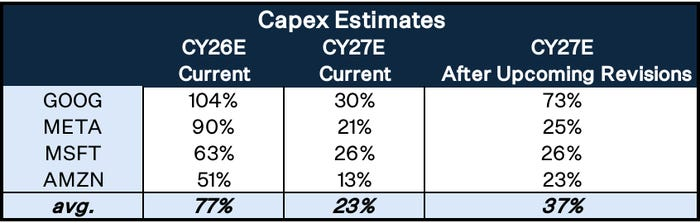
An earnings chart provided by Munster in his analysis on his web page. GeneMunster.com
Munster noted that much of his analysis centers on the themes of AI capex spending and cloud computing in Q2 tech earnings, which he described as equally important for investors. But while he made it clear that he sees Microsoft as the weakest link in the hyperscaler chain, even its 20% year-to-date decline isn’t enough to derail the AI infrastructure boom.
“The biggest narrative risk in the capex conversation is Microsoft, where I believe management will guide investors to an unchanged 26% growth rate for next year,” Munster noted. “If three of the four hyperscalers raise their outlook, I believe the AI infrastructure narrative will remain intact.”
https://www.businessinsider.com/tech-earnings-ai-capex-hyperscalers-msft-nvda-gene-munster-2026-7
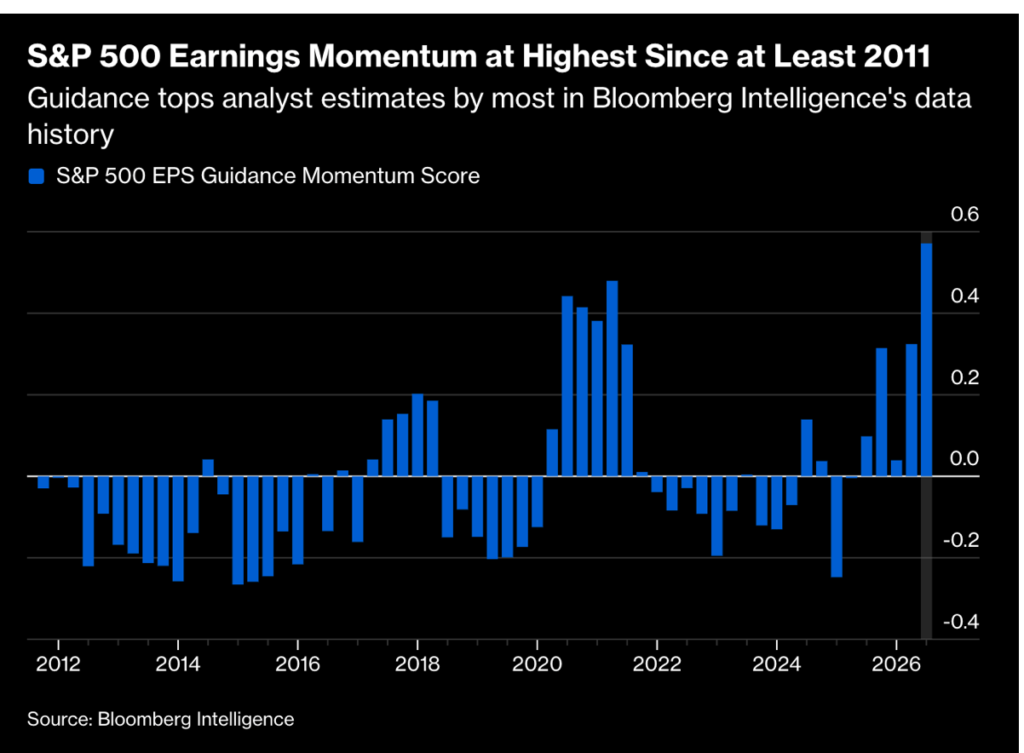
3. S&P Earnings Momentum at Highest Since 2011
4. Corporate Insider Sales
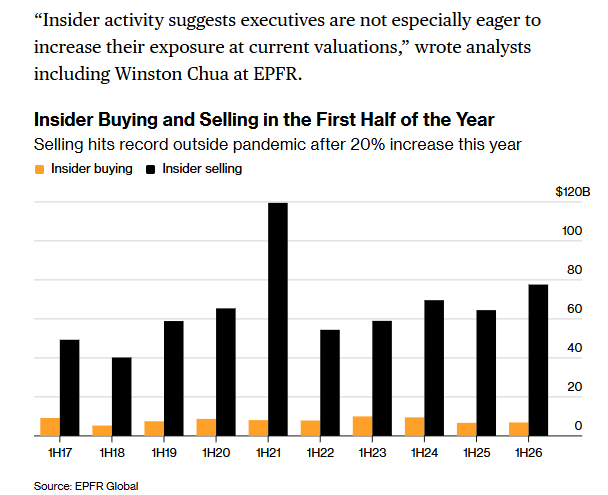
US Corporate Insiders Are Selling Stocks at a Near Record Pace By Michael Msika US executives are selling shares at the second-fastest pace in more than 20 years, a classic red flag to some investors because it suggests people with the most corporate knowledge are wary about markets.
Bloomberg
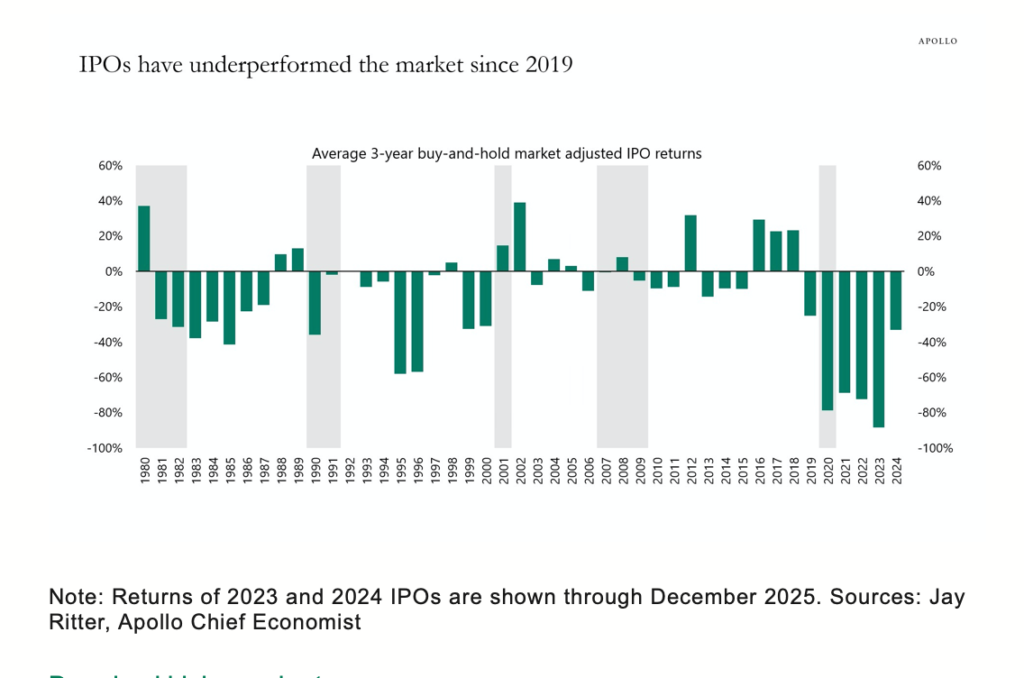
5. IPO Performance Since 2019-Torston Slok
The Daily Spark
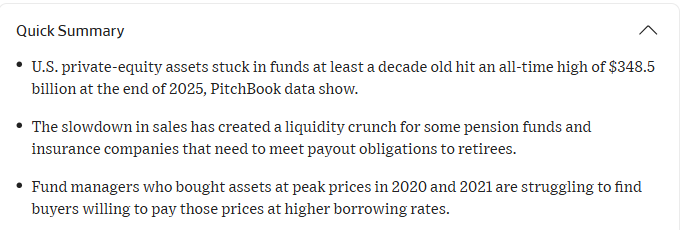
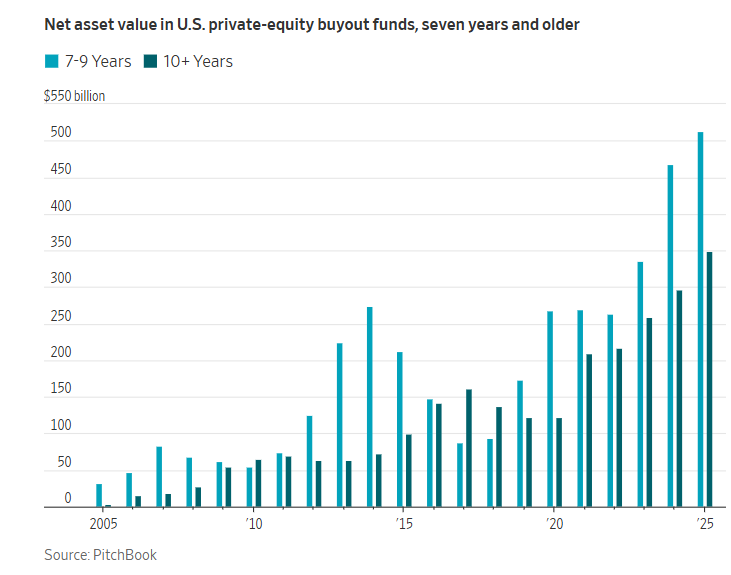
6. Private Equity 7-10 Year Deals…Will they IPO?
WSJ
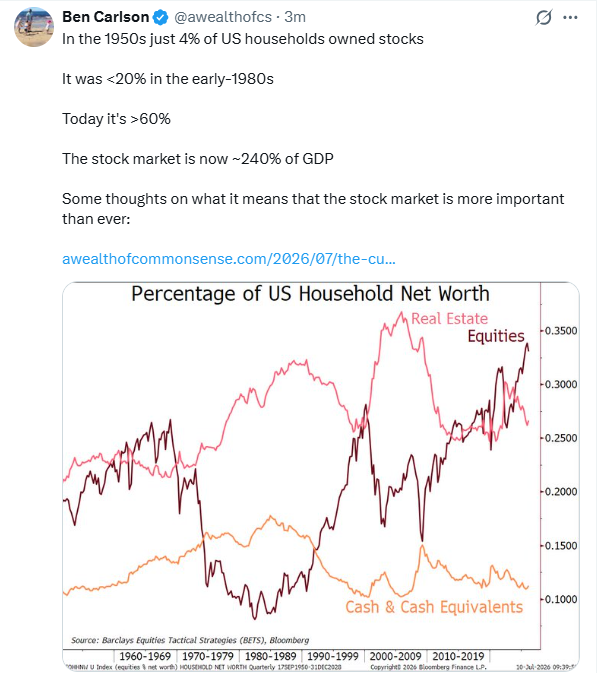
7. 60% of Americans Now Own Stocks
Ben Carlson
8. U.S. Wages and Salaries vs. GDP
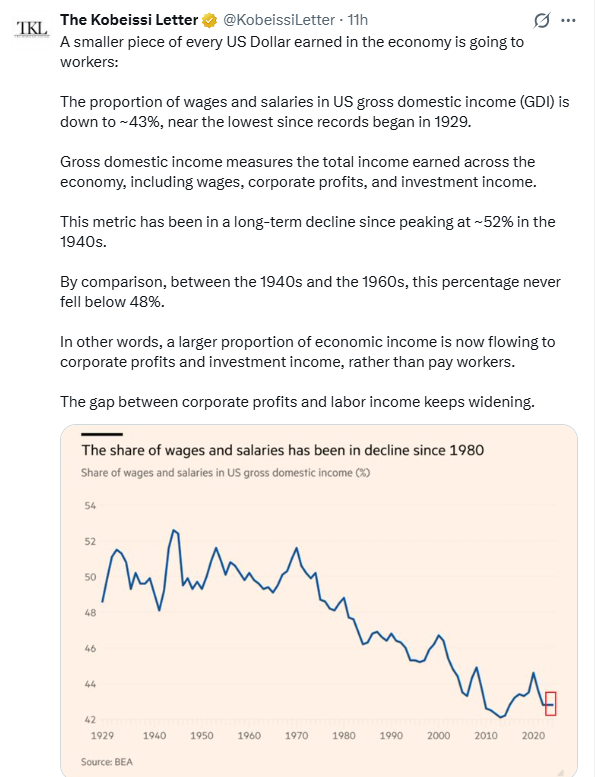
The Kobeissi Letter
9. China Making Women Miserable-Semafor
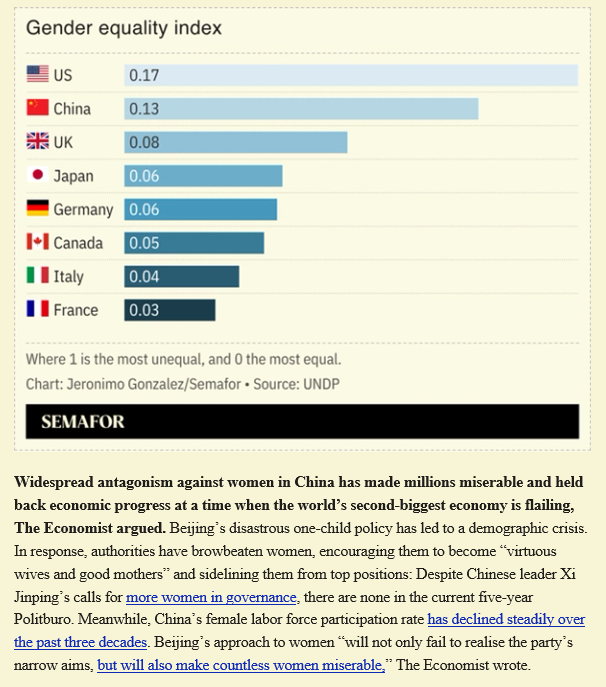
Semafor
10. Longevity Science 2026: 5 Findings Worth Knowing
Most of what people believe about aging was formed decades ago, when the science was thinner and the assumptions were darker. The working model—that physical and cognitive decline are inevitable, that the goal is simply to slow the slide—is being replaced by something more accurate and more demanding.
This year’s research is specific in a way that earlier longevity science wasn’t. Not “exercise more” but exactly how many minutes. Not “stay social” but a precise mortality comparison that changes how seriously you should take it. Not “eat enough protein” but the number that’s almost certainly higher than what you’re currently targeting. Five findings from 2026 that are worth updating your operating assumptions around.
1. Decline Is Not the Default—But Your Mindset Makes It One
The starting premise most people bring to aging is wrong. A Yale School of Public Health studypublished in 2026 tracked nearly 4,000 adults ages 19 to 94 over three years and found that 45% of adults 65 and older improved in at least one area—roughly 32% improved cognitively and 28% improved physically. Led by researcher Becca R. Levy and published in the peer-reviewed journal Geriatrics, the study found something more actionable: People who held more positive attitudes about their own aging were significantly more likely to show these gains.
That’s not a motivational footnote. It’s a mechanism. The way you think about what’s coming shapes the biological and behavioral choices that determine whether it arrives. If you’ve already written off your 70s as a period of managed decline, you are actively contributing to that outcome. The practical move here is to audit the assumptions you’re carrying about your own future health because the data increasingly suggests they are the most important variable you can control.
2. The Exact Amount of Strength Training That Pays Off
For years, the advice has been vague: lift weights, build muscle, do resistance training. A June 2026 study in the British Journal of Sports Medicine finally puts a number on it. Researchers tracked 147,374 people over 30 years and found that 90 to 120 minutes of strength training per week was the longevity sweet spot, linked to a 13% lower risk of death from any cause, a 19% lower risk of death from cardiovascular disease and a 27% lower risk of death from neurological disease. Critically, they found no additional mortality benefit above 120 minutes per week.
That’s three sets of data points that change the conversation. First, the specific window (90-120 minutes) gives you an actual target instead of a vague directive. Second, the neurological protection finding—27% lower risk—is striking and underreported; most discussions of strength training focus on cardiovascular and metabolic benefits. Third, the ceiling matters: Doing more doesn’t help. Two focused sessions of 45 to 60 minutes weekly is not a beginner’s approach. It’s the evidence-backed optimum. If you’re already doing more, you may be spending time that could go elsewhere.
3. Cardio & Strength Together Are a Different Category
The same 30-year study found that combining strength training with aerobic exercise produces benefits that neither generates alone. Participants who accumulated high levels of both—30 to 44 MET hours of aerobic activity weekly alongside 60 to 119 minutes of strength training—saw a45% lower risk of death compared with those doing minimal amounts of either. At the highest aerobic volumes, mortality risk dropped 53% to 58% regardless of the amount of strength training.
The practical interpretation isn’t “do more.” It’s that aerobic and strength training operate on different biological pathways and stacking them produces compounding protection rather than redundant protection. If you’ve been treating your weekly workout as a choice between cardio and strength, the data argues for both—not as a performance goal, but as a longevity strategy. A structured week that includes three cardio sessions and two strength sessions, each around 45 minutes, clears both thresholds.
4. Social Isolation Has a Mortality Number, & It’s Alarming
Stanford Medicine’s longevity research for people in their 40s and 50s cites a finding that deserves more attention than it typically gets. A study analyzing data from 2.3 million adults,published in Nature, found that social isolation increases the risk of premature death by about 30%, a mortality risk comparable to smoking 15 cigarettes per day.
Most high-achievers in their 40s and 50s treat social connection as a discretionary item that gets trimmed when schedules are full. The data says this is a serious miscalculation. Stanford’s Abby King, Ph.D., who has spent decades researching health behaviors across the lifespan, frames this explicitly: “Social connection is really important for healthy aging—for your brain and for your emotional health. Finding ways to stay engaged with others, whether through community groups, volunteer work or simply maintaining close friendships, is one of the most protective things you can do for your long-term health.”
The midlife years—when careers and family demands peak—are precisely when social connection tends to contract. Building structural habits around it now (a standing dinner, a recurring commitment, a consistent community) isn’t a lifestyle choice. Based on the mortality data, it’s closer to a health intervention.
5. Your Protein Target Is Probably Too Low
The standard dietary recommendation for protein is 0.8 grams per kilogram of body weight per day. Stanford Medicine’s experts say that number is wrong for adults over 40, and the gap matters. Starting around age 40, you lose approximately 1% of muscle mass per year; the rate accelerates through your 50s. To counter that loss, Stanford’s research puts the effective target for adults over 40 at 1.0 to 1.2 grams of protein per kilogram of body weight daily, 25% to 50% higher than the standard recommendation.
For a 165-pound person, that means roughly 75 to 90 grams of protein per day, distributed across three meals of 20 to 30 grams each plus a 15- to 20-gram snack. Most people eating a standard Western diet fall significantly short of this, particularly at breakfast. The practical adjustment isn’t complicated—it’s adding a structured protein source to every meal rather than treating protein as incidental—but it requires knowing the actual target, which most people don’t.
https://www.success.com/longevity-research-2026-new-findings