
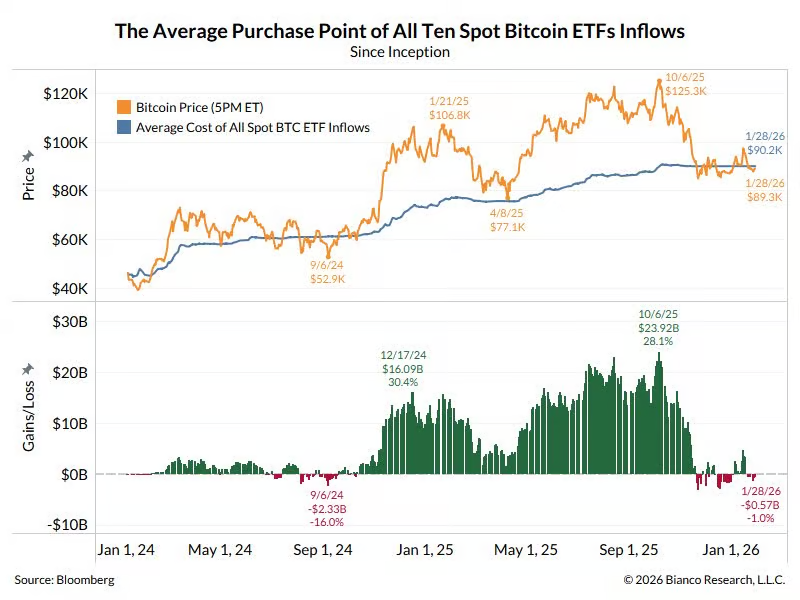
1. The Average Bitcoin ETF holder is in the Negative
BTC ETF average cost. “The average purchase for all the flows into all the spot $BTC since inception (January 2024) is $90,200. With today’s plunge, the AVERAGE $BTC ETF holder is about $5,000 (or ~7% underwater).”
DAILY CHARTBOOK
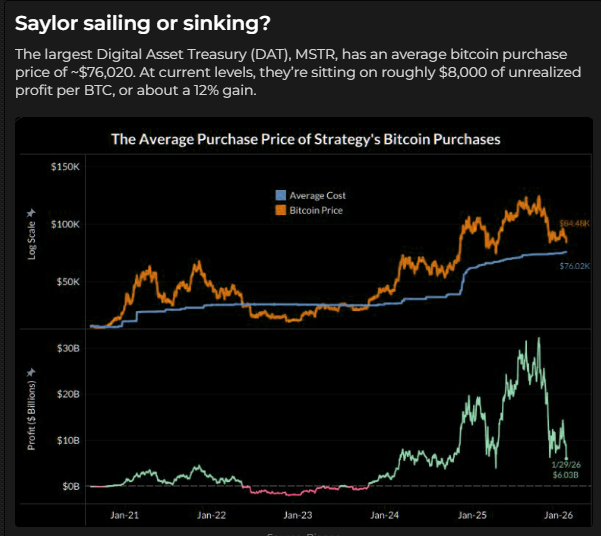
2. MSTR Average Bitcoin Price is $76,000
ZeroHedge
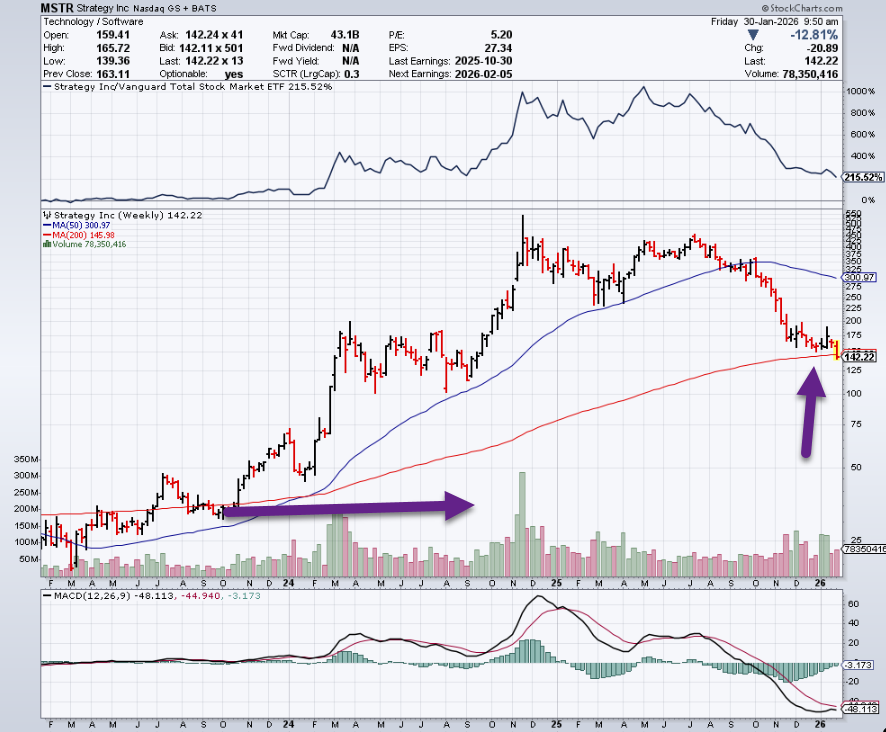
3. MSTR -75% from All-Time Highs…Sitting on Long-Term 200 Week Moving Average….Stock was at $25 in 2023
StockCharts
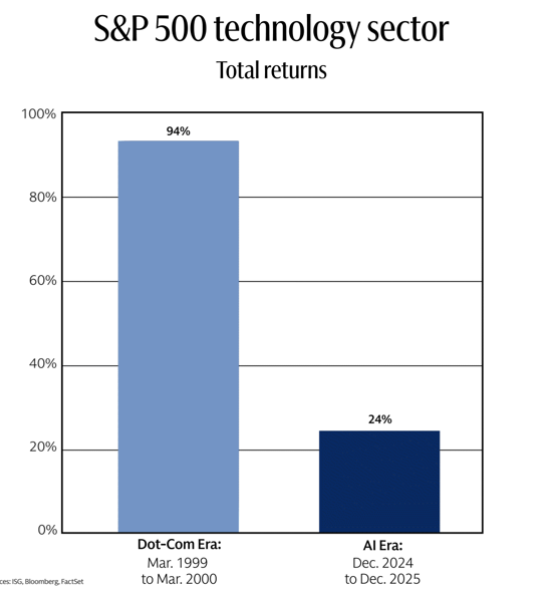
4. S&P Tech Sector 2024-2025 vs. 1999-2000
5. One Bearish Indicator Insider Selling
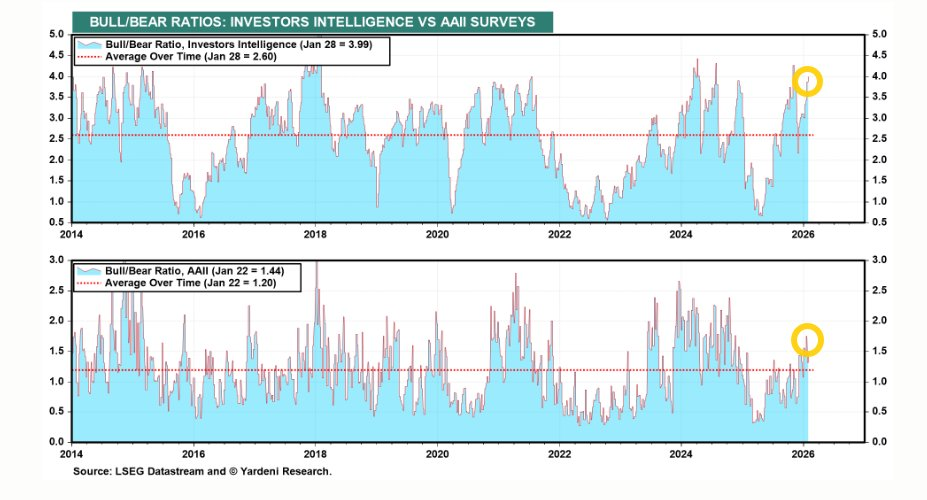
Yardeni noted, we asked our friend Michael Brush for an update on insider buying activity: “Insiders remain quite bearish. Actionable buying has dried up relative to selling. The combination of insider bearishness and the elevated investor sentiment reflected in the Investors Intelligence Bull/Bear Ratio of 3.99 suggests the market is quite vulnerable to a pullback here (chart).”
Zach Goldberg Jefferies
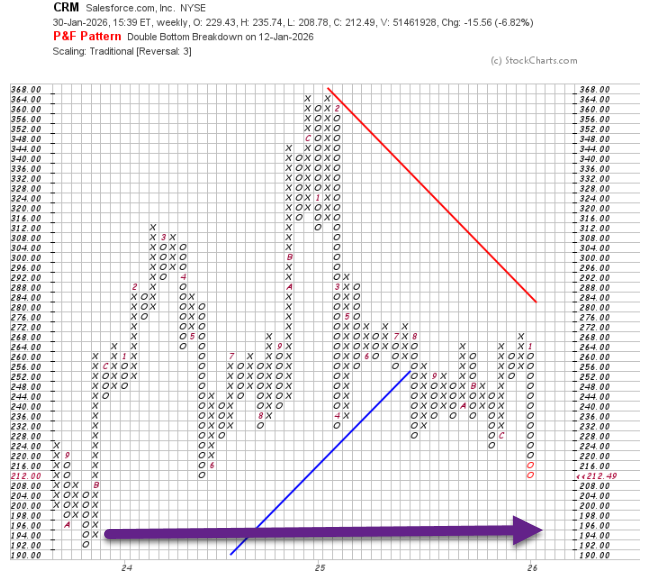
6. CRM-Salesforce Heading to 2023 Levels
StockCharts
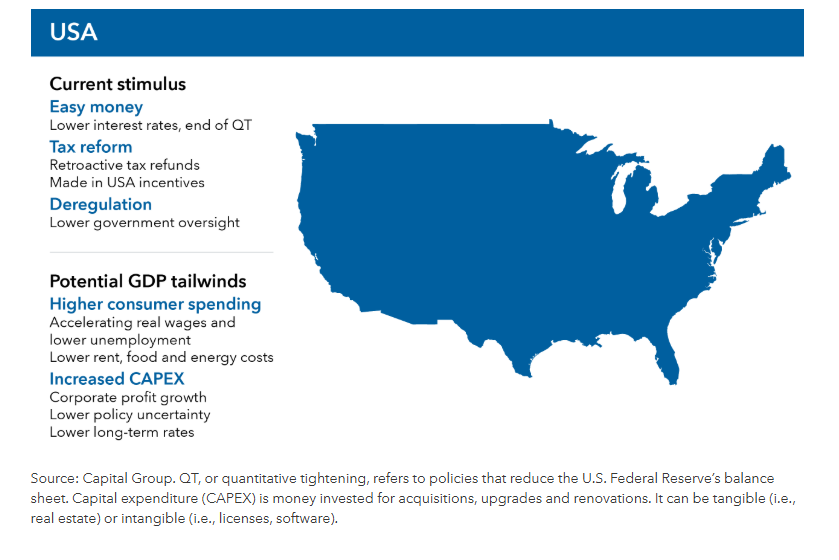
7. USA 2026 Economic Growth? -Capital Group
Capital Group
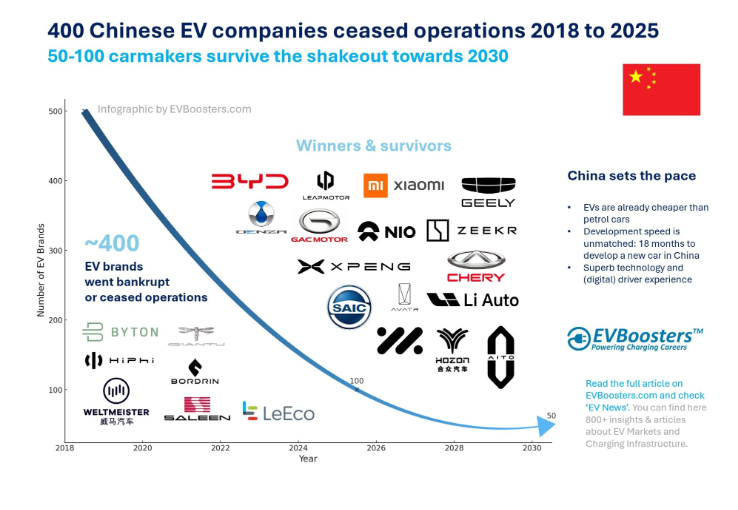
8. 400 Chinese EV Companies Went Under 2018-2025….100 Still Operating in Price War
EVBoosters
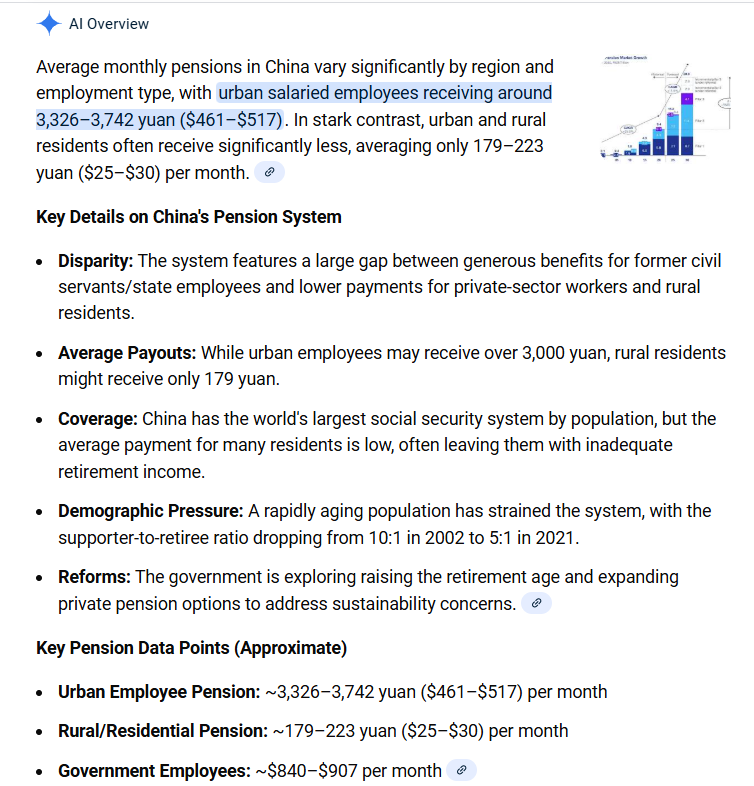
9. Average Chinese Rural Pension $25-$30 a Month
Perplexity
10. Why Critical Thinking Is the Most Important Skill in Your Life
Pausing, checking, and doubting yourself may matter more than talent or IQ. Psychology Today Lixing Sun Ph.D.
Key points
- Critical thinking keeps you alive by helping you avoid bad information that can harm your health.
- It beats brilliance because breakthroughs and fortunes often come from questioning the obvious.
- Your brain works against critical thinking; it’s wired to agree with others and protect your existing beliefs.
- Critical thinking can be trained by checking original sources and getting comfortable with being wrong.
Ever wonder why rats are so spectacularly successful in our cities? They live in our walls, our subways, our basements. They flourish in places we find impossible. Why? Because they are critical thinkers, sort of.
City rats face a daily buffet. Pizza crusts. Half a bagel. Spilled fries. But mixed into this feast could be poisons. One careless bite and that is the end of the story. So how do rats survive?
They hesitate.
When a rat encounters unfamiliar food, it often lets another rat eat first. If nothing happens, the observer will join in later. If the taster gets sick or dies, that food is banned forever. Rats remember these lessons for days, which makes poisoning entire colonies difficult. This behavior, known as bait shyness, has been documented for decades. It is a primitive version of critical thinking, eerily similar to what kings and emperors would do to avoid being murdered: make their chefs the tasters.
Now, before you feel offended by the comparison, consider this. Humans are not always as careful as rats. In fact, we are often far worse.
We live in an age of endless information. News, hot takes, rumors, screenshots, and confident nonsense stream past us all day long. Some of it is nutritious. Some of it is toxic. And unlike rats, we often swallow first and think later.
Take vaccines. If you believe the false claim that the MMR vaccine causes autism, a claim thoroughly discredited by large epidemiological studies (Madsen et al., 2002; Hviid et al., 2019), you may choose not to be vaccinated. The cost is to expose yourself to the risk of measles, mumps, and rubella, which have been on the rise in parts of the United States.
During the COVID pandemic, the pattern repeated. Multiple studies showed that people who refused vaccination died at far higher rates than those who accepted it, especially among old adults (Johnson et al., 2022). Critical thinking, in other words, can be a matter of life and death.
But even when death is not on the line, critical thinking quietly shapes success.
Science runs on it. Galileo questioned the heavens. Darwin questioned creation. Einstein questioned time itself. Marie Curie questioned what matter was really made of. None of them accepted the obvious answer. Each insisted on testing ideas against evidence, even when that evidence was inconvenient or unpopular.
Business does too. Warren Buffett built his fortune not by following the crowd, but by distrusting it. His most famous advice sounds almost insultingly simple: “Be fearful when others are greedy, and greedy when others are fearful.” Behind the slogan is a disciplined habit of independent mind that behavioral economists later formalized (Kahneman, 2011).
And the cases can go on and on.
Critical thinking is not about sounding smart at dinner parties. It is about not being fooled. And it is harder than it sounds. Real critical thinking requires knowledge. You cannot evaluate medical claims without some biology. You cannot judge economic arguments without understanding incentives and tradeoffs. Thinking well is not free. It costs time, effort, and homework.
It also requires practice. Like a muscle, it weakens when unused. Repeated exposure to the same claim makes it feel true, even when it is not, a phenomenon psychologists call the “illusory truth effect.” Familiarity quietly replaces evidence.
This is where one simple rule matters more than almost any other. Whenever possible, check the original source. The actual study, the original data, the primary document. Not the headline or a tweet about the study. Even a brief look at the original often reveals caveats and limitations that vanished somewhere along the sharing chain.
Then there are the two major roadblocks built into human nature.
The first is the inclination to be agreeable. Humans are social animals. We evolved to get along. Disagreeing with the group once meant exile, and exile usually meant death. Even today, pushing back against a crowd can feel uncomfortable.
The second is confirmation bias. We favor information that supports what we already believe and discount what may feel a threat to our identity or pride. This bias is so robust that it has been observed across cultures, political ideologies, and levels of education (Nickerson, 1998).
Put these together, and you get echo chambers. Inside them, bad ideas flourish, receive applause, and start selling merchandise. This is why critical thinking may be the most valuable skill you can develop.
The good news is that it can be trained. And here are a few practical steps:
- ? Start with a pause. When you encounter a claim that makes you angry, thrilled, or smug, stop. Strong emotions are often a warning sign.
- ? Ask dull questions. Who is making this claim? What do they gain if I believe it? What evidence would change my mind?
- ? Seek disagreement on purpose. Read thoughtful people you do not agree with. Not trolls. Not loudmouths. Serious critics. And,
- ? Practice intellectual humility. Being wrong is not a personal failure. It is the entry fee for learning. Every corrected mistake is a rat that did not eat the poison.
Critical thinking will not make you omniscient. It will not guarantee success. But it will dramatically reduce the odds that you wreck your life, or your society, by swallowing something lethal simply because everyone else around you already did.