
1. Where Does Hormuz Oil Go?
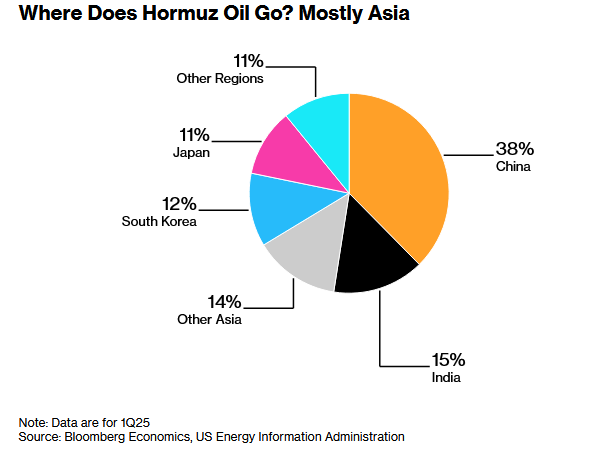
2. Hormuz Traffic -98%
Sherwood News With attacks on vessels in the narrow transit corridor escalating last week, Bloomberg data shows that daily ship traffic through the Strait of Hormuz has plunged 98.5% over the past three weeks, from 67 vessels on February 22 to just one ship on March 16.
The only maritime gateway between the Persian Gulf and the open ocean, the strait handles roughly one-fifth of the world’s daily oil and liquefied natural gas shipments, with very few alternatives if closed.

Sherwood
3. Mag 7 Market Cap History-Bespoke
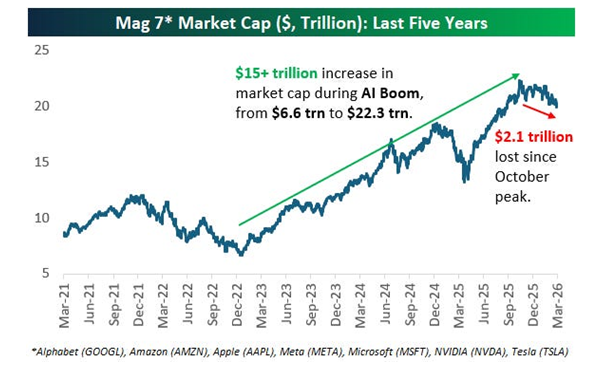
Bespoke’s
4. INDA India ETF Hit -20% from Highs…Closed Below 200-Week Moving Average

StockCharts
5. Value of Private Equity Deals Held for More than 7 Years Hits $1T

Financial Times
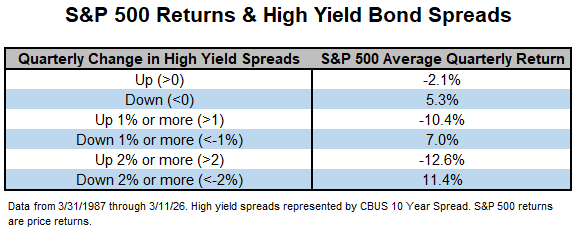
6. Quarterly Performance of S&P 500 When Yield Spreads Narrow vs. Widen
Nasdaq Dorsey Wright The economy and the stock market are not one in the same, but there is a typically a strong relationship between the two and US equities have historically performed significantly better when high yield spreads are narrowing, indicating favorable economic conditions. The table below shows the quarterly performance of the S&P 500 when high yield spreads are narrowing versus when they are widening. It is also apparent that the magnitude of the change is also change is also significant as the S&P has performed better during quarters when spreads narrowed significantly and worse when they widened by a large amount.
Nasdaq
7. High Dispersion Under the Hood of S&P

Axios
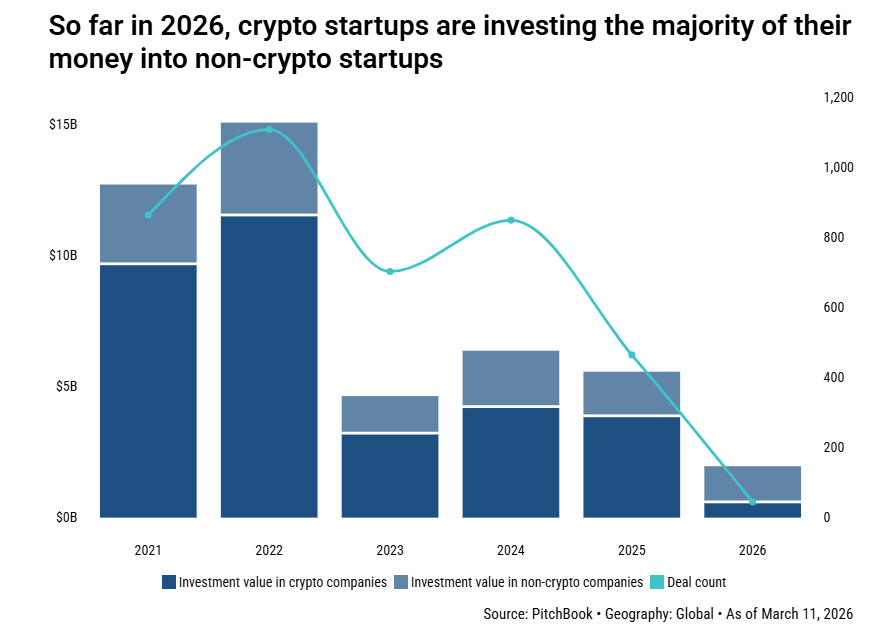
8. VC Backed Crypto Companies Investing in Non-Crypto Businesses
Pitchbook-So far in 2026, VC-backed crypto companies have invested $1.4 billion in startups outside the industry, more than twice the $600 million they invested in crypto-focused startups, according to PitchBook data.
PitchBook
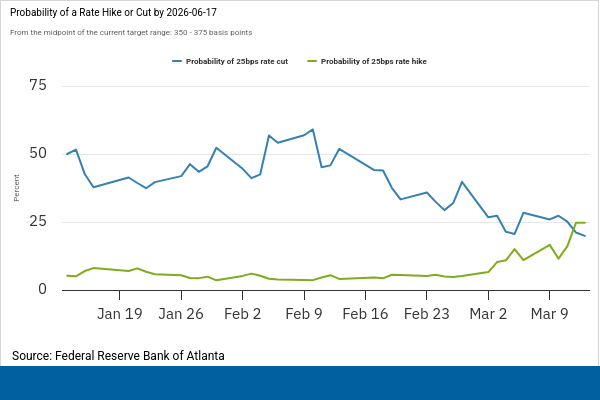
9. Probability of a Rate Hike Higher than Cut as of March
10. Cultivating a Lucky Mindset
Looking for the lucky explanations in life can transform our experiences-Psychology Today Dayna Lee-Baggley Ph.D.
Key points
- Train your brain to find lucky interpretations with practice and repetition.
- Acknowledge reality and reframe it positively without ignoring negative events.
- Practice finding the lucky explanation to create new neural connections and change your mindset.
There was a study of people who considered themselves lucky and people who considered themselves unlucky (see Wiseman, 2003). They had to read a scenario and discuss it. One of the scenarios: You’re at the bank, and while you’re at the bank, there’s a robbery, and you get shot in the arm.
- The unlucky people said, How unlucky am I? I’m at the bank, and I get shot during a robbery.
- The lucky people said, How lucky am I? I only got shot in my arm.
This begs the question: Do they have a lucky life, or did they find ways to find a “lucky” interpretation?
Cultivating a Lucky Mindset
Most of us don’t automatically come up with a lucky explanation when faced with adversity. It requires conscious effort and practice. However, with time and repetition, you can spontaneously train your brain to expect and generate these positive interpretations.
Acknowledge the Reality: It’s crucial to understand that adopting a lucky mindset doesn’t mean ignoring or downplaying negative events. The lucky participants in the study acknowledged the fact that they had been shot. They weren’t engaging in toxic positivity, which involves denying or minimizing genuine distress.
Reframe the Situation: After acknowledging the reality, intentionally look for a positive angle. For instance, “I got shot in the arm, but how lucky am I that it wasn’t more serious?” In psychology, a well-known effect highlights the importance of who you compare yourself to. When researchers examine the happiness levels of Olympic medal winners, they find an intriguing pattern: gold medalists are the happiest, followed by bronze medalists, with silver medalists being the least happy. This phenomenon occurs because each group has different reference points for comparison. Bronze medalists tend to compare themselves to those who did not win any medal, which makes them pleased and grateful for their achievement. In contrast, silver medalists often compare themselves to gold medalists, feeling disappointed that they did not win the top prize. Think about your comparison group when proposing a lucky explanation.
Practice Regularly: Like any skill, this mindset requires regular practice. Whenever you encounter challenges, make it a habit to finish the sentence with, “How lucky am I?” As you repeat this process, you create a new neural connection. Over time, your brain will begin to do this automatically.
Conclusion
Science shows us that adopting a lucky mindset doesn’t mean ignoring life’s challenges. It’s about finding a balanced perspective that acknowledges difficulties while recognizing the positives. Consciously practicing this technique can train your brain to seek the lucky explanation. This can make life feel way more manageable and hopeful.