
1. Credit Default Rates Improving-Torsten Slok
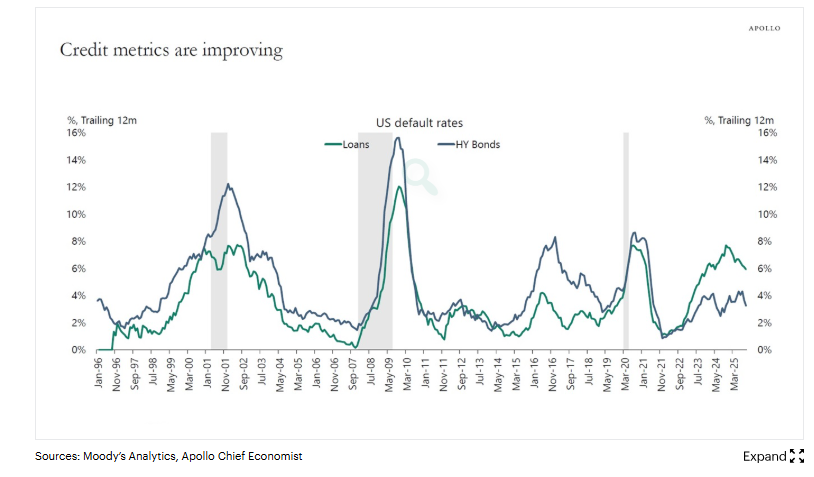
Apollo
2. Markets Don’t Top Out When Investors are Pessimistic…How About 2025 Being 4th Most Pessimistic Year on Record?
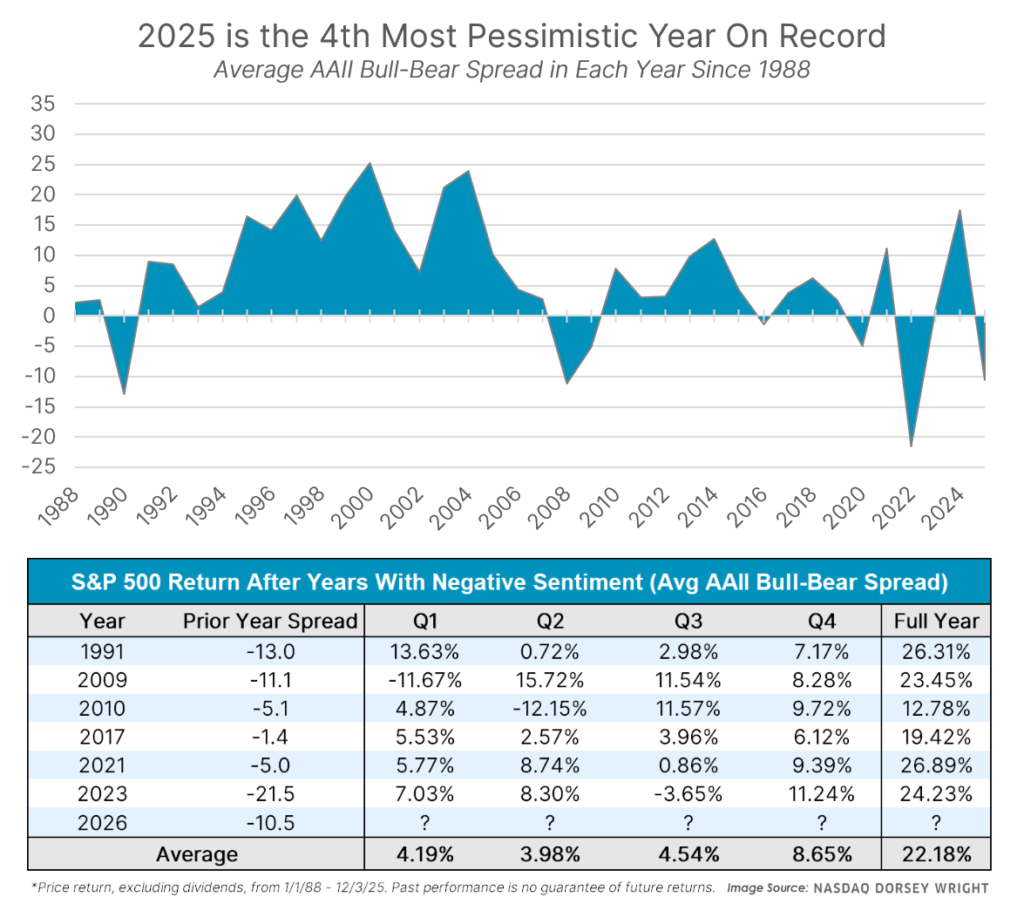
Nasdaq Dorsey Wright
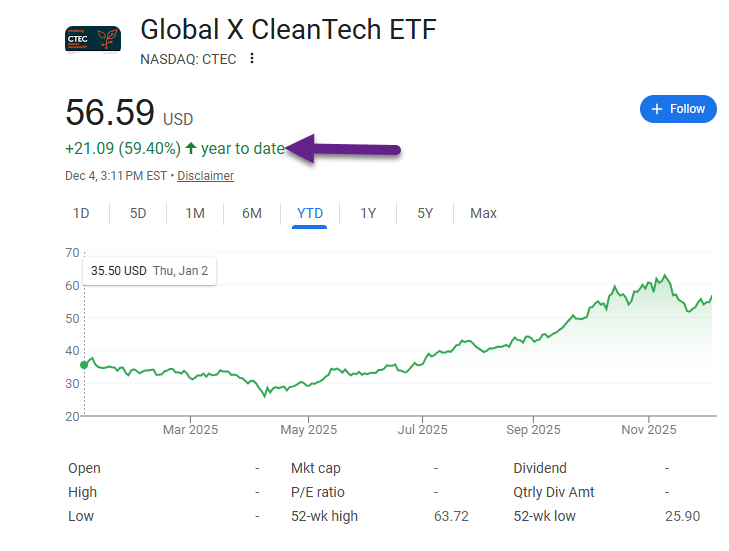
3. Was Trump the Bottom in Clean Energy Stocks? Global X CleanTech +60% YTD
4. Trump was Bottom in Clean Energy Stocsk….Invesco Clean Energy ETF +54% YTD
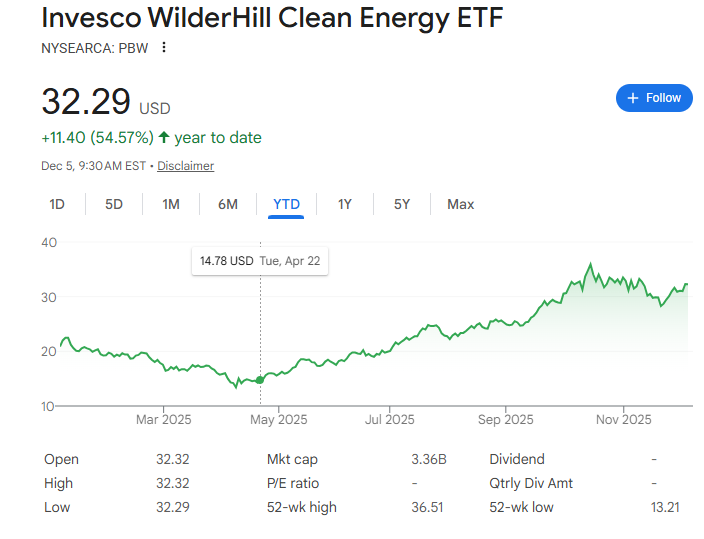
Google Finance
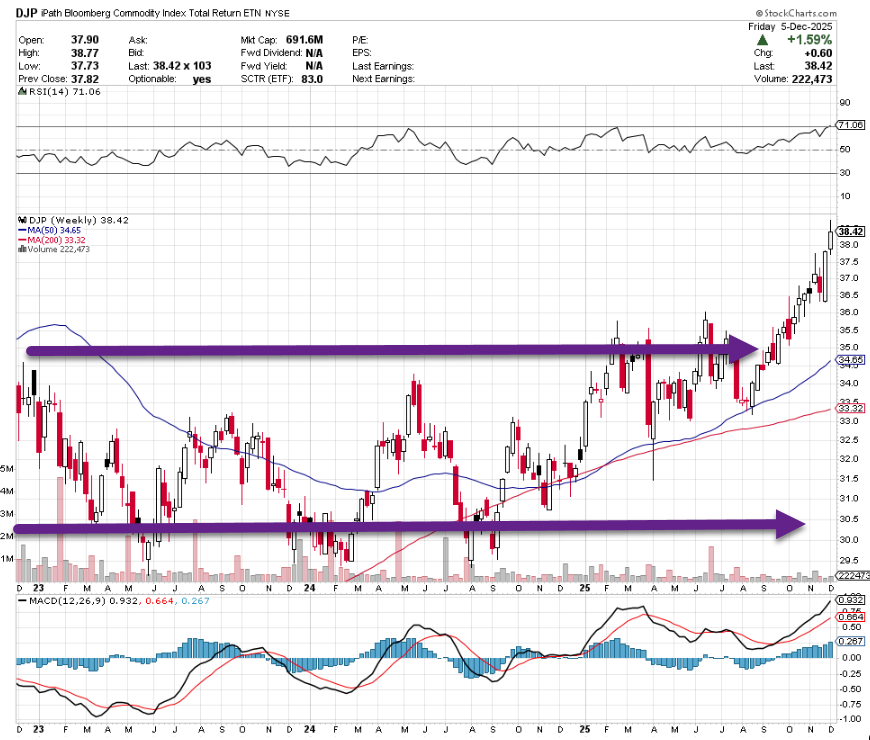
5. Commodites Index Breaking Out of 3 Year Sideways Pattern
StockCharts
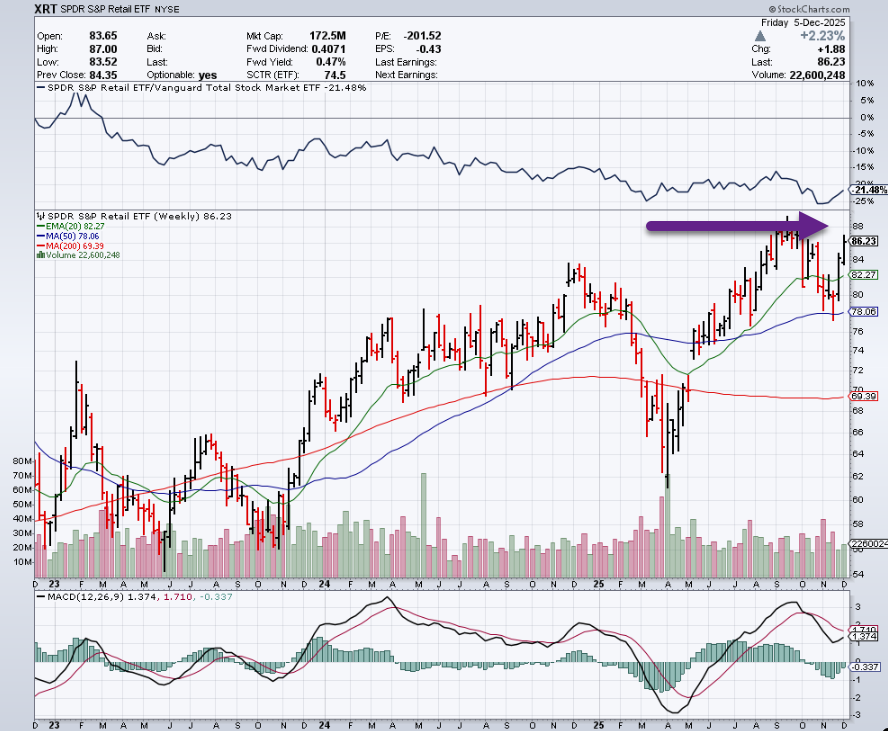
6. Never Bet Against the American Consumer Spending Money….Retail Index About to Make New Highs for XMAS
StockCharts
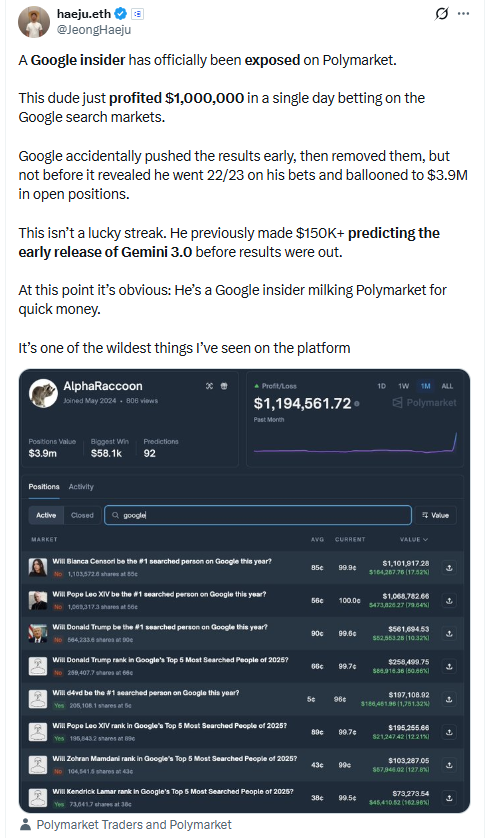
7. Polymarkets New World for “Insider” Trading—From Howard Lindzon
haeju.eth
8. Markets with Biggest Rent Deflation

Nick Gerli
9. 39% of U.S. Land is Farmland
Mapped: Farmland by State in 2025
Niccolo Conte Ryan Bellefontaine Joyce Ma
Mapped: Farmland by State in 2025
This was originally posted on our Voronoi app. Download the app for free on iOS or Android and discover incredible data-driven charts from a variety of trusted sources.
Key Takeaways
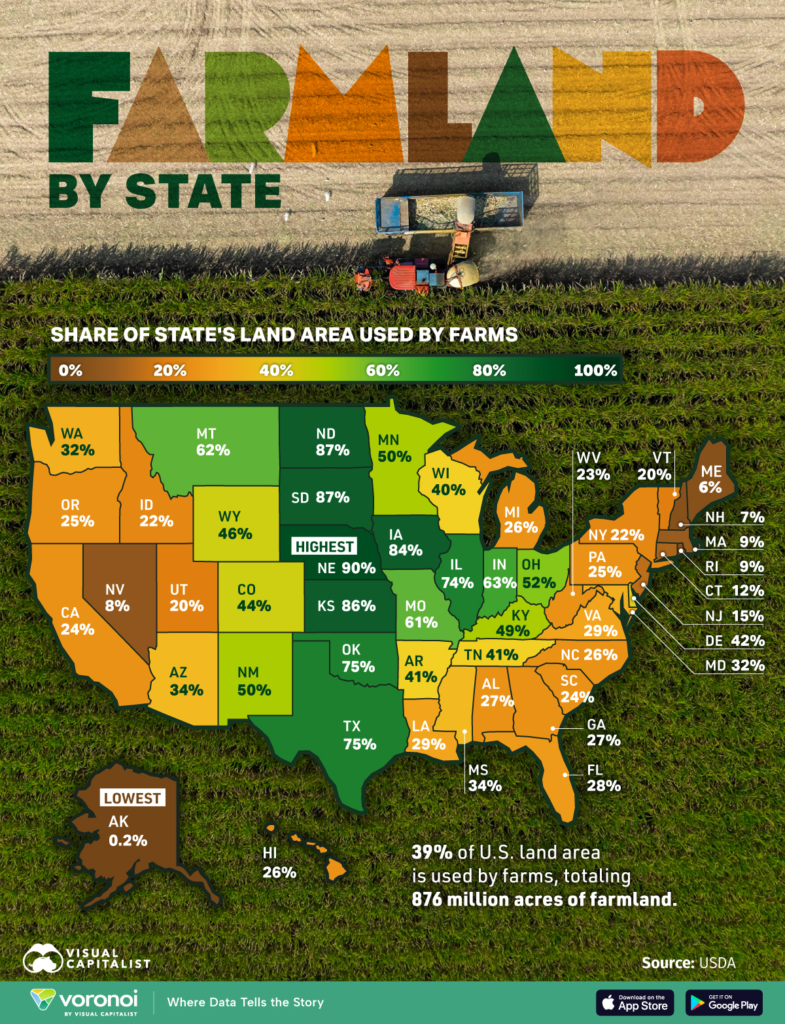
- Farmland covers 876 million acres, or 39% of U.S. land.
- Great Plains states dominate: Nebraska tops the list at 89.5% farmland.
Much of the vast space of the U.S. is occupied by farmland, which produces many of the most demanded commodities. But which states have the most of their area used by farms?
The map uses the latest data from the U.S. Department of Agriculture (USDA) to show the share of each state’s land area used for farming.
Visual Capitalist
10. How Purpose Envy Misleads Us
Stop chasing someone else’s life path and build a meaningful one of your own.-Psychology Today
Key points Jordan Grumet M.D.
- Envy harms well-being, especially when comparing others’ purpose to our own.
- Purpose envy is fueled by social media, influencers, and unrealistic highlight reels.
- You can’t co-opt someone else’s purpose; true purpose must align with your own values.
- Focus on what you want and are willing to work for; envy fades when you’re embracing your path.
Envy arises when we compare ourselves to someone else and conclude they’re better off. We’ve all been there. Envy is a universal emotion, but it’s also a corrosive one. In a large longitudinal study of more than 18,000 adults, researchers found that higher levels of envy predicted poorer well-being years later. Put simply: The more envious we are, the worse we tend to feel over time.
Most of us would love to sidestep that emotion entirely. But when it comes to purpose—our sense of direction and meaning—it’s getting harder than ever to avoid.
Although psychologists haven’t yet named it formally, purpose envy is becoming a modern condition. We scroll through feeds full of people who seem to know exactly why they’re here and what they’re meant to do. They’ve branded their purpose, packaged it beautifully, and broadcast it to millions. For young people in particular, this can be intoxicating. Searching for a relatable version of purpose, they often model their lives on the influencers they follow: the entrepreneur building a seven-figure business, the traveler living out of a van, the artist who “made it” by 25.
The problem isn’t admiration. It’s imitation. When we confuse someone else’s highlight reel for a road map, we end up chasing a life that isn’t ours.
And it’s not just a Gen Z issue.
When Admiration Turns to Envy
I’ll admit it: I’ve felt purpose envy myself. I’m a fan of Scott Galloway—the professor, podcaster, and author whose work (like The Algebra of Wealth and The Prof G Pod) dives deep into ideas that matter to me. He’s articulate, accomplished, financially successful, and undeniably purposeful.
I admire him. But I also envy him.
That envy used to sting until I realized something important: As much as I admire Galloway, I don’t actually want to be him. That insight changed everything. It revealed why escaping purpose envy might be simpler than we think.
Here are three truths that helped me, and might help you, put purpose envy in its place.
1. Purpose Can’t Be Co-Opted
Everywhere you look, someone is trying to sell you a version of purpose.
Social media influencers wrap it around whatever they’re promoting. If they’re selling designer sneakers, purpose becomes fashion. If they’re promoting travel, purpose becomes seeing the world. If they’re pushing protein supplements, purpose becomes fitness.
Advertisers do the same. They frame purpose as luxury, vitality, or success. Anything that convinces you their product will complete you. Even family members can unintentionally project their version of purpose onto you (“We just want you to have the opportunities we didn’t”).
The catch? All of these versions of purpose serve their goals, not yours.
To “co-opt” means to absorb something for your own use, often in a way that dilutes its original meaning. When we internalize someone else’s idea of purpose—whether it’s an influencer’s, a brand’s, or a parent’s—the result is usually frustration, not fulfillment.
Your purpose can’t be bought, borrowed, or inherited. It’s not something you “find” by copying someone else’s story. It’s something you build by paying attention to what makes you feel alive, and what you’re willing to work for.
2. Ask Yourself: Am I Willing to Put in the Work?
It’s easy to envy someone else’s life when you’re only seeing the rewards. But purpose isn’t built on envy; it’s built on effort.
When I catch myself wishing I had Scott Galloway’s platform or career, I ask a simple question: Am I willing to do what he does to get it?Do I want to travel constantly, spend long weeks recording podcasts, running businesses, and giving talks? Do I want to live that pace, that public life?
The honest answer is no.
Many of us want the outcomes of someone else’s purpose, but not the sacrifices it requires. We envy the destination without wanting to take the journey. And that’s a sign that what we’re craving isn’t their purpose—it’s the feeling of fulfillment we imagine they have.
Once you realize that, envy starts to lose its grip.
3. You Don’t Have to Want the Whole Package
When we compare ourselves to others, we tend to fixate on the highlights: the parts of their lives that look enviable. But we rarely consider the full picture.
I might wish I had Galloway’s platform, but I don’t necessarily want his schedule, his scrutiny, or his stress. Like most people, I only envy select pieces of his life.
Purpose envy tricks us into forgetting that every life is a bundle of trade-offs. You can’t have the good parts without the costs that come with them. And when you look closely, you may find that you don’t actually want the whole package. You just want a more authentic version of your own.
When I remember that, I’m reminded that my life, as ordinary as it sometimes feels, already reflects a set of choices I value: time with family, creative autonomy, work that feels meaningful on my own terms.
The Paradox of Purpose Envy
Here’s the irony: Envy isn’t always bad. Sometimes, it’s a compass. It points to something you value but haven’t yet developed. Seeing another writer or podcaster succeed can spark the motivation to improve your craft or commit to a project you’ve been neglecting.
But if you let envy steer the ship, you’ll end up chasing other people’s dreams instead of building your own.
Purpose envy thrives on comparison. It fades when you start paying attention to your own direction.
In the End
Purpose envy is common, but it rarely serves us. It encourages us to adopt someone else’s story, complete with their costs, instead of writing our own.
The truth is, most of us are already living parts of our purpose; we just overlook them because they don’t look grand or glamorous. The envy we feel toward others can be a cue, not a curse: a reminder to get curious about what truly drives us.
Because in the end, purpose isn’t something you envy. It’s something you earn by paying attention, doing the work, and refusing to let anyone else define what it means for you.
https://www.psychologytoday.com/us/blog/the-regret-free-life/202511/how-purpose-envy-misleads-us