
1. Government Shutdown Betting on Polymarket Explodes
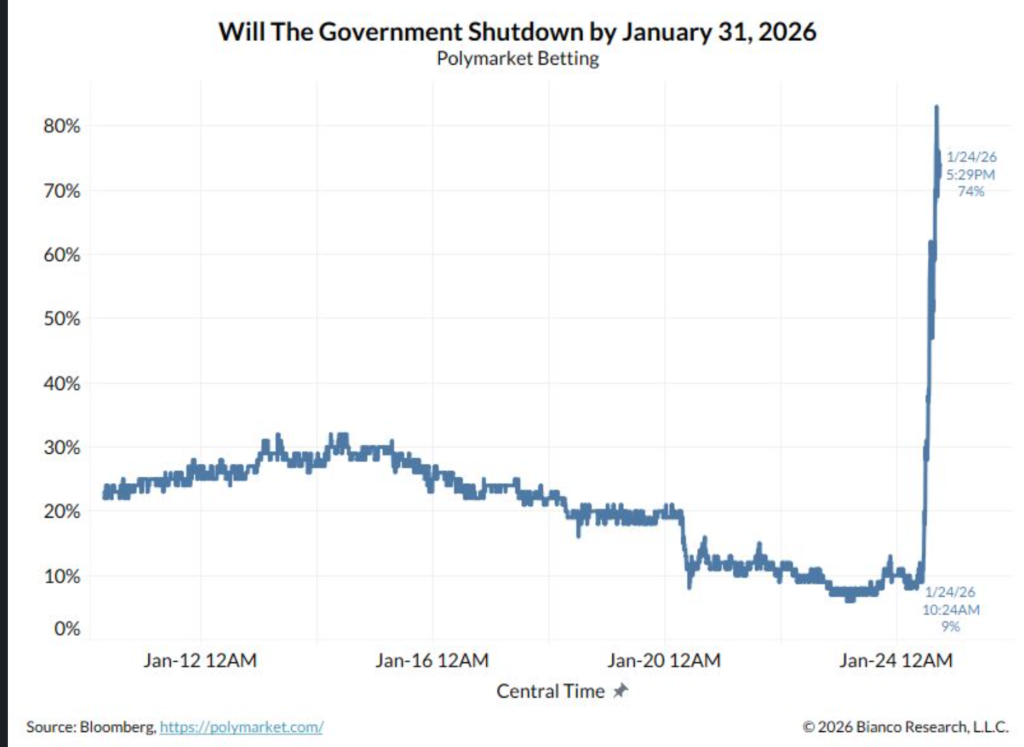
James Bianco
2. Hyperscalers Debt is a Small Part of EBITA
It’s that flood—and not default risks—that worry many analysts. Microsoft’s gross debt is only 0.22 times its earnings before interest, taxes, depreciation, and amortization, or Ebitda, which means it could theoretically pay all its debt in under three months. Alphabet has the next best ratio at 0.49 times, while Amazon’s leverage ratio is 0.56 times and Meta’s is 0.57 times. Even including lease commitments barely moves the needle, except for Amazon, whose leverage ratio rises above a still unconcerning 1. Barrons
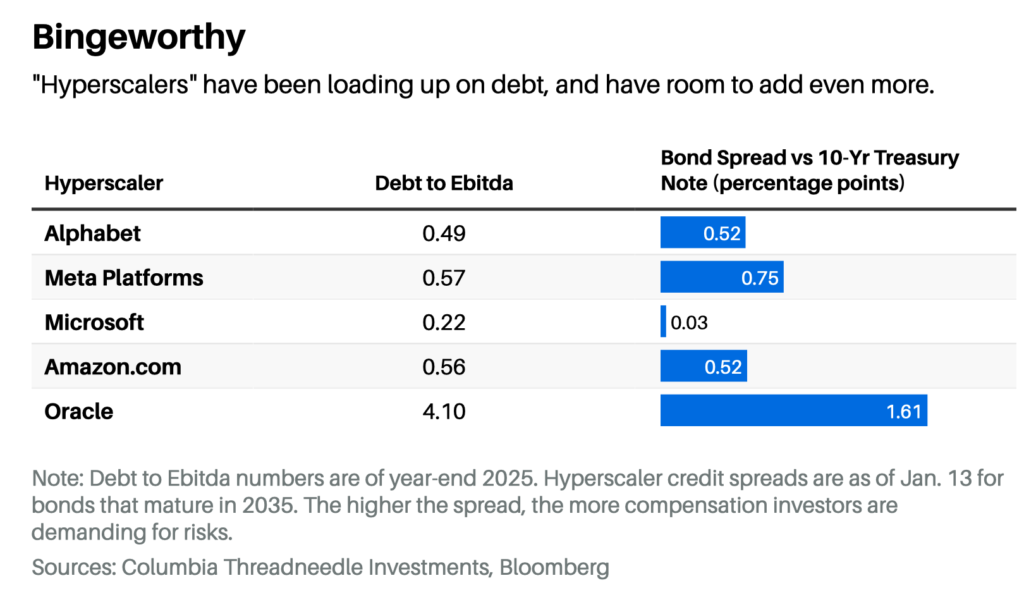
Barron’s
3. S&P 500 Margin Expansion All Tech-Torston Slok

The Daily Spark
4. Skyrocket on ETF Fund Flows….$400B in 3 Months
Fund Flows: meanwhile, as documented previously, sentiment is running hot — and here’s the latest sentiment snippet showing speculative splurging into equity ETFs.
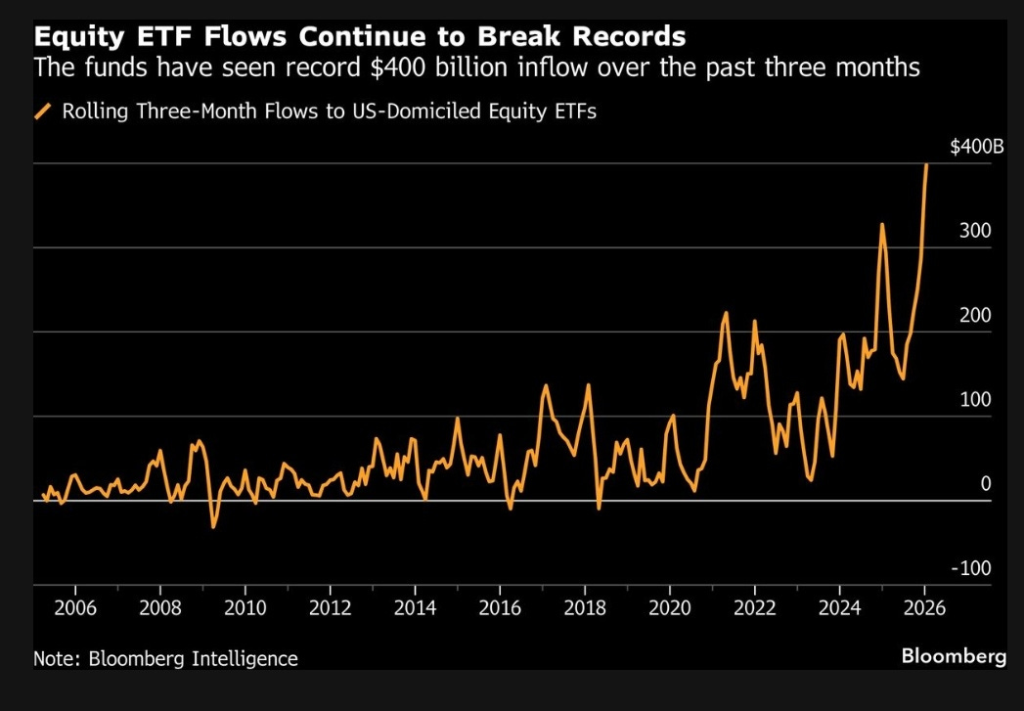
Tracy Shuchart
5. Vanguard Value (VTV) Outperforming Growth (VUG) by 6% to Start 2026
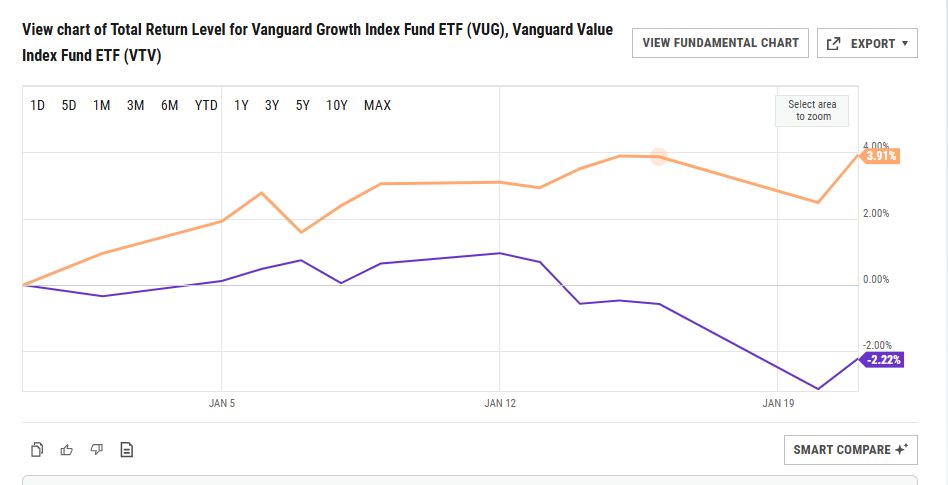
YCharts
6. Healthcare Market Cap as a Percent of S&P Market Cap at 1995 Lows
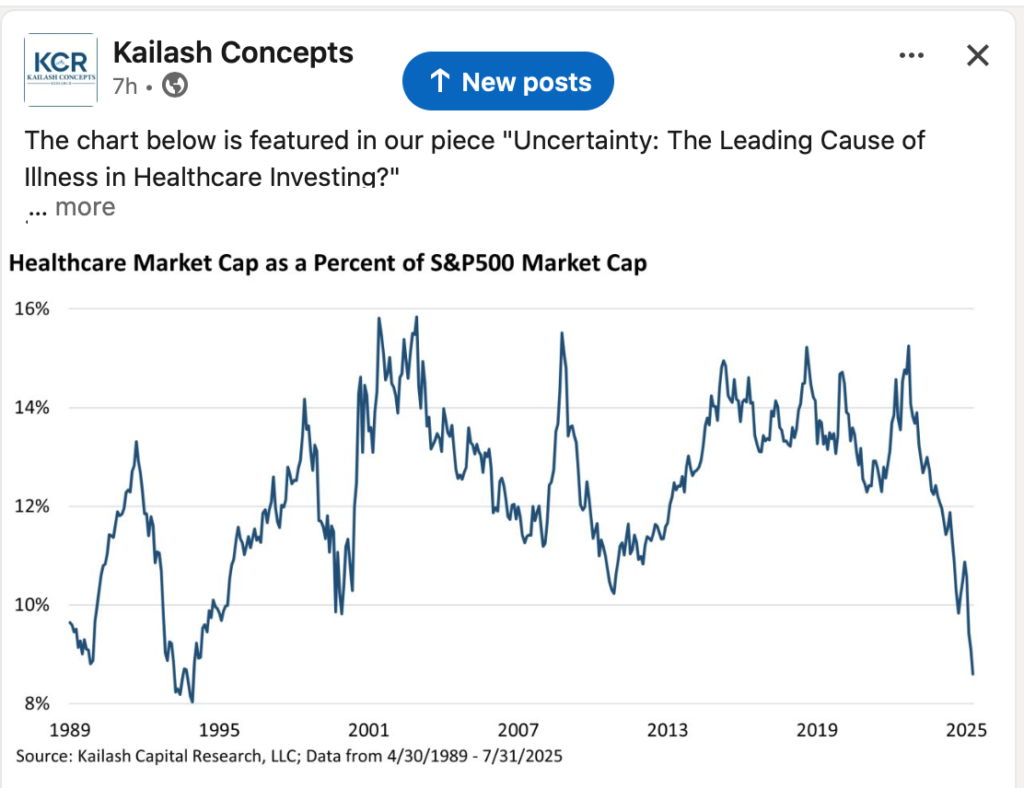
Kailash Concepts
7. Tether Freezes $182M USDT in Largest-Ever Crackdown — Is Venezuela’s Crypto Lifeline Under Siege?
Key Takeaways
- Tether froze $182 million in USDT across five Tron wallets on Jan. 11, 2026, marking one of its most significant single-day actions to date.
- This occurred amid Venezuela’s heavy reliance on USDT for oil trade, with 80% of PDVSA revenue now in stablecoins to evade sanctions.
- The freeze highlights USDT’s dual role: lifeline for Venezuelans facing hyperinflation, yet a tool for compliance with U.S. authorities targeting illicit flows.
Prediction Market powered by
Tether, the issuer of USDT, has carried out its largest asset freeze to date, sparking speculation that the funds may be linked to Venezuela.
This action comes amid escalating scrutiny over USDT’s role in Venezuela, where the stablecoin has become a critical financial tool for both the government and citizens to navigate U.S. sanctions, hyperinflation, and economic isolation.
https://finance.yahoo.com/news/tether-freezes-182m-usdt-largest-105442400.html
8. 10 Most Powerful Air Forces
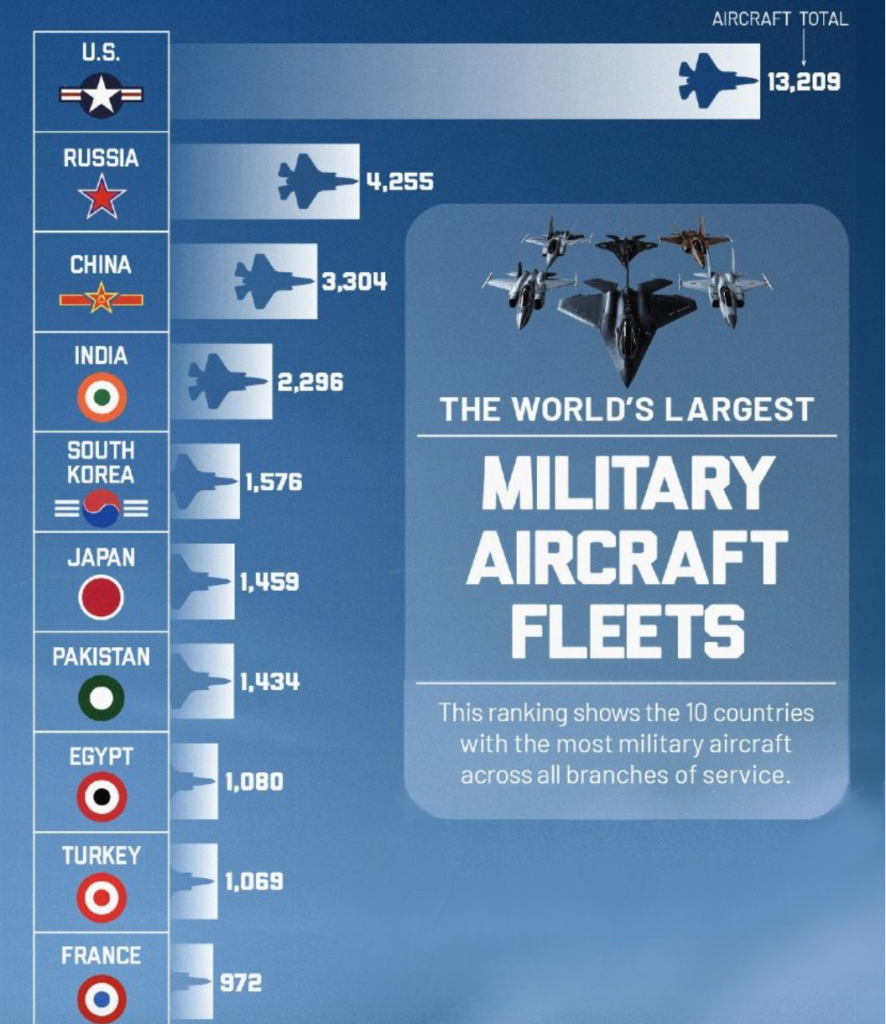
Visual Capitalist
9. #1 Cause of Disease Inflammation-Dr.Hyman


Mark Hyman
10. Keep Forgetting Things? To Improve Your Memory and Recall, Science Says Start Taking Notes (by Hand)
And then do a quick review the next morning. BY JEFF HADEN @JEFF_HADEN
When I spoke at the Arabian Business Awards a few years ago, I showed a slide describing research that shows meetings literally make people dumber: a study published in Transcripts of the Royal Society of London found that meetings cause you to (during the meeting) lose IQ points.
A bunch of people in the audience took photos of that slide.
The same was true when I presented a slide describing research published in Journal of Business Research showing that not only do 90 percent of employees feel meetings are unproductive, but when the number of meetings is reduced by 40 percent employee productivity increases by 70 percent.
A bunch of people took photos of that slide, too.
Both findings seem easy to remember, if only because the research confirms what most people feel about meetings: Most of the time, the only person who thinks a meeting is important is the person who called the meeting. But what if you really wanted to remember that meetings tend to make participants dumber, and tend to negatively impact overall productivity?
Or, more broadly, have a better shot of remembering things you really want to remember? Don’t take photos.
In a study published in Journal of Experimental Psychology: Applied, researchers evaluated the effectiveness of a variety of memory-boosting strategies: taking photos, typing notes, and writing notes by hand.
As you can probably guess, people who wrote notes by hand scored the highest on subsequent recall and comprehension tests, even when people who took photos or typed verbatim notes were allowed to review those items before they took the tests.
Or maybe you couldn’t guess that: The researchers also found that “learners were not cognizant of the advantages of longhand note-taking, but misjudged all three techniques to be equally effective.”
So why does taking notes by hand work so well? According to the researchers:
Longhand note-takers mind-wandered less and, in turn, demonstrated superior retention of the lecture content.
Which makes sense. Taking a photo requires no “mental participation” at all. You don’t have to consider, synthesize, decide how you’ll capture the information in shorthand, etc. Typing notes verbatim — for example, transcribing a lecture or meeting recording — is more of a process than a thought exercise. The focus is on accuracy, not retention. (I can type fast enough to capture everything someone says in real time, but that doesn’t mean I remember any of it without reviewing what I’ve typed.)
Maybe that’s why Richard Branson carries a notebook everywhere he goes. (Literally: I’ve seen him with one at least 10 times.) Summarizing, putting concepts or ideas in your own words, deciding not just what to write, but how to write it — all those things engage different parts of your brain, and therefore improve your retention and recall.
Especially if you don’t stop there. According to a study published in Psychological Science, people who study before bed, then sleep, and then do a quick review the next morning can not only spend less time studying, they also increase their long-term retention by 50 percent.
Try it. At night, take a quick look at notes you’ve written during the day. Take a few moments to remember not only what, but why: why you’ll use what you jotted down. When you’ll use it. Why it will make a difference in your professional or personal life. Then do a quick review the next morning.
Unless you’re a compulsive note-taker, both exercises will take only a minute or two.
After all, if it was important enough to write down, it’s important enough to remember — and more to the point, to do something with.
Because knowledge is useful only if you do something to make it useful.