
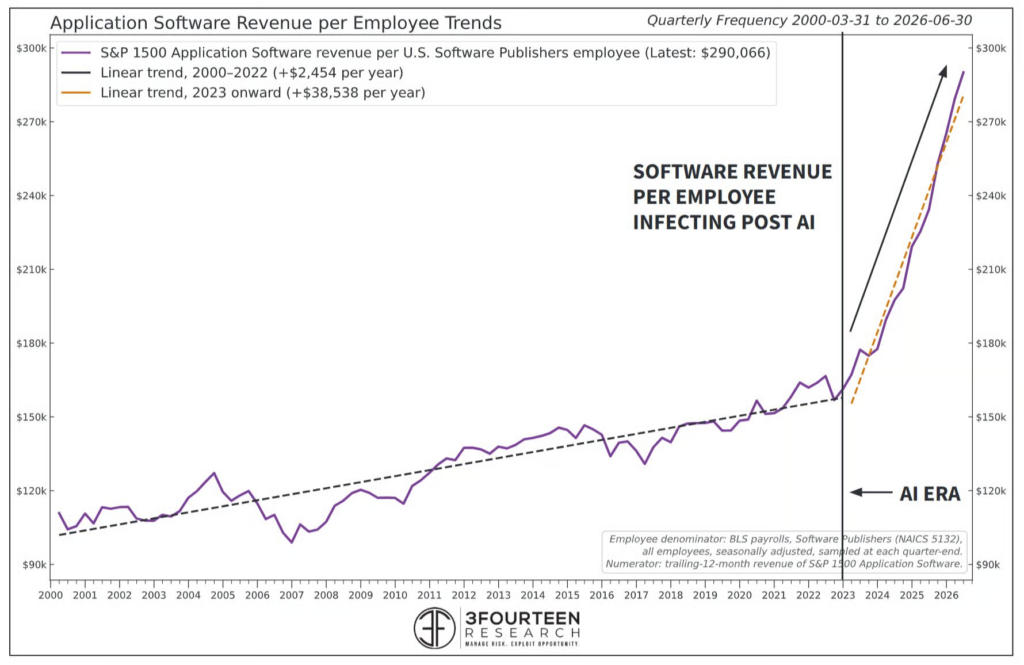
1. Software Revenue Per Employee Hockey Stick
Software revenue per employee. “S&P 1500 Software revenue per employee has gone parabolic. If you are looking for evidence that AI is starting to impact the real economy, this is exhibit A.”
2. Monday Biggest Intra-Day Spread Software +5% vs. Semis -5% In History
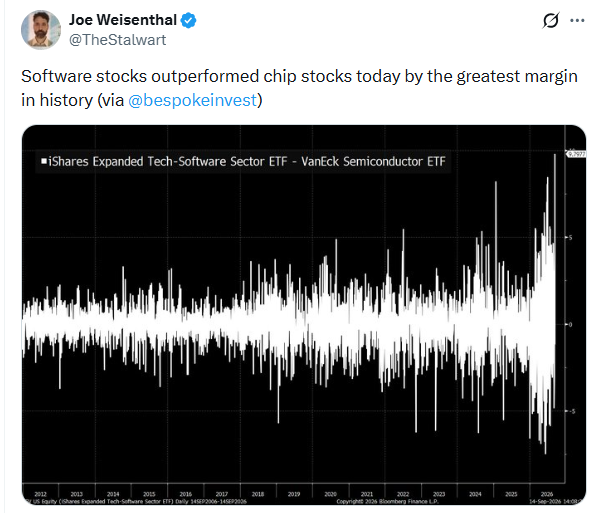
Joe Weisenthal
3. Mag 7 2026 Laggards Close to New Highs
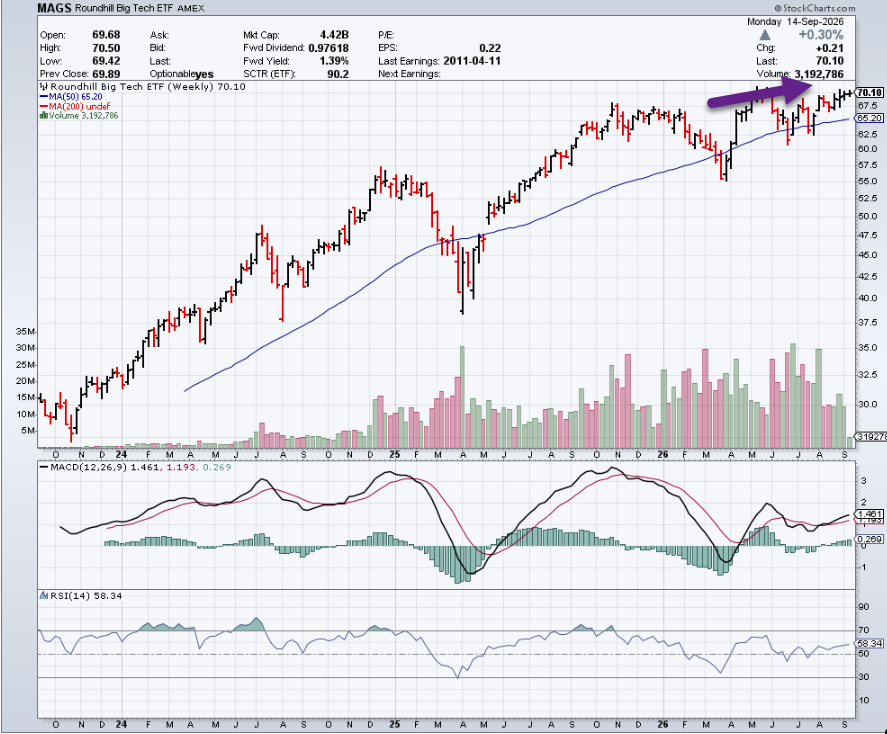
StockCharts
4. No Money Flowing to Defensive Investments Yet
Where’s Everybody Hiding?
- ByJC Parets
- September 14, 2026
People can say whatever they want.
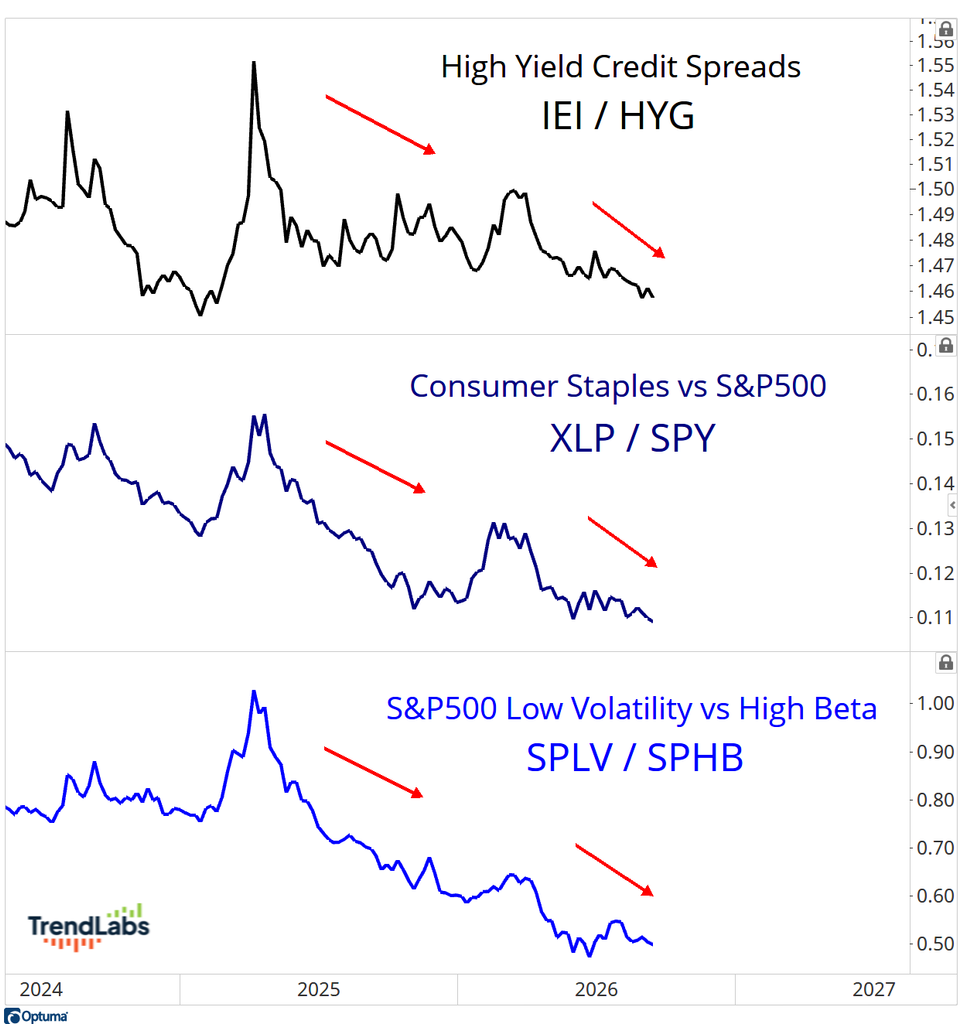
But there’s a big difference between saying you’re worried and actually positioning your money like you’re worried.
I’d rather watch the money.
Especially when we’re talking about the biggest financial institutions in the world.
Because when markets really start to deteriorate, money moves.
Investors start protecting themselves. They move away from riskier parts of the market and toward safer ones.
And we can see it happening in real time.
That’s what this chart is about:
TrendLabs
These are three completely different relationships.
But they’re all telling us something similar about the health of the market.
And right now, I don’t see much evidence of deterioration.
5. Universal Bond Hatred
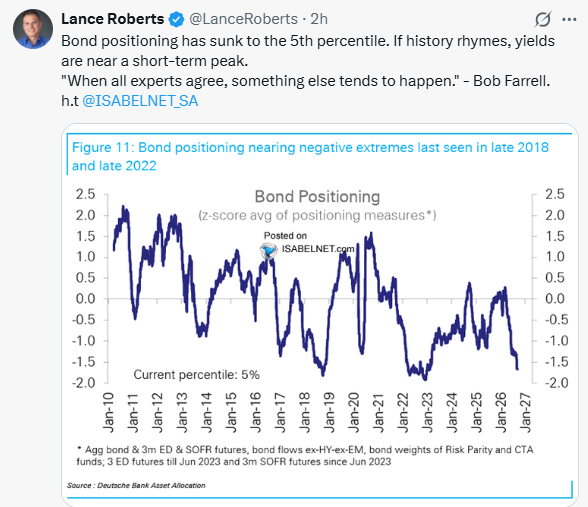
Lance Roberts
6. Gasoline in Driving Most of Inflation
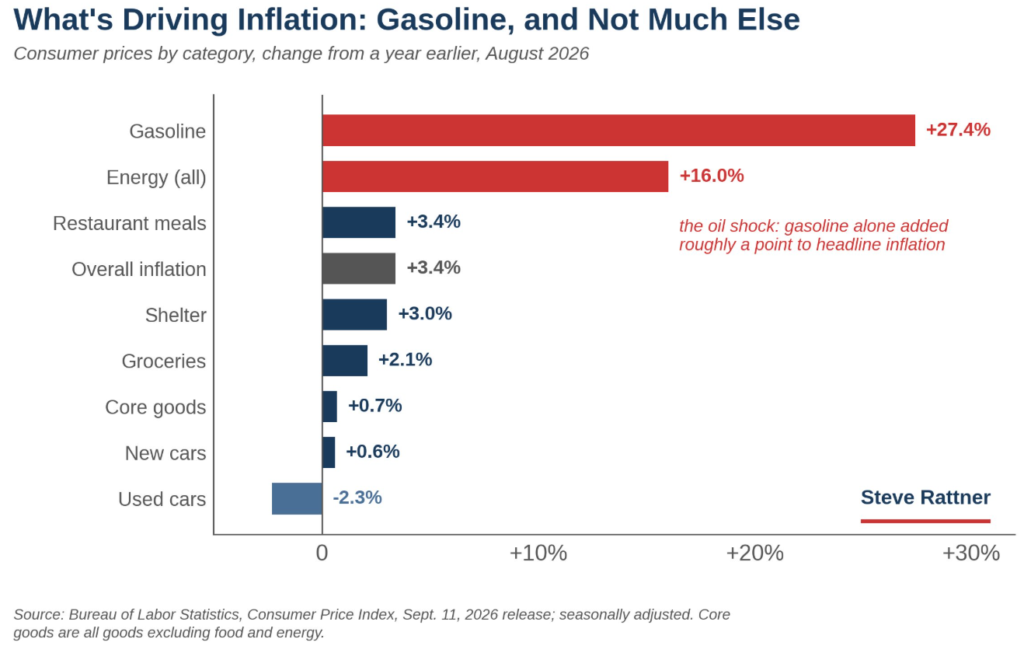
Steve Rattner
7. Core CPI Continues Trend Downward
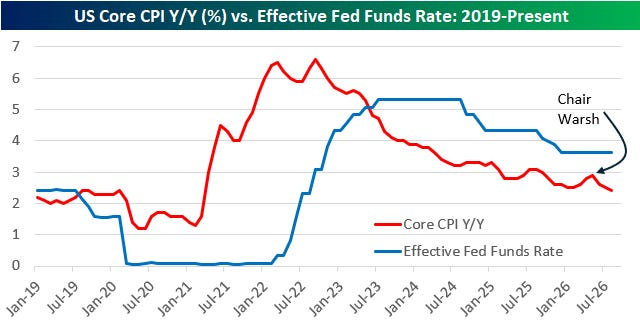
Bespoke
8. BRICS Countries Met this Week….5 Year Chart S&P 500 +83% vs. BKF (BRICS ETF) -10%
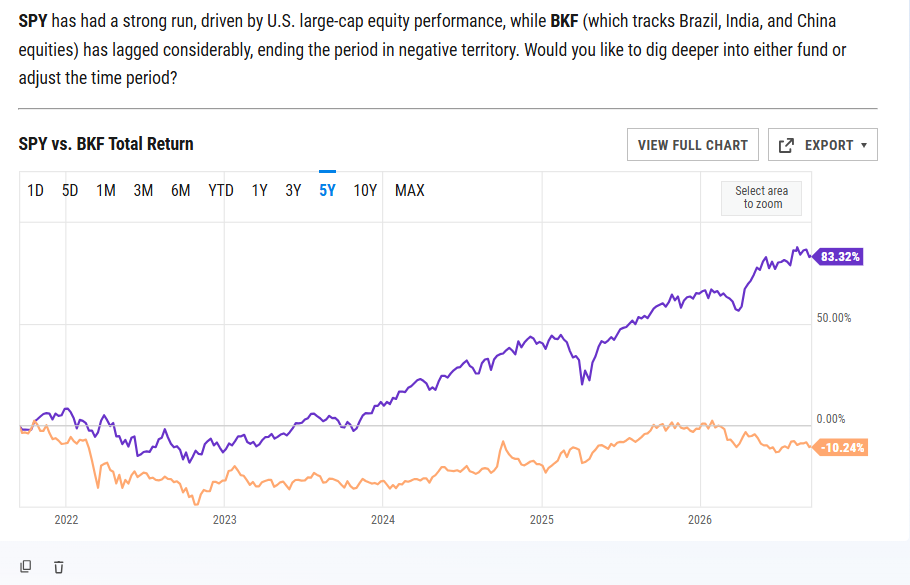
Ycharts
9. Are AI Data Centers Raising Your Electric Bill?
AI data centers use a lot of power, and it’s easy to assume that demand drives up electricity bills. A new data center can use as much power in a year as hundreds of thousands of homes. However, electricity markets don’t work like most markets, and the data tells a complicated story. USAFacts gathered data on electricity prices, data center locations, and much, much more for our deepest data dive yet.
USAFacts
- A new data center built with capacity for 100 to 1,000 megawatts of power could consume as much electricity in a year as 80,000 to 800,000 homes. Virginia’s existing data centers currently draw enough for 7.5 million homes — more than double the state’s 3.4 million households.
- It’s understandable to think that more demand would mean higher prices in general. And new grid infrastructure costs money. But the electricity market works in unique ways: power plants and other infrastructure are expensive to build, yet extra electricity is cheap to produce once those things exist.
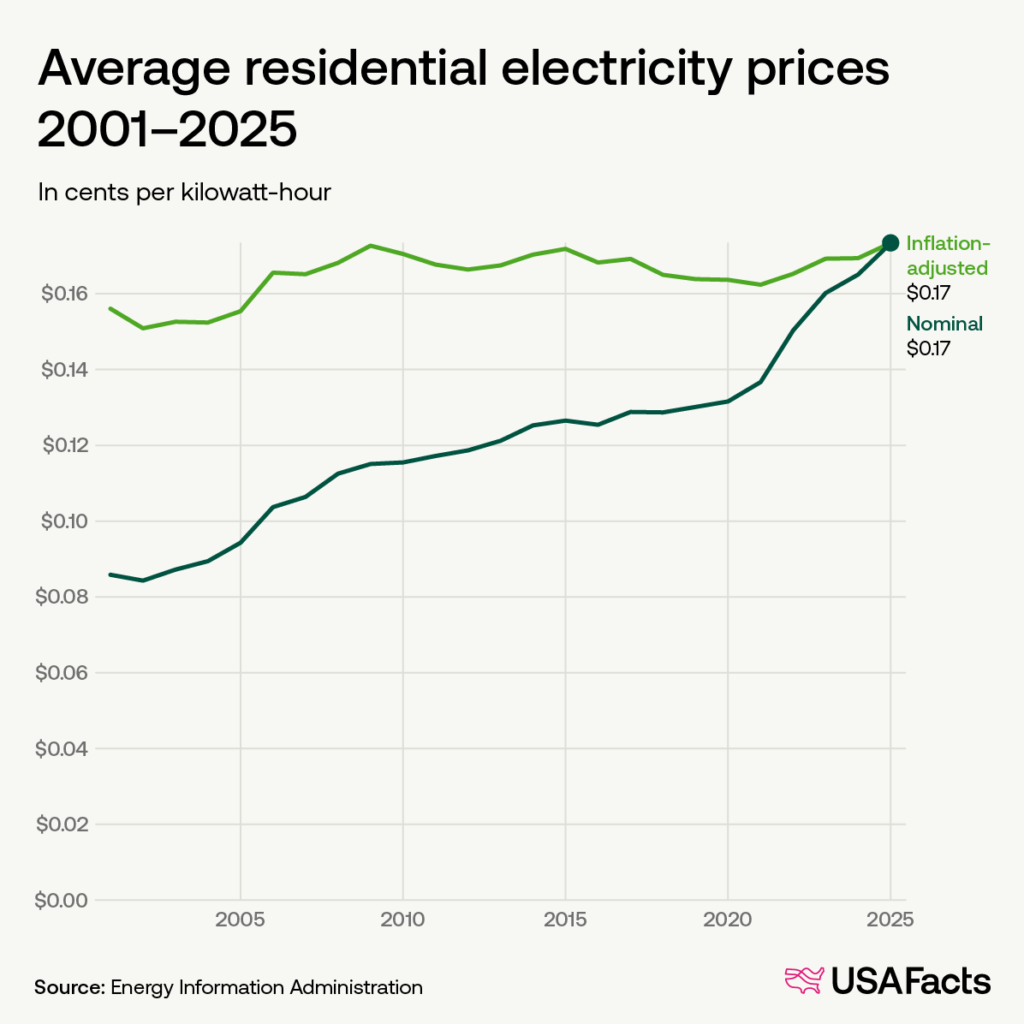
- National electricity prices (adjusted for inflation) have increased somewhat modestly nationally since ChatGPT kicked off the AI boom in 2022. Last year, the average residential electricity price was $0.17 per kilowatt-hour. In 2001, the inflation-adjusted average was $0.16.
- Of course, rates have swung quite a bit for some people when you move past national averages. Washington, DC’s rose 45% from $0.16 in December 2022 to $0.24 in December 2025. Yet rates fell in states ranging from Hawaii to New Hampshire and Massachusetts.
- And price swings aren’t new. We looked at other three-year stretches since 2000 and found nine other instances in which a state’s prices grew by more than 50%. All of these instances were before the AI boom.
- States are working to keep data centers, not households, covering these costs. Some regulators are pushing utilities to charge data centers directly, and more utilities now bill them separately from other customers. Some AI developers have pledged to cover the costs themselves.
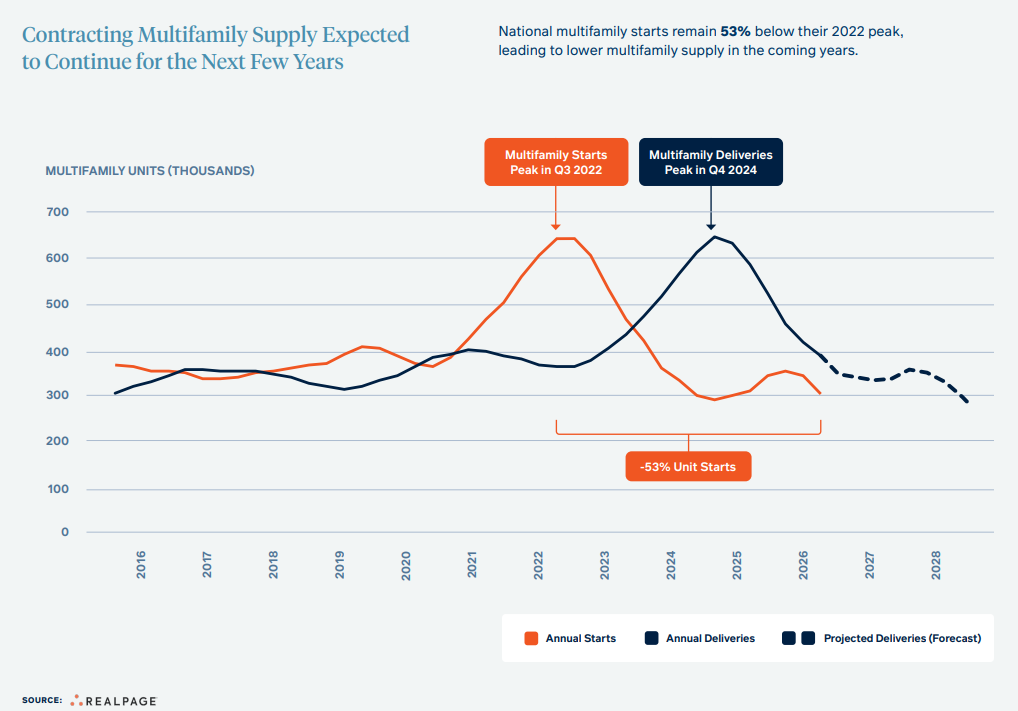
10. U.S. National Multifamily Apartment Starts -53% from 2022 Peak
Thompson Thrift