
1. Ratio of Semiconductor ETF to S&P 500 Double Previous Highs
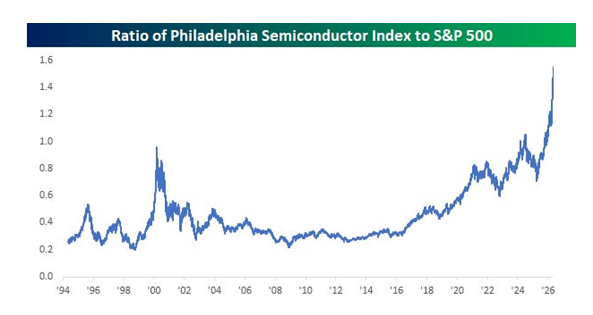
Bespoke
2. Meta 2026 Capital Spending is 50% of Revenue

Alex Morris
3. AI Chatbots vs. Search Engines

Chartr
4. Europe is Minting Unicorns 2026-Pitchbook
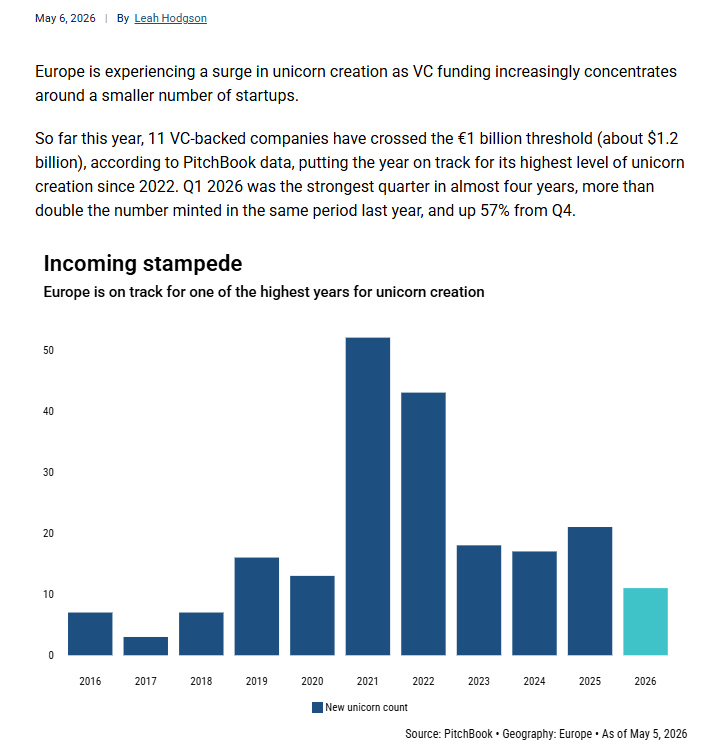
PitchBook
5. Inflation Adjusted Gas Prices are Flat the Last 22 Years
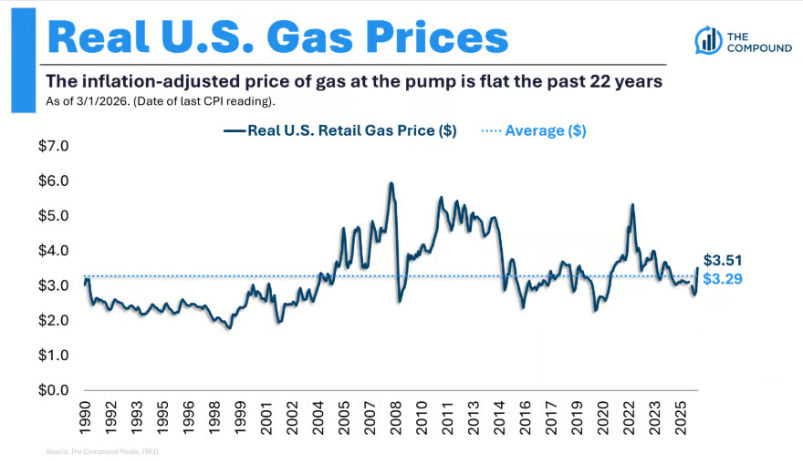
The Irrelevant Investor
6. Large Endowments Reliance on Private Equity and Venture Capital-Meb Faber…Liquidity Issues to Watch
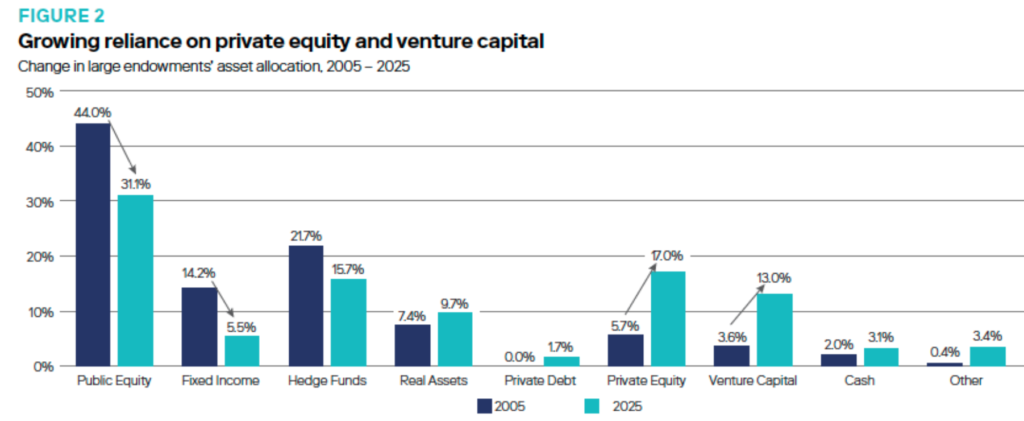
Meb Faber
7. Saudis Big Spending

The Kobeissi Letter
8. Iran Used Chinese Satellites to Target U.S. Bases



Financial Times
9. Global Economy $126T

Visual-capitalist
10. I’ve been a neuroscientist for 20 years: I do 6 things to keep my brain strong and healthy—you don’t need to ‘optimize every minute’
Some people wake up at 5 a.m. to exercise, meditate and journal. They attempt to optimize every moment to create the most productive day possible. If this works for you, great. But it isn’t for everyone.
As a neuroscientist, I don’t follow a strict daily routine. Trying to shove your real life into a rigid structure can create unnecessary stress and undermine what you are trying to achieve.
Instead, I focus on a few key categories to make sure my brain gets what it needs to perform at its best, without burning out. Here’s how.
1. I focus on consistent movement over an intense workout
Physical activity doesn’t have to be intense to make a positive impact on your brain. Most mornings, I do about a minute and half of yoga and 20 pushups before breakfast. When I need a break from work, I take a 10 minute walk.
I also count tasks like cleaning the kitchen, carrying groceries or taking the stairs as helpful movement. It might seem trivial, but research shows that simply appreciating the physical activity you’re already doing can improve health and happiness.
2. I use enjoyable activities as mental fuel, not a reward for productivity
Every day I try to do something fun. I’ll mess around with the guitar, read or watch a TV show or movie I like.
When possible, I try to do activities that are both enjoyable and physical like pickleball. Or I turn chores into a game, like seeing how clean I can get the kitchen in five minutes.
Enjoyable activities boost motivation and reward circuits in your brain, while reducing stress hormones. All of this gives you more energy to invest in your big goals.
3. I prioritize meaningful activities, even if they’re not fun
Meaningful activities are about connecting your actions to ideas, values or relationships that are bigger than your own ego. Not everything that is meaningful is going to be fun, and that’s okay.
Building a company, writing a book, or helping others can be slow, frustrating or uncomfortable. But these experiences provide your brain with an essential sense of purpose and fulfillment. Without that, it’s easy to lose your motivation, even if things look successful on the outside.
I’ll try to connect unpleasant activities to something more meaningful in my life. A visit to the dentist is taking care of my health so I can be there for my kids. Getting through my e-mails is a commitment to the success of my clients.
4. I savor small achievements
If you want to unlock greater satisfaction in your life, don’t ignore your small wins. When you only focus on the final result, you miss out on crucial support your brain needs to stay motivated.
I break big goals into small chunks to maintain a sense of progress. For this, I’ll often use the Pomodoro Technique. I will give myself 25 minutes to work on a project. Then I will give myself a checkmark for completing that 25 minutes, regardless of whether the task is complete.
At the end of the day, even if the project isn’t done, I’ve still got a bunch of completed check boxes. Little sparks of achievement also come from doing chores or any of my enjoyable or meaningful activities.
5. I don’t eliminate socializing for the sake of efficiency
When life gets busy, social activities often get the boot. But as a social species, our brains evolved to rely on and connect with each other. Strong relationships help the systems in your brain designed to boost your mood and reduce stress.
The greatest mistake you can make is ignoring one of your brain’s most basic needs. In this case, all that is required of you is to be fully present with the people you care about.
6. I give myself enough time to rest and reset
Sometimes your brain just needs a break. In a culture that emphasizes constant output, it’s easy to view taking time to rest as a weakness, but that is not the case.
Athletes need sleep and rest to reach their full potential. That isn’t a distraction from their training. They need it to perform at their best. That’s true for all of us.
You don’t need a highly structured or “perfect” routine to succeed. Just focus on what will help your brain feel its best each day.
Alex Korb, Ph.D., is a neuroscientist, UCLA professor, and mindset coach. He is the author of ”The Upward Spiral.”