
1. Q1 Letter: All Along the Watchtower
Introduction
“There’s too much confusion, I can’t get no relief.” Hendrix wasn’t writing about global markets, but he might as well have been. War in Iran, political turmoil, an AI reckoning, and a private credit crisis are dominating headlines all at once and investors are searching for a way out. But through the noise, American business keeps doing what it does best: innovating and producing higher earnings.
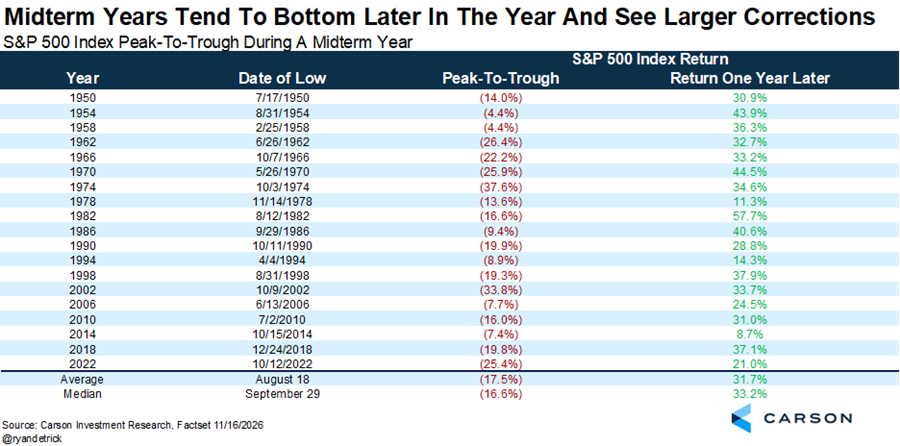
In my year-end 2025 letter, we discussed stock market volatility versus bear markets, with the expectation that 2026 would bring heightened turbulence. That expectation has arrived in force. Although the Iran conflict is front and center, the broader thesis from that letter remains intact. As the chart below shows, 100% of midterm election years since 1950 have produced significant corrections, averaging more than –17%. Add the well-documented pattern of –10%+ pullbacks surrounding the appointment of a new Fed chair, and 2026 is delivering both events in a single year.
The good news: one-year returns following midterm correction troughs have been positive every single time.
Click Here to Continue Reading
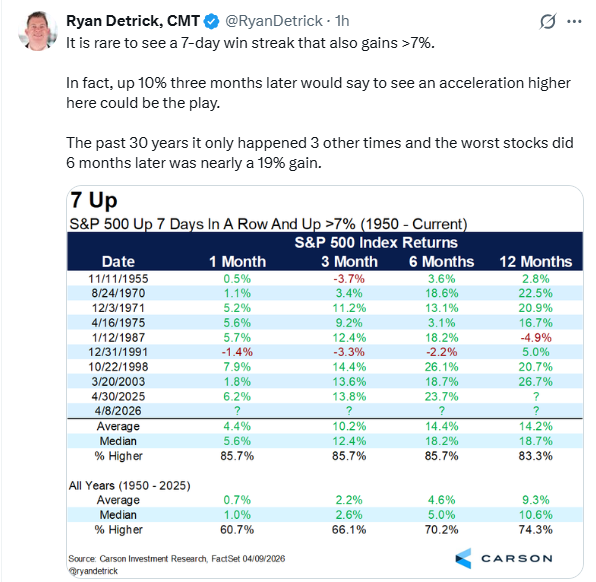
2. 7 Day Win Streak Prior History
Ryan Detrick
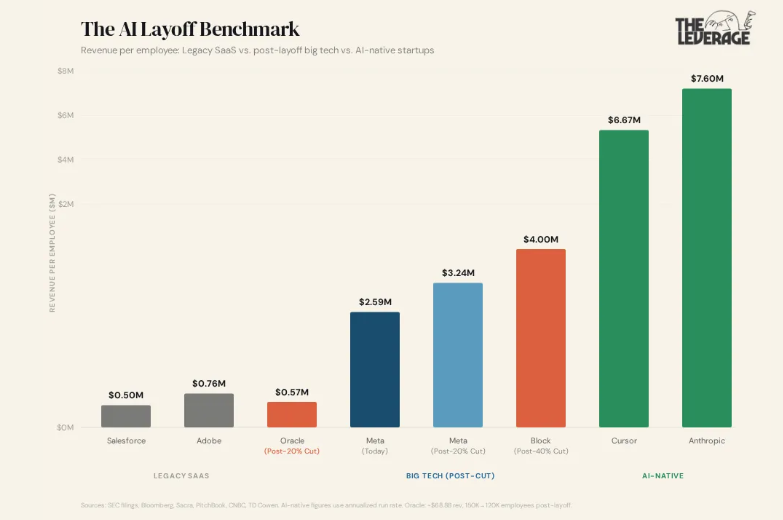
3. The AI Layoff Benchmark-Revenue Per Employee
Get The Leverage
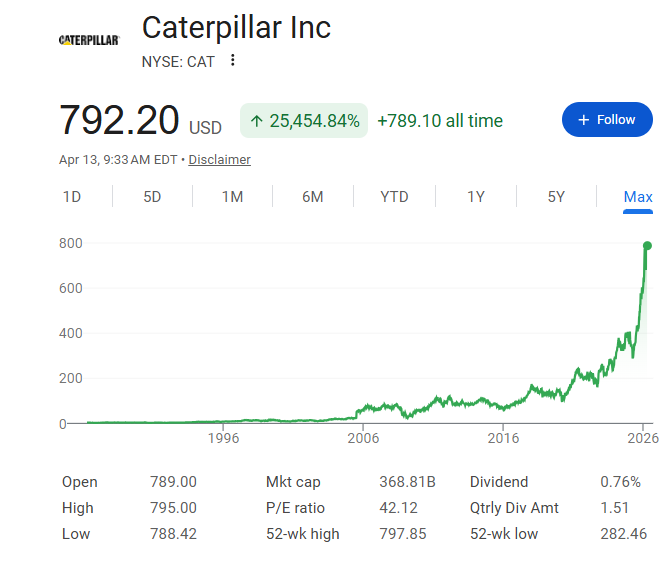
4. CAT Caterpillar Investors Used to Look at CAT as Measure of Economy?? $200 to $800
Google finance
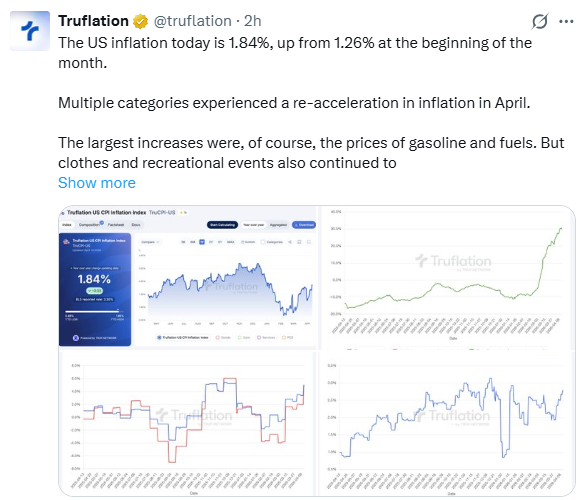
5. Truflation Update
Truflation
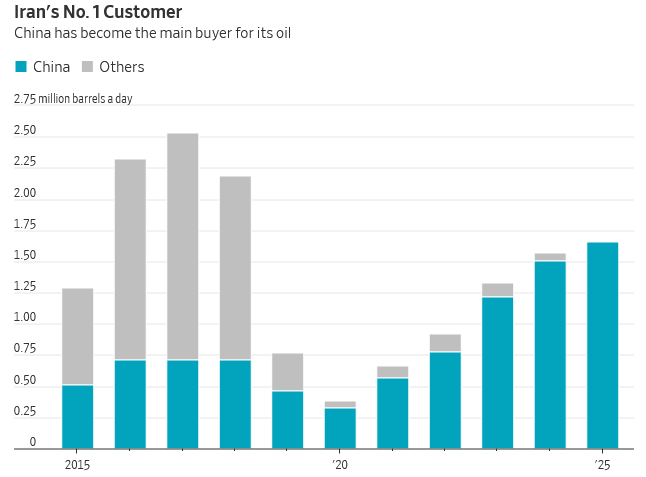
6. Pre-War All of Iran’s Oil Went to China
7. China EV Exports +124%

Sherwood Media
8. Home Sellers vs. Buyers Biggest Gap Ever

Barchart
9. Diamond Prices Hit Record Low as Lab Grown Eats the Middle Market

Torston Slok Apollo
10. Tax Refunds +11% this Year
Tax Refunds Climb Ahead Of April 15, IRS Data Show
April 13, 2026 • Medora Lee
The number of tax returns the IRS has received so far this tax season continue to lag last year’s pace, but refunds are up more than 11%, IRS data show.
The average refund through Apr. 3 was $3,462, up 11.1% from $3,116 at the same time in 2025 while total returns received fell 1.6%, the IRS said. Total returns received was just over $99.8 million, down from more than $101.4 million a year ago.
Given the earliest filers tend to be the lowest income, refunds in the final week to the April 15 deadline the average payout could get another small boost, analysts said.
That should be encouraging news to Americans who are struggling under the weight of elevated prices and a slowing job market, analysts said.
“Tax refunds appear to be mitigating the gas price surge so far as both discretionary and nondiscretionary spending remain strong,” said Christopher Horvers, analyst at JP Morgan.
“As the tax season progresses, the middle-income-plus consumer should see a strong lift given the SALT (state and local tax) portion of the OBBB,” or One Big Beautiful Bill, he added.
Average refunds are big. How to get them faster?
“Combining direct deposit with electronic filing is the fastest way to receive your refund,” the IRS said. Most refunds are issued in less than 21 days for taxpayers who filed a flawless return electronically and chose direct deposit.
Nine out of 10 taxpayers already receive their tax refunds by direct deposit, but to boost that closer to 100%, the IRS began phasing out paper checks last September.
“Paper checks are over 16 times more likely to be lost, stolen, altered, or delayed than electronic payments,” the IRS said. “Direct deposit also avoids the possibility that a refund check could be returned to the IRS as undeliverable.”
How do I know when my refund’s coming?
Through the IRS “Where’s My Refund” tool, you can track when the IRS received your tax return, when it approved a refund and when it issued the refund. The money should land in your account within five days from the date the IRS approves your refund.
If you mailed a paper return and expect a refund, it could take four weeks or more to process your return, the IRS said.
Since refunds for Americans who claimed the EITC/ACTC can’t be released until mid-February for early filers, those taxpayers may have to wait until around March 3 to see their refunds in their bank accounts or on debit cards, if they chose direct deposit and there are no issues with the tax return.
If you don’t have a bank account, find one through the FDIC website or the National Credit Union Administration using their Credit Union Locator Tool. Usually, people can open a bank account pretty quickly. You can also ask your tax preparer if they offer other electronic payment options.
Otherwise, you might be able to deposit your refund onto a reloadable prepaid debit card or mobile app. Many reloadable prepaid cards and mobile apps have routing and account numbers, which may be different from the card number. Check with your financial institution to make sure your card or app can receive the deposit and double-check the routing and account numbers.
How should people use their tax refunds?
Along with that big check comes big responsibility, so make sure not to spend it all away, financial experts said. Here are some ideas:
- Since refunds are expected to be larger than usual, splitting a refund can be a convenient way to manage your money. You can split the refund in any proportion you want, sending some to an account for immediate use and some for future savings, in up to three different accounts with U.S. financial institutions, reloadable prepaid debit cards, or mobile apps. You can use your tax software to do it electronically or use IRS Form 8888, Allocation of Refund if you file a paper return.
- Plan how to use the refund before receiving it. This “reduces overspending risk by assigning the refund a job in advance — debt payoff, emergency savings, or essential expenses,” said Paul Ricci, chief executive of personal loans site Best Egg.
- Put debt reduction and financial health ahead of lifestyle upgrades. “Applying refunds toward high-interest balances can reduce financial stress and improve credit utilization,” Ricci said. “Prioritizing emergency savings – 3 to 6 months of expenses — helps prevent future reliance on credit when unexpected costs arise.”
(Story was updated to include the latest IRS filing data through April 3)
This article originally appeared in USA Today and was provided by Reuters.
https://www.fa-mag.com/news/tax-refunds-climb-ahead-of-april-15–irs-data-show-86617.html